
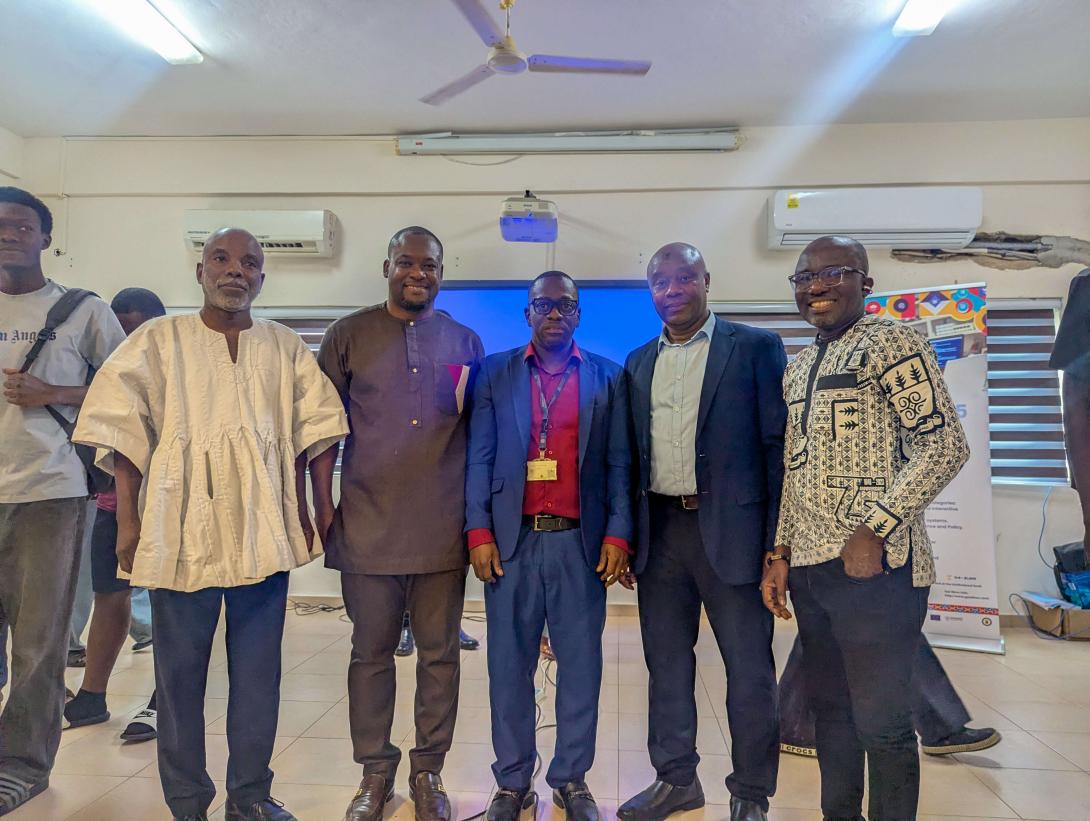
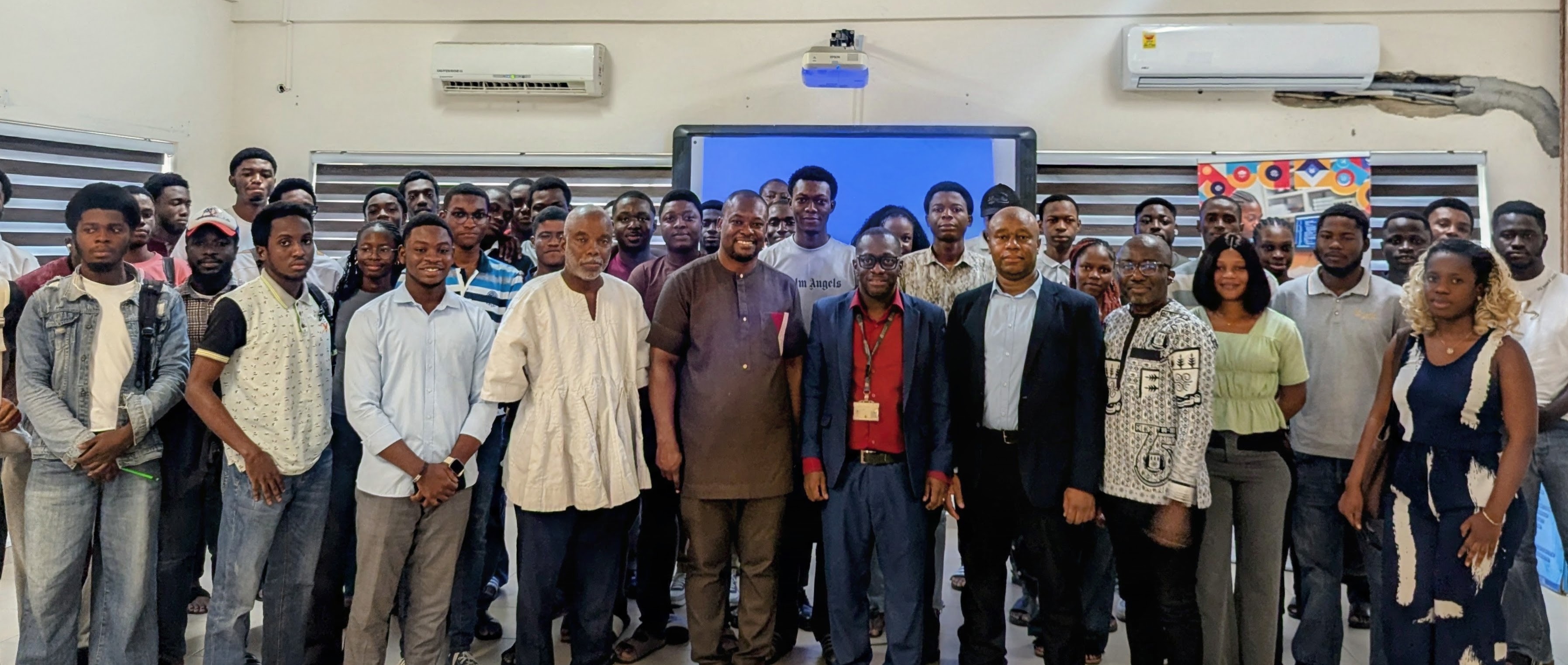
The Department of Materials Science and Engineering is delighted to share highlights from a thought-provoking lecture by Prof. Yusuf Makarfi Isa on transforming agricultural residues into valuable resources through the concept of the bio-circular refinery.
Key highlights from the lecture include:
- Agricultural waste as a resource: West Africa produces large quantities of cassava peels, maize stalks, rice husks, cocoa pods, and oil palm residues. Rather than treating these materials as waste, they can serve as feedstocks for energy, materials, and other high-value products.
- Addressing environmental challenges: Converting agricultural residues into useful products can help reduce open burning, uncontrolled decomposition, greenhouse gas emissions, and associated public health risks.
- The bio-circular refinery concept: The lecture introduced a systems engineering approach for converting biomass residues into multiple valuable products while improving resource efficiency and sustainability.
- Water–Energy–Food Nexus: Using the Water–Energy–Food Nexus framework, participants explored how decisions involving agricultural resources, energy production, and water use are interconnected and can influence one another.
- From theory to feasibility: The session introduced a four-level assessment framework for evaluating biomass resources:
- Theoretical potential
- Technical potential
- Economic potential
- Sustainable potential
- Practical assessment of agricultural feedstocks: Participants examined major feedstocks such as cassava, maize, rice, and groundnut, using available production data to assess their potential for energy and resource recovery.
- Hands-on calculations: The practical session covered important calculations involving residue-to-product ratios, moisture correction, unit conversion, and energy potential estimation.
- A systems perspective: The case studies demonstrated how well-designed bio-circular systems can create a virtuous cycle linking waste management, energy generation, resource recovery, environmental protection, and rural economic development.
In his closing remarks, Prof. Yusuf Makarfi Isa emphasised that the transition towards bio-circular systems is not a distant ambition but an engineering challenge that demands action today. The central question, therefore, is not whether change is necessary, but whether we can afford to wait.