DCS-UG Holds 3rd TiMC Conference: Renewed Calls to Rethink Innovation in Africa Communication Spaces
This year’s Trends in Media and Communication (TiMC) Research Conference kicked off with renewed calls for academics, researchers, and industry professionals to critically rethink innovation in Africa’s rapidly evolving communication space.
The biennial event organized by the Department of Communication Studies, University of Ghana brought together scholars and practitioners from different parts of the world to deliberate on the emerging disruptions reshaping African media and communication.
Speaking at the opening ceremony of the three-day event held from November 5 to 7, 2025, Provost of the College of Education, Professor Samuel Nii Ardey Codjoe, described the conference as a timely reflection on the changing face of media practice and scholarship in Africa.
“Disruption is no longer an occasional visitor; it is the permanent neighbor living next door to every newsroom, PR department, creative agency, and university,” he said.
Head of the Department of Communication Studies, Prof. Gladys Nyarko Ansah, also speaking at the opening ceremony, highlighted the need to deepen research conversations that critically examine Africa’s evolving media realities and enrich global scholarship.
“We gather at a time of profound change where citizen journalism, digital activism, and algorithmic bias are reshaping Africa’s media landscape,” she said. “These disruptions, though challenging, open new possibilities for innovation and inclusion, redefining what ‘media’ means on our continent.”
The 2025 edition, which marked the third TiMC Conference, explored how artificial intelligence, influencer culture, platformization, and digital innovation are reshaping the continent’s media landscape and redefining the boundaries between scholarship and practice.
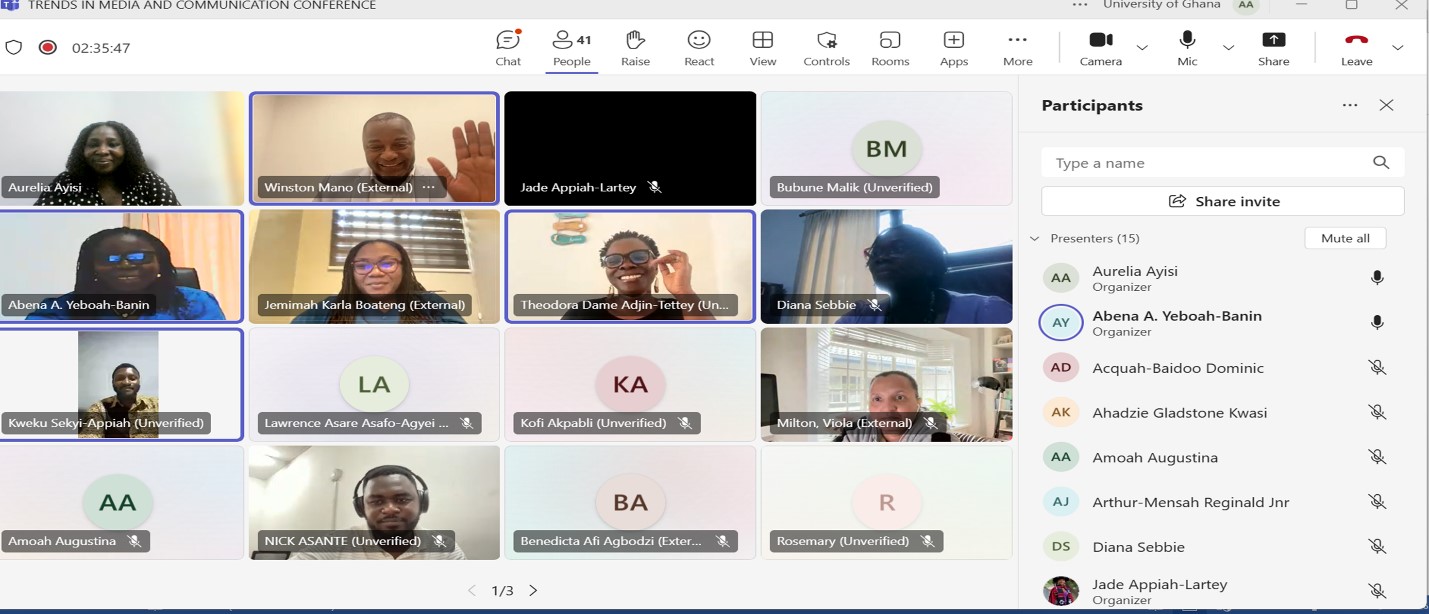
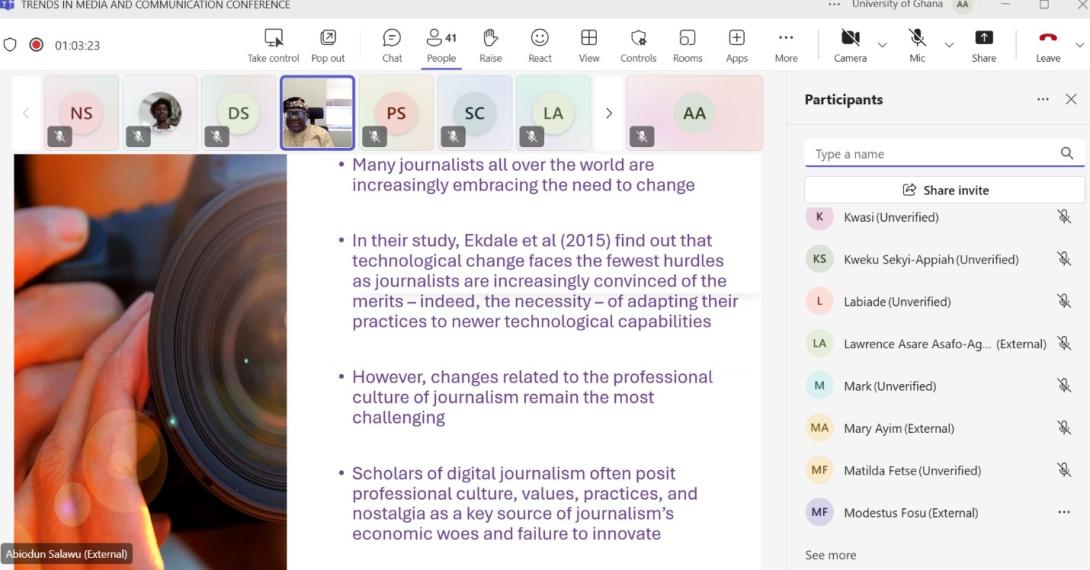
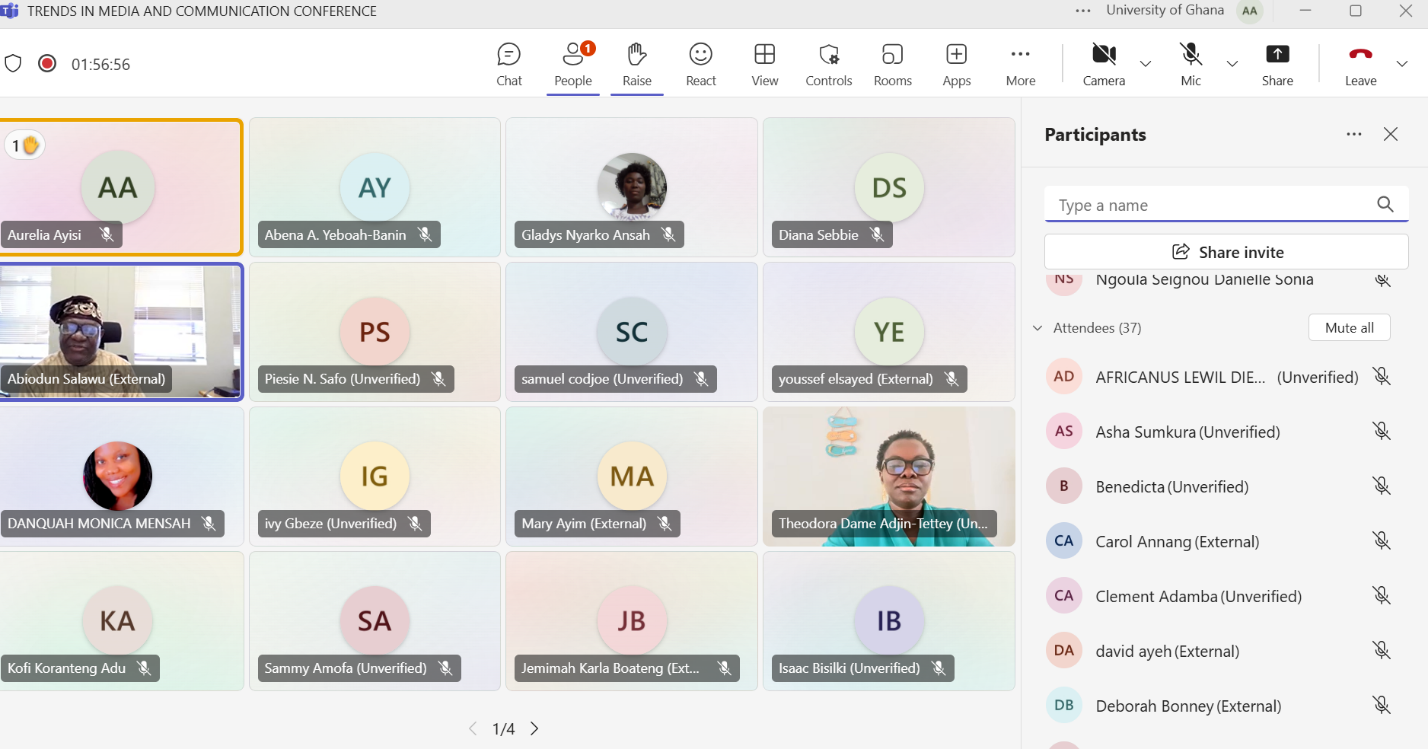
About 150 participants including scholars, students, and media professionals converged online via Microsoft Teams for the three-day event, held under the theme “Disruptions in African Media and Communication Spaces.”
Conference Convener, Dr. Aurelia Ayisi, expressed excitement about the growth of the TiMC initiative since its inception in 2021.
“What began as a platform for emerging research has evolved into a vibrant space for interrogating new technologies, shifting audience dynamics, and the political, ethical, and cultural implications of digital change,” she said.
Dr. Ayisi added that the conference provides a meeting ground for scholars, students, and professionals who care deeply about the future of media and communication in Africa.
The conference explored nine major sub-themes including: Rewriting Power and Representation in African Digital Media, Navigating Influencer Culture and Media Trust in Africa, Sustainability and Climate Reporting in the Digital Age, AI, Automation, and the Future of African Communication among others.
Participants delivered presentations across the various sub-themes and received constructive feedback aimed at strengthening their research and perspectives. Conversations throughout the sessions revealed the twofold impact of digital disruption revealing both its challenges and its capacity to support creativity, inclusivity, and innovation.
“The speed of innovation leaves us exhilarated, yet it also challenges us to think more critically about ethics, governance, and equity,” Prof. Codjoe had noted.
The highlight of the conference was the final day (November 7), which featured a Doctoral Colloquium, providing participants with the opportunity to learn about the formalities of publishing a research paper. The discussion centered on the theme “Publishing Your Research: What Research Students and Early Career Faculty Must Know.”
The panel featured leading journal editors, including Professor Winston Mano (Journal of African Media Studies), Professor Viola Milton (Communicatio), and Professor G. Etse Sikanku (Journal of Communication, Media and Society), who offered practical insights into academic publishing and research visibility.
The TiMC 2025 Conference reaffirmed its role as a space where scholarship meets practice, bridging academic inquiry and professional innovation. As Dr. Ayisi remarked in her closing note, “Even in times of disruption, knowledge remains our most powerful tool for transformation. Together, we can shape media and communication that are more ethical, inclusive, and authentically African.”
The event concluded with a renewed call for collaboration across institutions and generations to advance critical research and practice in African communication.