PROGRAMME
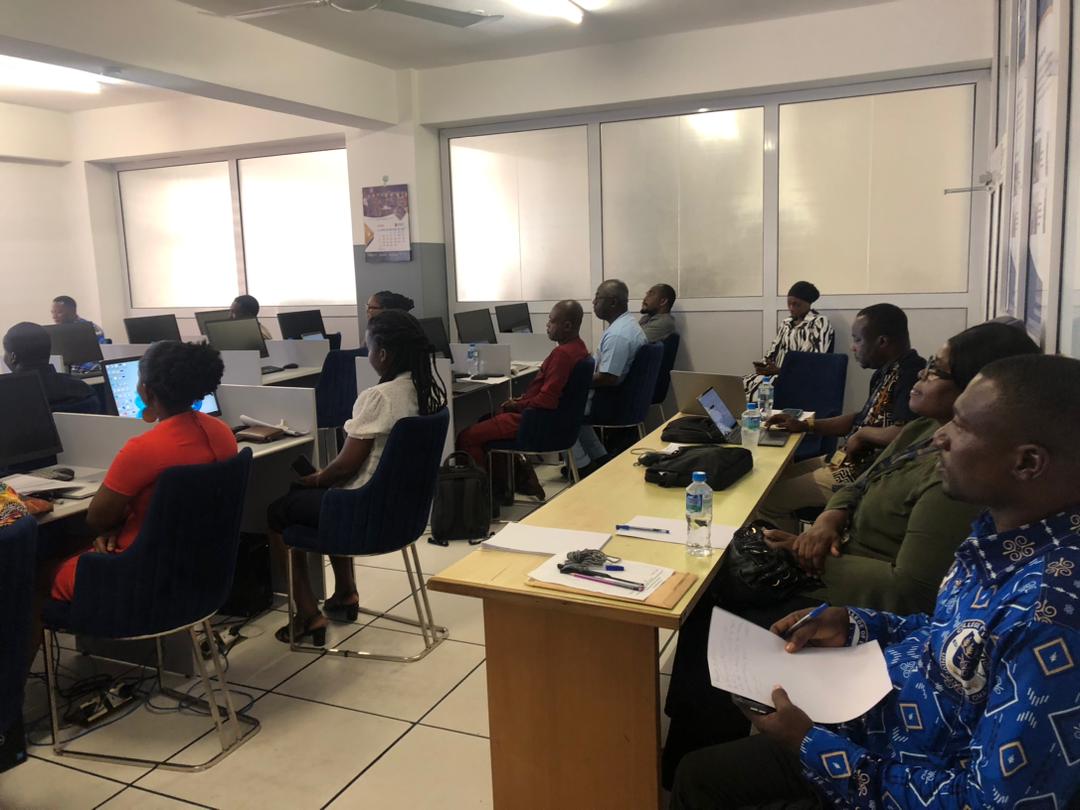
On Wednesday, 8 April 2026, the Department of Distance Education (DE) conducted a one-day capacity-building workshop for 20 lecturers who are teaching on the programme for the first time. The programme aimed to standardize instructional quality by equipping faculty with skills in innovative online pedagogies, the application of Bloom’s Taxonomy in assessment design, and the technical management of the Sakai Learning Management System (LMS).
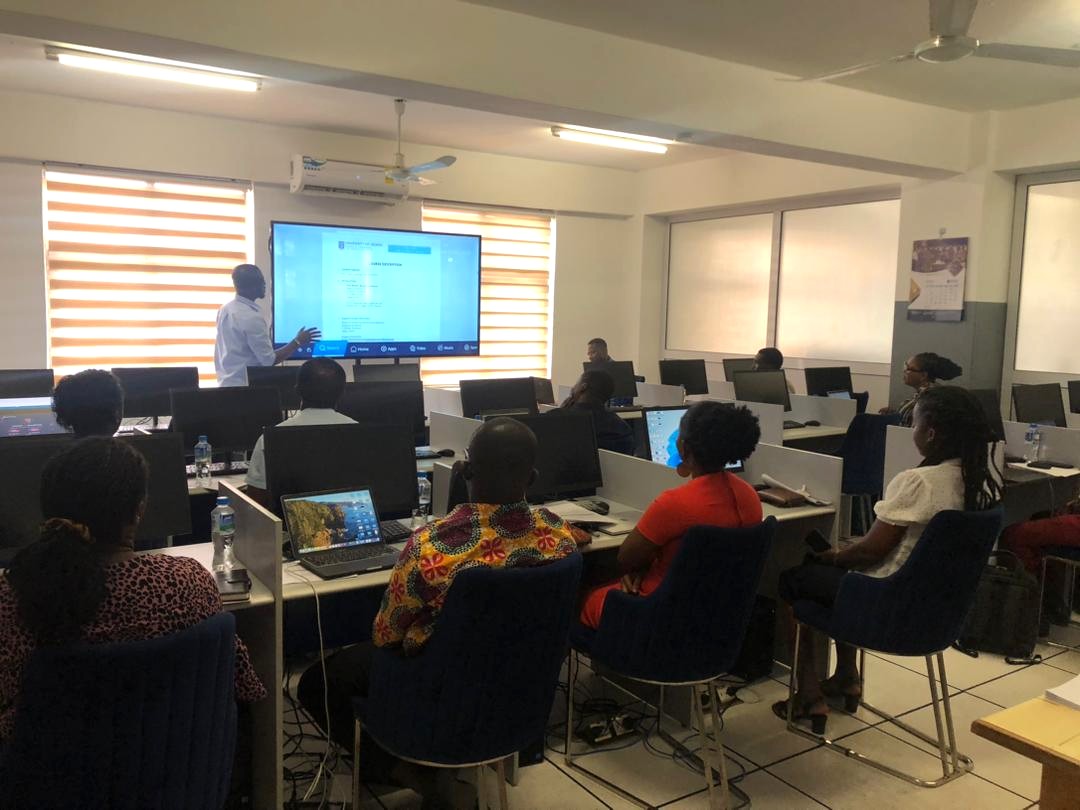
Ms Cynthia Adeborna opened the proceedings by emphasizing the necessity of technology-driven instruction. She underscored that proficiency in digital platforms is no longer optional, but a prerequisite for delivering high-quality distance education. Professor Samuel Amponsah followed with a session on Bloom’s Taxonomy, reframing it from a passive assessment framework into a dynamic tool for instructional design. He challenged participants to move beyond rote methods, advocating for creativity in both delivery and assessments. Through hands-on collaborative activities, lecturers practised aligning learning objectives with higher-order cognitive levels. Transitioning to online pedagogy, Professor Amponsah addressed the diverse socio-academic challenges students bring to virtual spaces. He demonstrated how inclusive, learner-centred environments can remain flexible and responsive to these varied student needs.
The focus shifted to administrative and technical standards. Mr. Ebenezer Odame Darkwah detailed the mandatory requirements for study material development, stressing that all guides must strictly adhere to the current UG-DE Department Study Guide and lecture slide template. He clarified that structured overviews, activities, and assignments are essential components for any course material to be processed. Building on this, Mr. Yusif Amadu provided a technical walkthrough of the Sakai LMS. Through practical exercises, participants gained proficiency in navigating course sites, managing enrollments, and configuring interactive tools such as group management and learning activities.
The workshop concluded with a hands-on session led by Mr. Frank Kasapa on educational technology and assessment security. He demonstrated efficient grading workflows for diverse question formats, including multiple-choice and fill-in-the-blank, and showcased how to provide meaningful digital feedback. To ensure academic integrity and promote critical thinking, Mr. Kasapa introduced advanced Sakai features, such as question randomization and the use of Artificial Intelligence tools to generate MCQ questions to ease faculty time.
The workshop successfully bridged the gap between theoretical pedagogy and technical implementation. By aligning faculty expertise with institutional standards and digital tools, the Department has strengthened the capacity of the lecturers to deliver inclusive, rigorous, and student-focused distance education.
Photo Gallery