UG-MTN Partnership Opens Doors for Student AI Innovation in Inclusive Mobile Money Services
A partnership between the University of Ghana and MTN Ghana has given students the platform to build artificial intelligence (AI) solutions that make mobile money and other digital services accessible to persons with disabilities and speakers of Ghanaian languages. Top among them is an application that allows visually impaired persons to send and withdraw mobile money with ease.
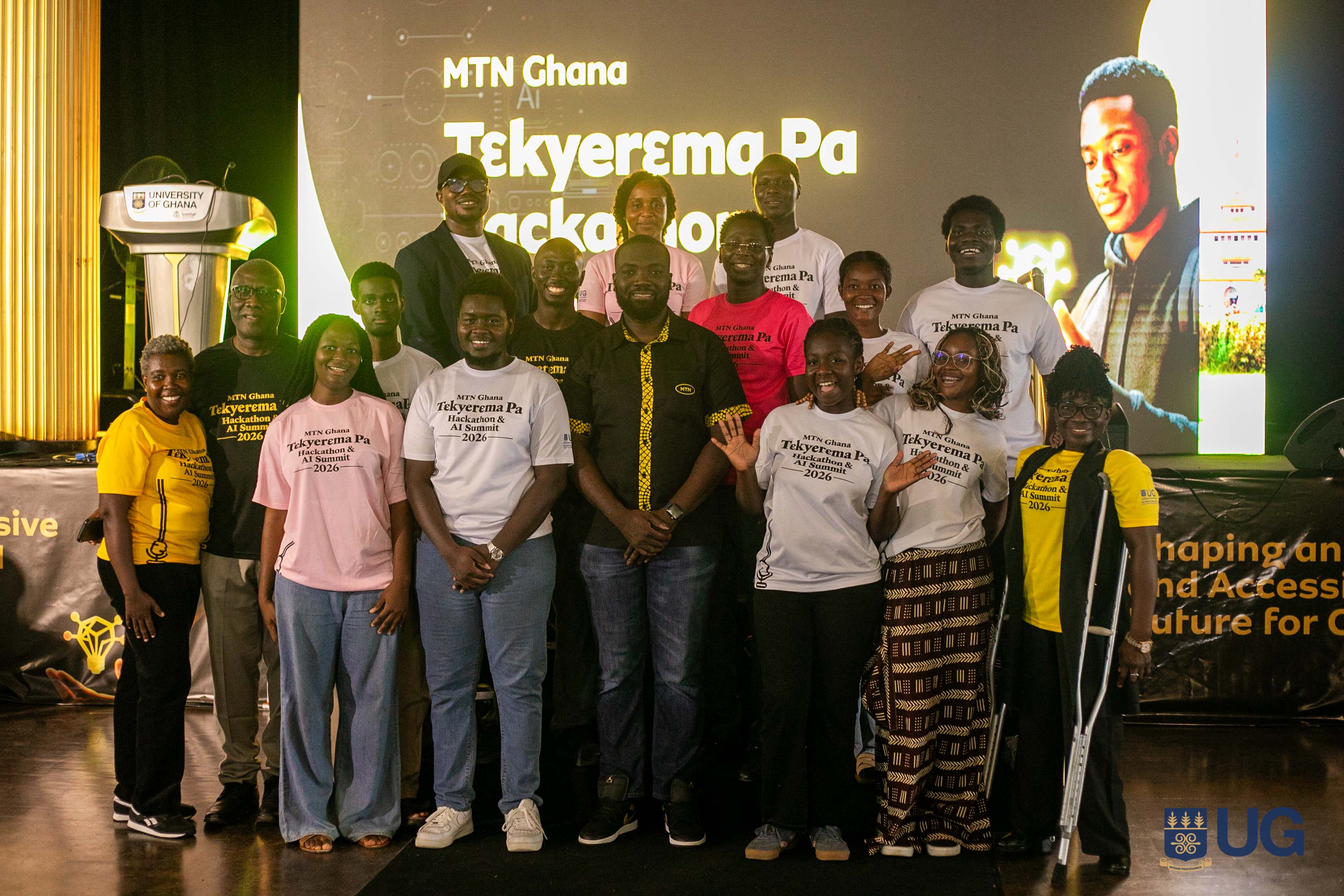
The innovations were showcased at the MTN Ghana Tɛkyerɛma Pa Hackathon and AI Summit 2026, which UG hosted at the Great Hall, Legon.
Held on the theme “Shaping an Inclusive and Accessible AI Future in Ghana: Perspectives from Industry, Academia, Government and Persons with Disabilities,” the summit brought together students, innovators, researchers, industry players, policymakers and persons with disabilities to explore how AI can be harnessed to solve local challenges and drive national development.
The Tɛkyerɛma Pa Hackathon is an initiative of the Human-Computer Interaction (HCI) Lab at the Department of Computer Science, UG. This year, MTN Ghana sponsored the hackathon as part of a partnership with the University, formalised through a Memorandum of Understanding in September 2026. The competition challenged young innovators to build digital solutions that work in at least one Ghanaian language and are accessible to persons with disabilities.
In her opening remarks, the Vice-Chancellor, Prof. Nana Aba Appiah Amfo, commended MTN Ghana for its partnership with the University and its commitment to the digital future of Ghana. She noted that AI presents enormous opportunities for Africa but that its benefits must be inclusive, accessible and responsive to local languages, cultures and socio-economic realities.
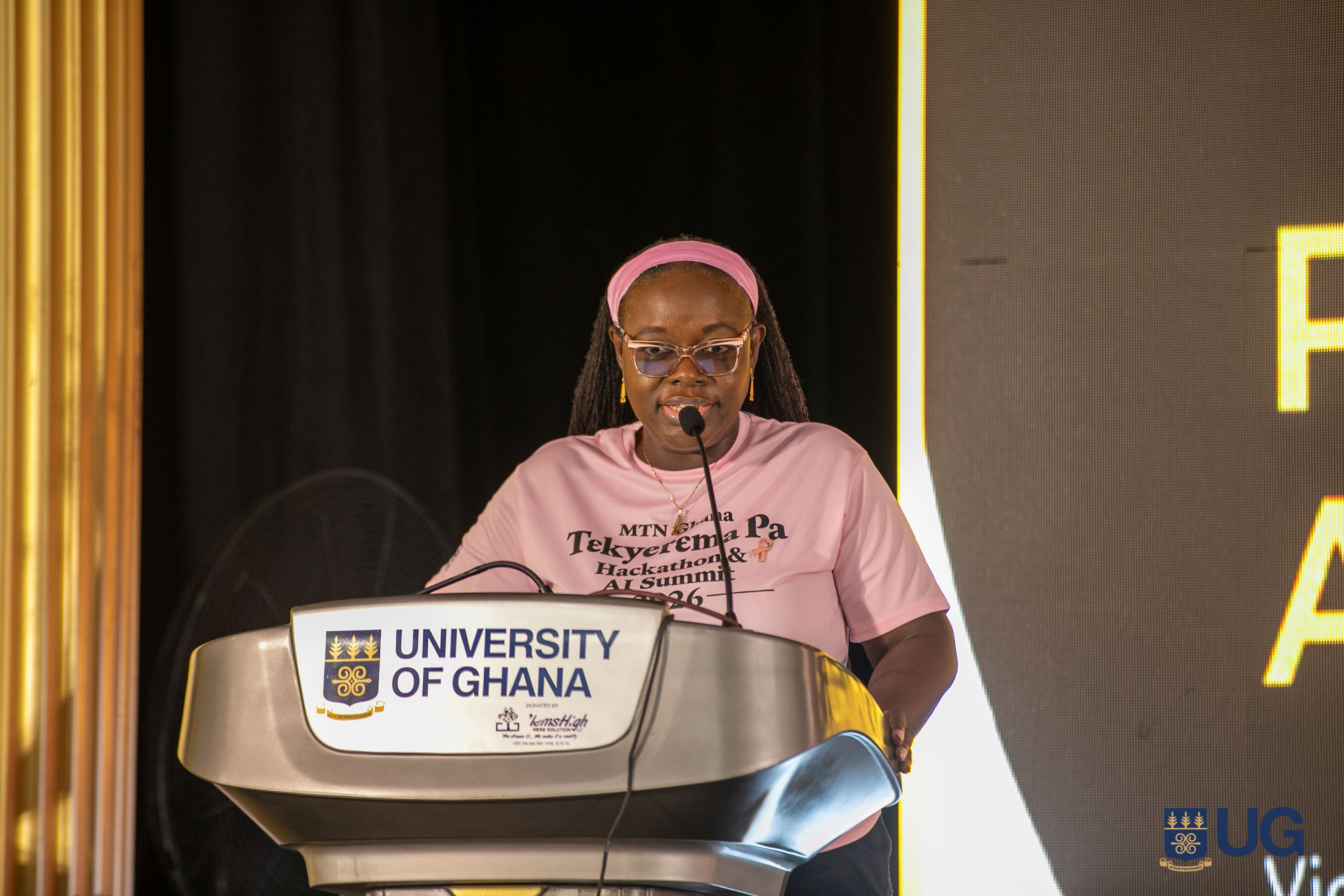
Prof. Amfo said the summit showed the value of collaboration between academia, industry, government and the communities that technology is meant to serve. She urged developers to consider who benefits from emerging technologies and noted that many African languages remain poorly represented in AI systems, a gap the Human-Computer Interaction (HCI) Lab at the Department of Computer Science at UG is working to close through its work on Ghanaian language datasets. She also stressed that persons with disabilities must take part in the design, development and testing of solutions intended for them.
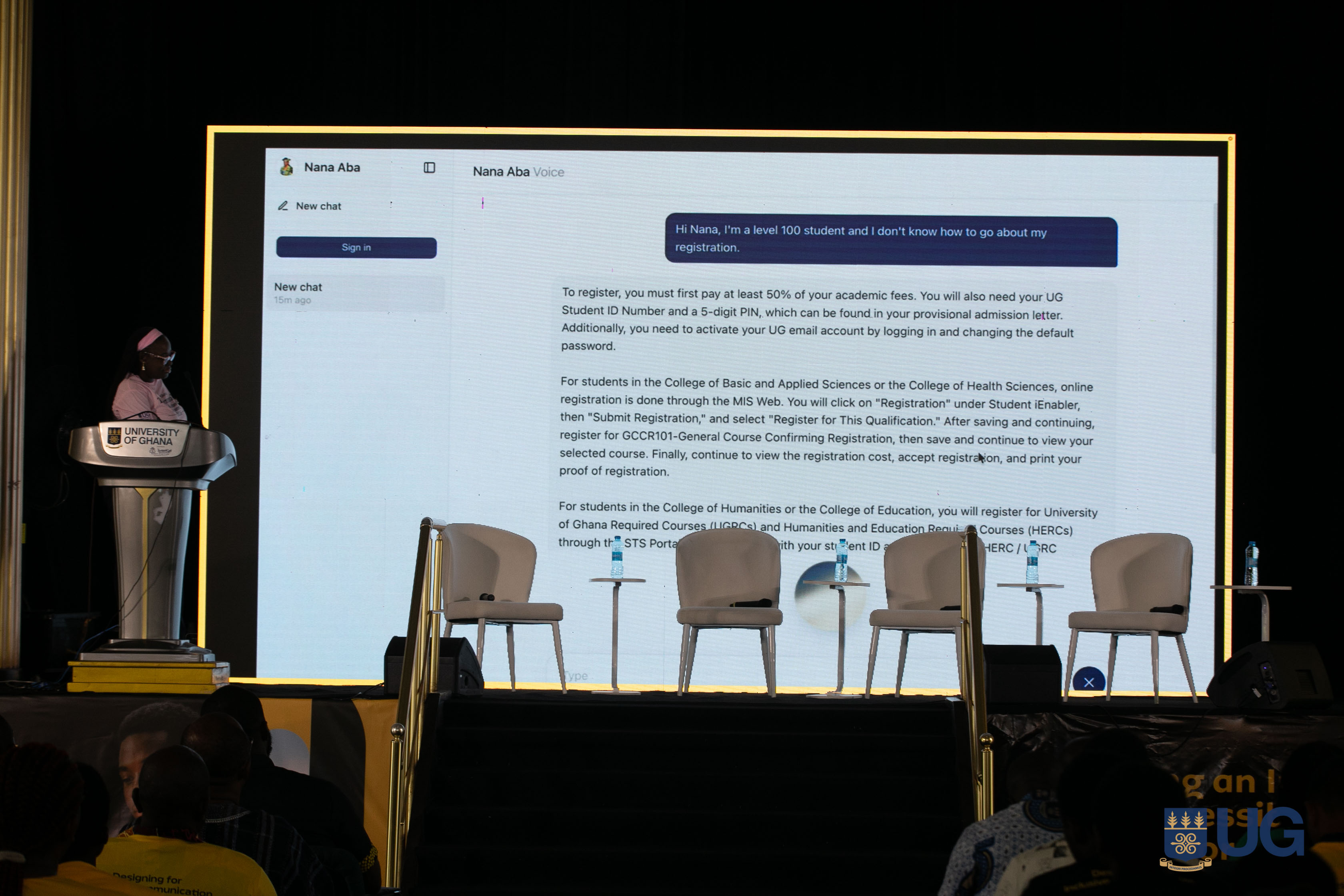
At the event, Prof. Amfo launched Nana Aba AI, a voice and text AI assistant developed by the HCI Lab. The assistant helps prospective and current students, faculty, staff and the public to access information on the programmes, admissions and policies of the University.
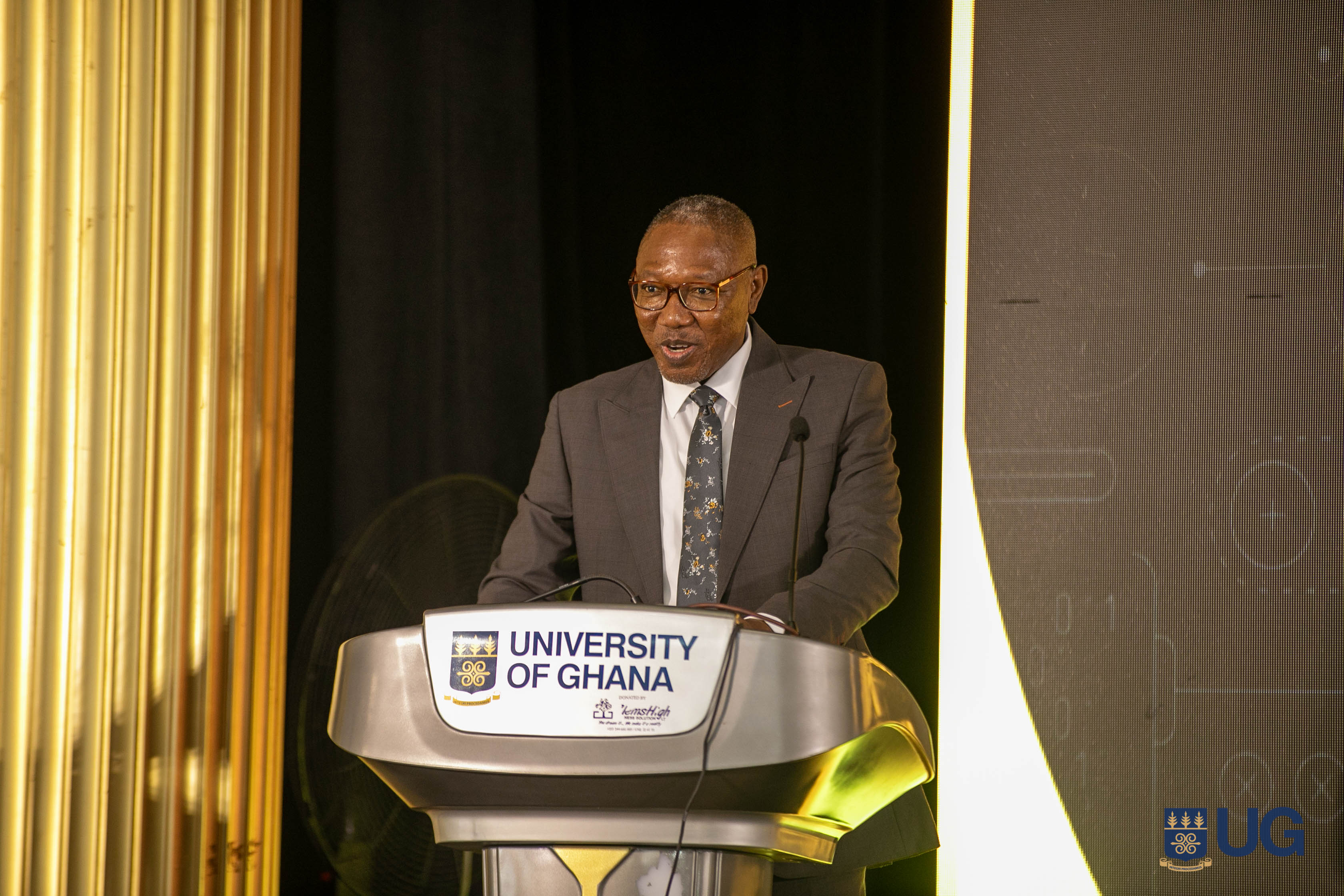
Speaking on behalf of MTN Ghana, the Senior Manager for Digital Analytics and Monetisation, Mr. Kwame Adu Manu, said the future of AI in Ghana must be inclusive, accessible and developed by Ghanaians. He urged the innovators to build solutions for market women, visually impaired students, farmers and speakers of local languages such as Twi, Ewe and Dagbani. “We want to reach a point where we can refer to their innovations just as we do today with global platforms,” he said. He also encouraged students to stay in school, take part in hackathons and collaborate across institutions.
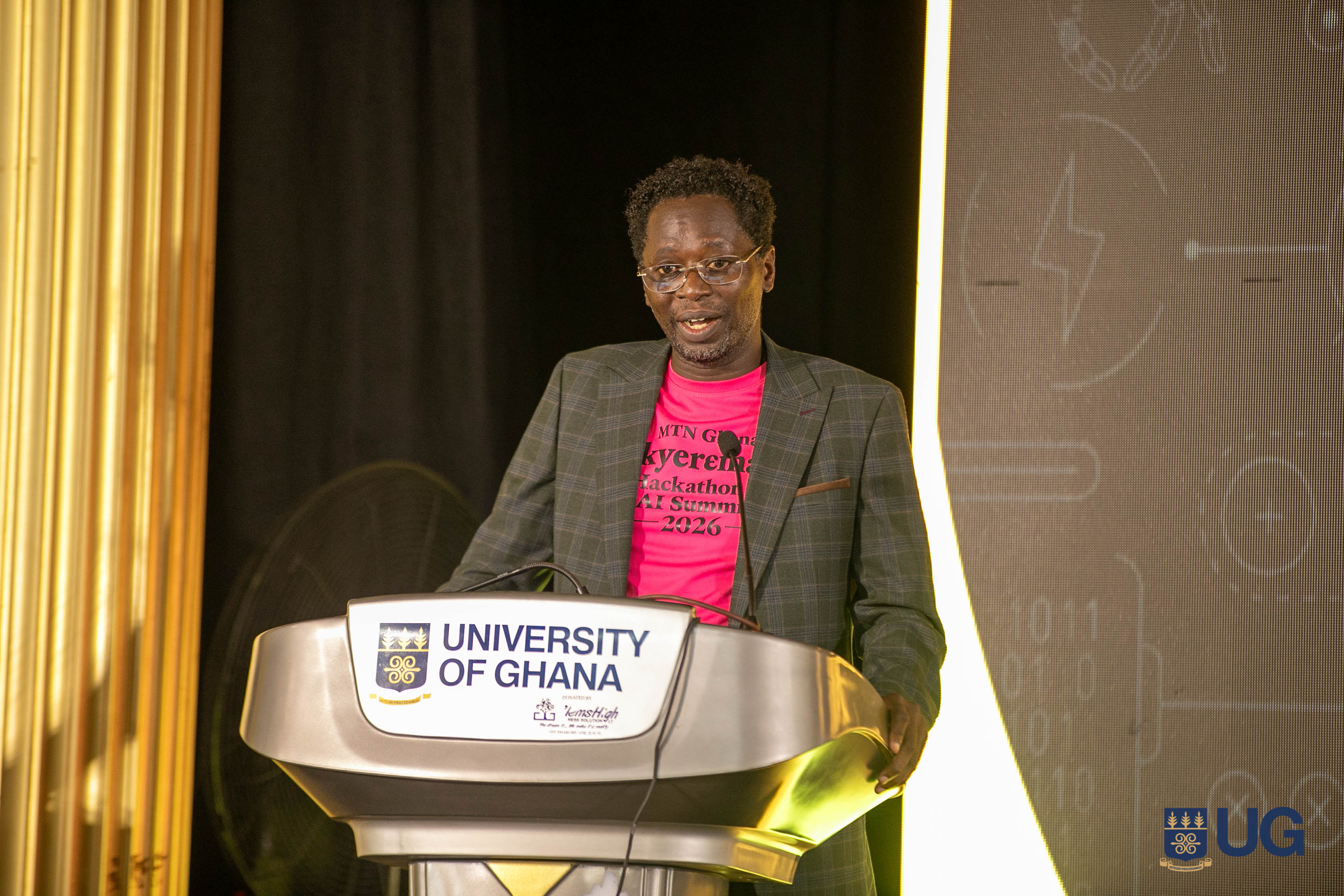
The Deputy Minister for Education, Hon. Dr. Clement Abas Apaak, who spoke on behalf of the Minister for Education, Hon. Haruna Iddrisu, said, “The question is no longer whether AI will influence education. It already does.” He called for education reform that builds critical thinking and digital skills and said Ghana must move from the use of AI to its creation.
He highlighted the upcoming Smart Start curriculum, which introduces coding, robotics and AI at the basic school level, as well as the One Million Coders Programme. He cautioned that AI can reproduce bias and undermine academic integrity. To the innovators, he said, “Do not build simply to impress the judges. Build to make a difference.”
In a speech delivered on his behalf, the Minister for Communication, Digital Technology and Innovations, Hon. Samuel Nartey George, called for sustained investment in Ghanaian language technologies and responsible AI development. He said the digital agenda of the Government aims to make Ghana a creator of technological solutions, intellectual property and economic value.
The Head of the HCI Lab, Prof. Isaac Wiafe, noted that inadequate funding remains a major obstacle to the development of local AI. He announced that the Lab will provide the finalists with technical assistance and free access to its foundational AI models.
A major highlight of the Summit was the hackathon finals. The competition attracted 131 teams made up of 550 participants, among them 85 women and 54 persons with disabilities. After about two months of online training and mentorship, five teams qualified to pitch their prototypes to a panel of judges.
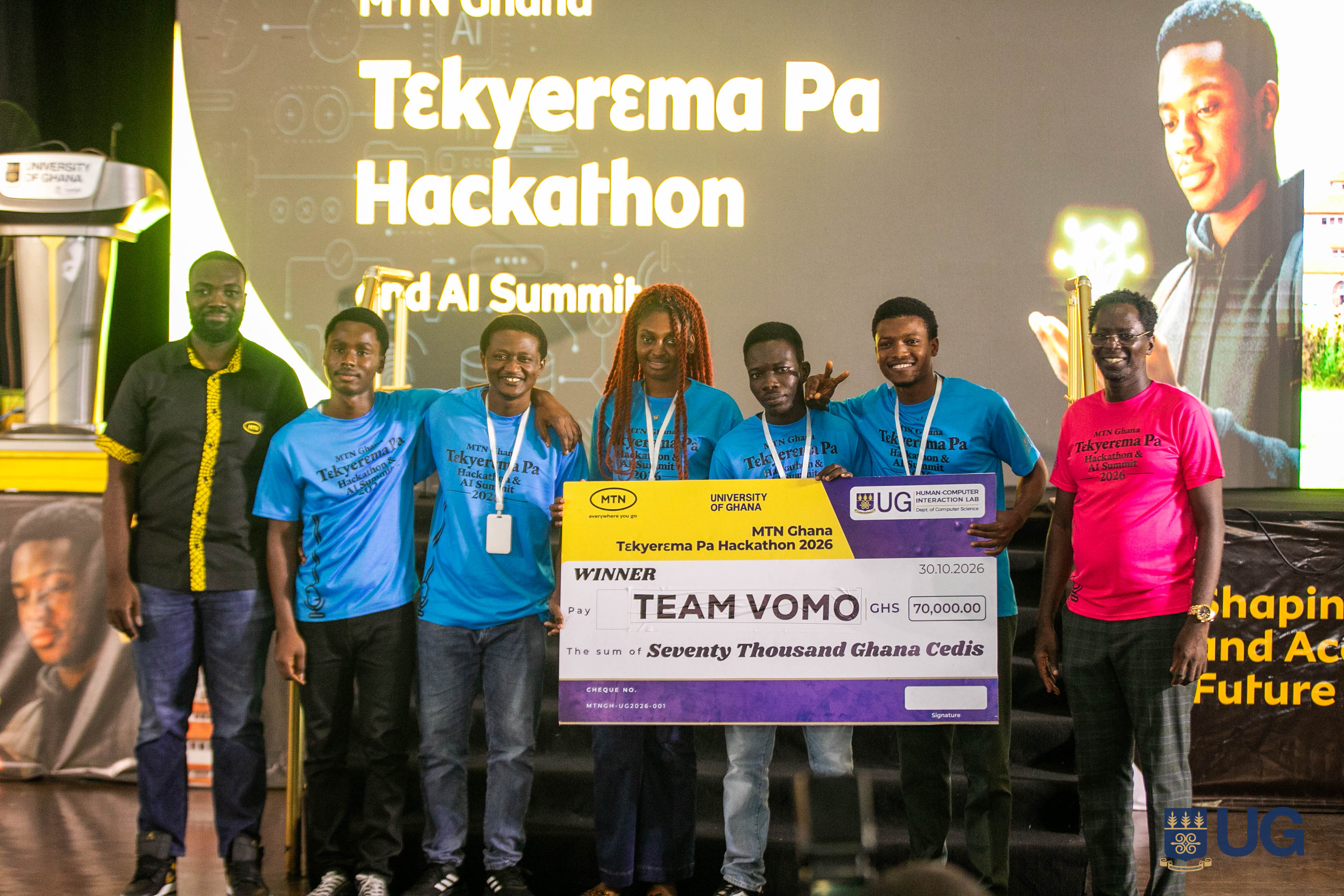
Team Vomo won the first prize of GH¢70,000 for an application that allows persons with disabilities, especially the visually impaired, to send and withdraw mobile money and carry out other digital transactions. The interdisciplinary team comprised Alfreda Alolbila (Media and Communication Studies), Thomas Boakye-Yiadom (Pharmacy), Gabriel Bempah Owusu and Ketu Samuel Gyasi (Computer Science) of the Kwame Nkrumah University of Science and Technology (KNUST), together with John Aduko Anamboi of the technology firm Rarbl.
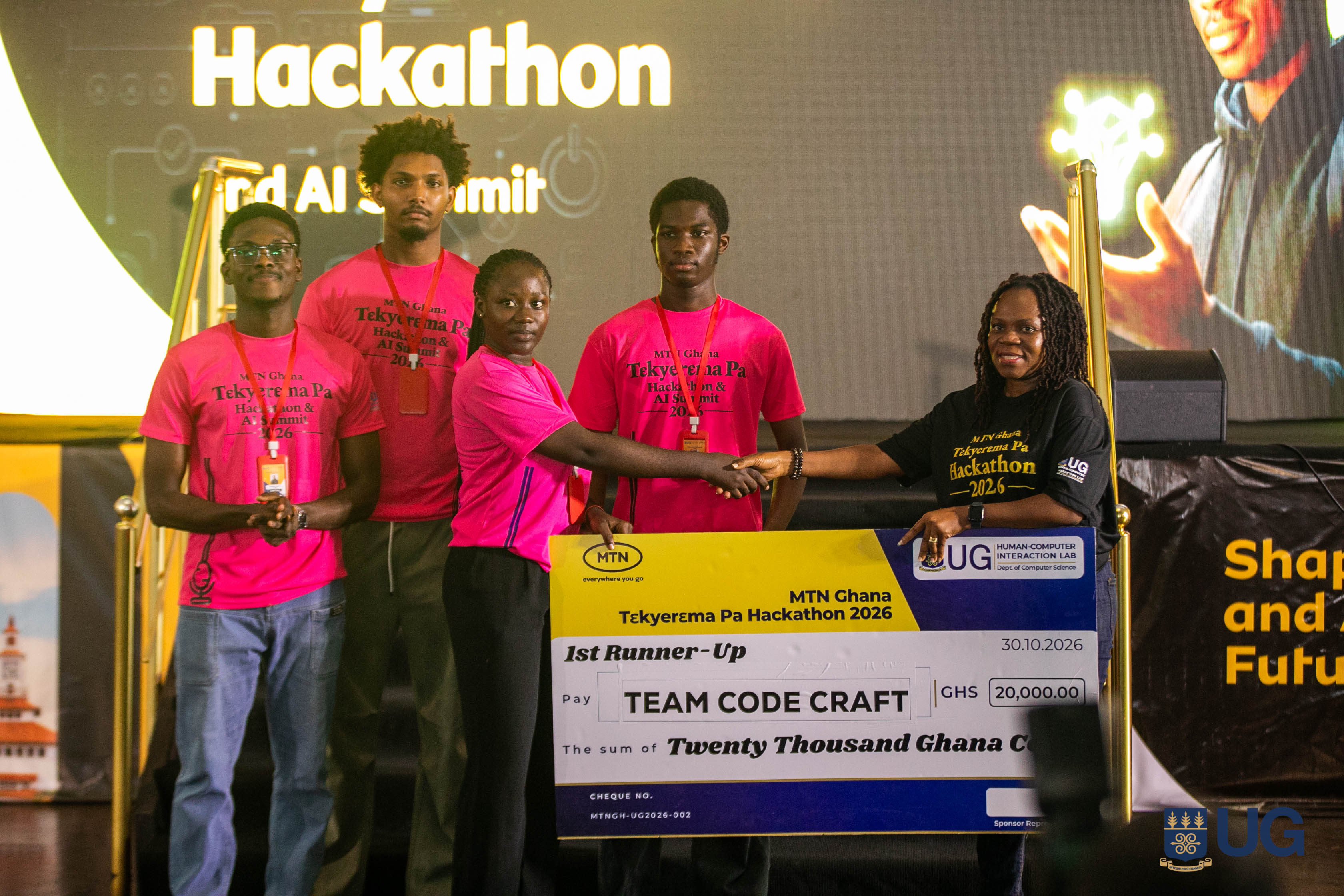
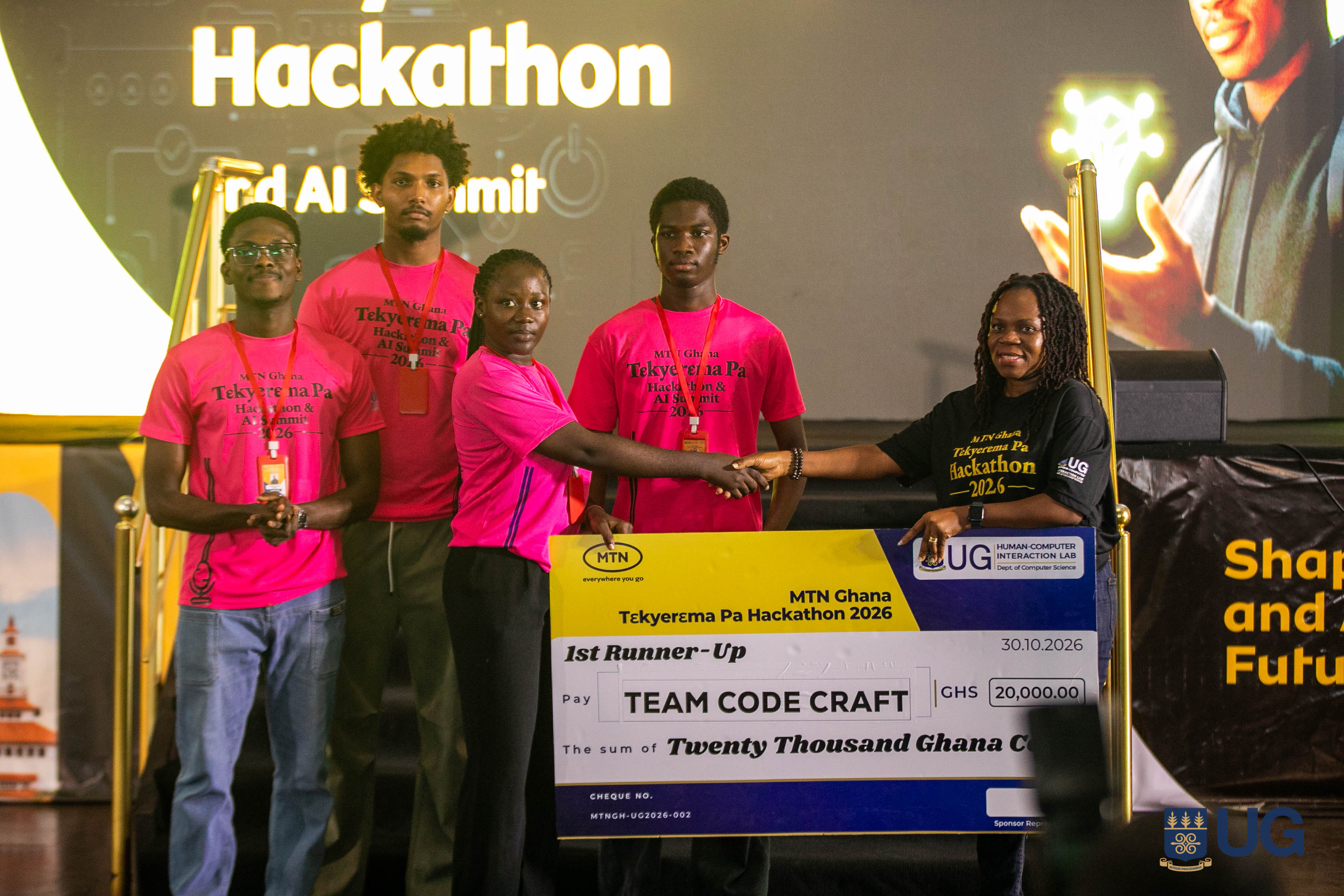
Team Code Craft placed second, taking home GH¢20,000. The team was made up of Franklin Asare Wiafe, Emmanuel Otoo, Ohenewaa Owusu Ansah and Edudzi Kofi Kuagbedzi, all Computer Science students of UG.
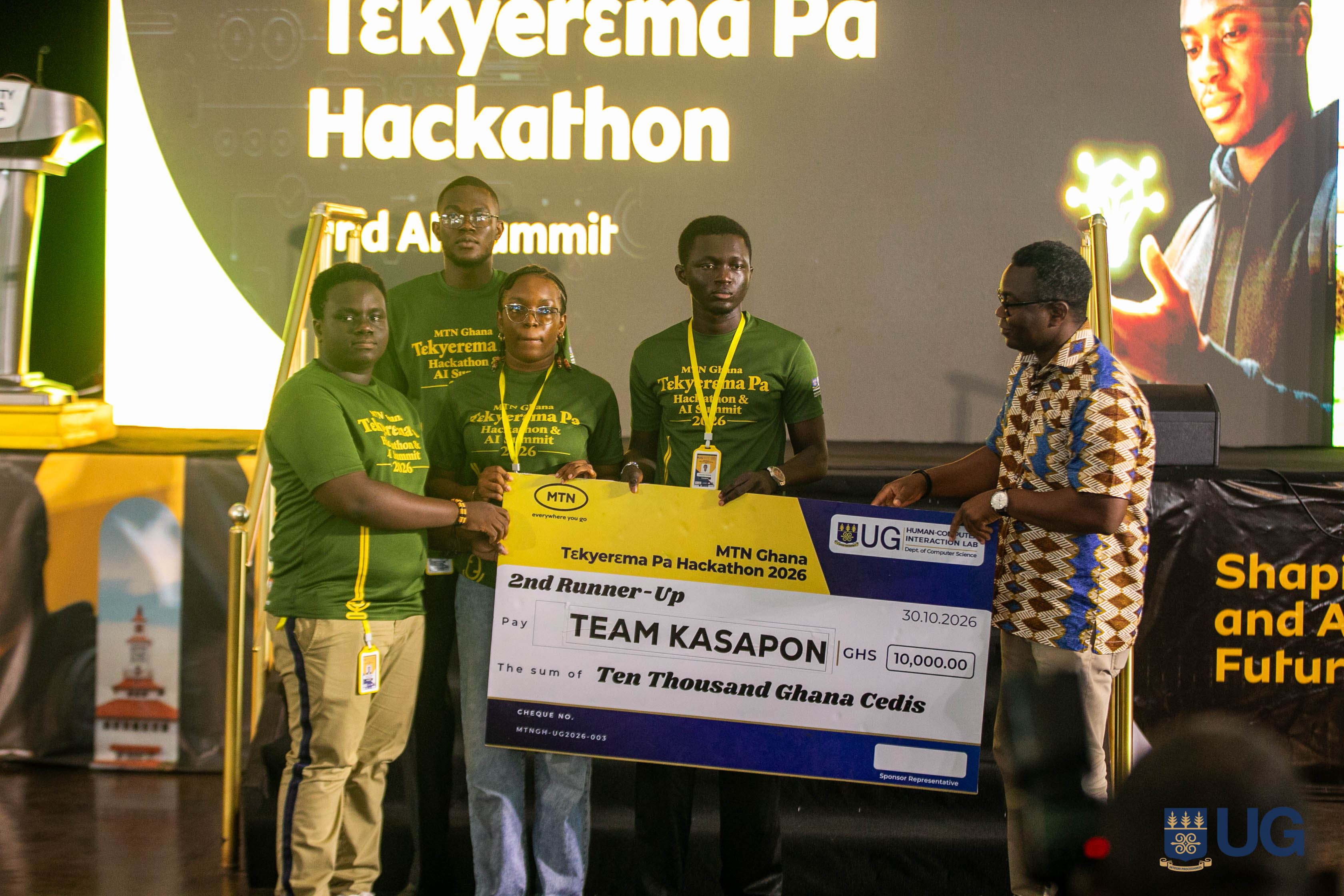
Team KasaPon took third place with GH¢10,000. Its members were Chisom Vivian Oduah, Chamba Nanang and Apeweh Rexford Awaregya of the Department of Computer Science, UG. They worked with Raphael Delasi Menyawovor of the Department of Computer Science, KNUST.
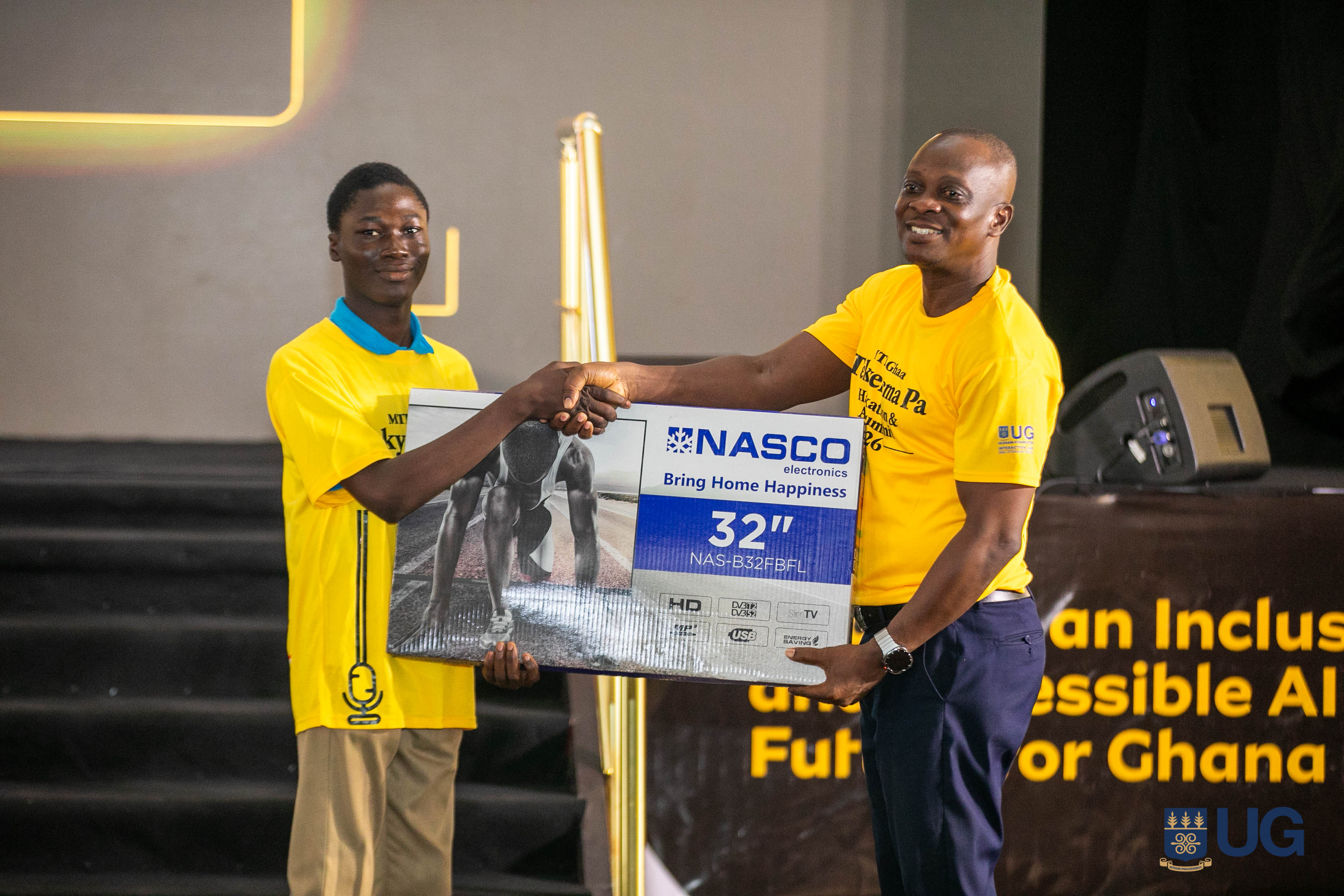
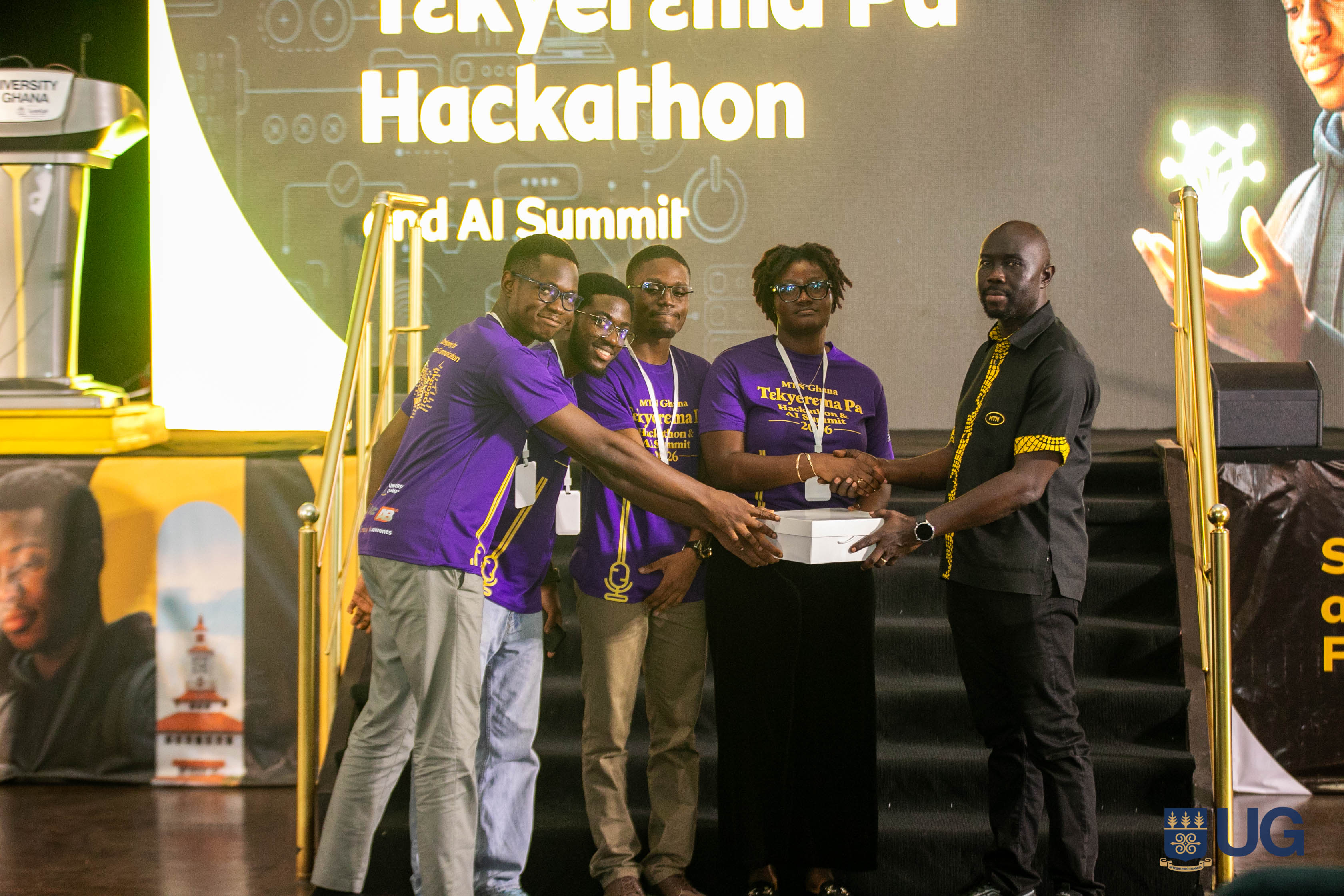
Special awards were also presented to four teams. Team SMARTi won Best Digital Experience Innovation. Its members were Michael Arthur, Stanley Kodjo Akwetey, Priscilla Akorli and Cassandra Adwoa Pokuaa Adams of the University of Mines and Technology, together with Prince Morcher, an entrepreneur in furniture design.
Team Manex won Best Financial Inclusion Solution. The team comprised Dorinda Sumahum Ania, Kelvin Kwofie Mawusenam Ackuaku and Mawuena Komla Ackotia of Academic City University and Kono Agyemang of the Department of Computer Science, UG.
Team Nexus, an interdisciplinary team of UG students, won Best Female-Led Team. Its members were Prince Nasamu Alhassan (Mathematics and Computer Science), Richmond Apenensu Alale Awinbilla (Political Science), Stacy Loglo Elikem and George Owusu Ansah (Computer Science) and Safiya Abdul Rhaman (Psychology).
Team Gefyra won Best Agentic AI Solution. The team was made up of Maame Afua Ayisibea Ayisi, Samuel Kojo Anafi Antwi, King David Asare Baffour and Matthew Kotey Mensah, all Computer Engineering students of UG.
In all, UG students were members of five of the seven award-winning teams.
Other entries let users make mobile money transactions and buy airtime or data by voice command in local languages, some of which work offline. MTN Ghana will support promising teams with incubation, mentorship and industry exposure to help them develop their innovations into businesses.
The hackathon reflects a deliberate effort by the University to cultivate partnerships with industry that nurture talent and entrepreneurship among students across disciplines. Through its partnership with MTN Ghana, students from Computer Science and Engineering to the Social Sciences gain access to training, mentorship, internships and incubation support that help them turn classroom ideas into ventures with real impact. The success of interdisciplinary teams, with members from Computer Science, Mathematics, Political Science and Psychology, shows the value of this approach.
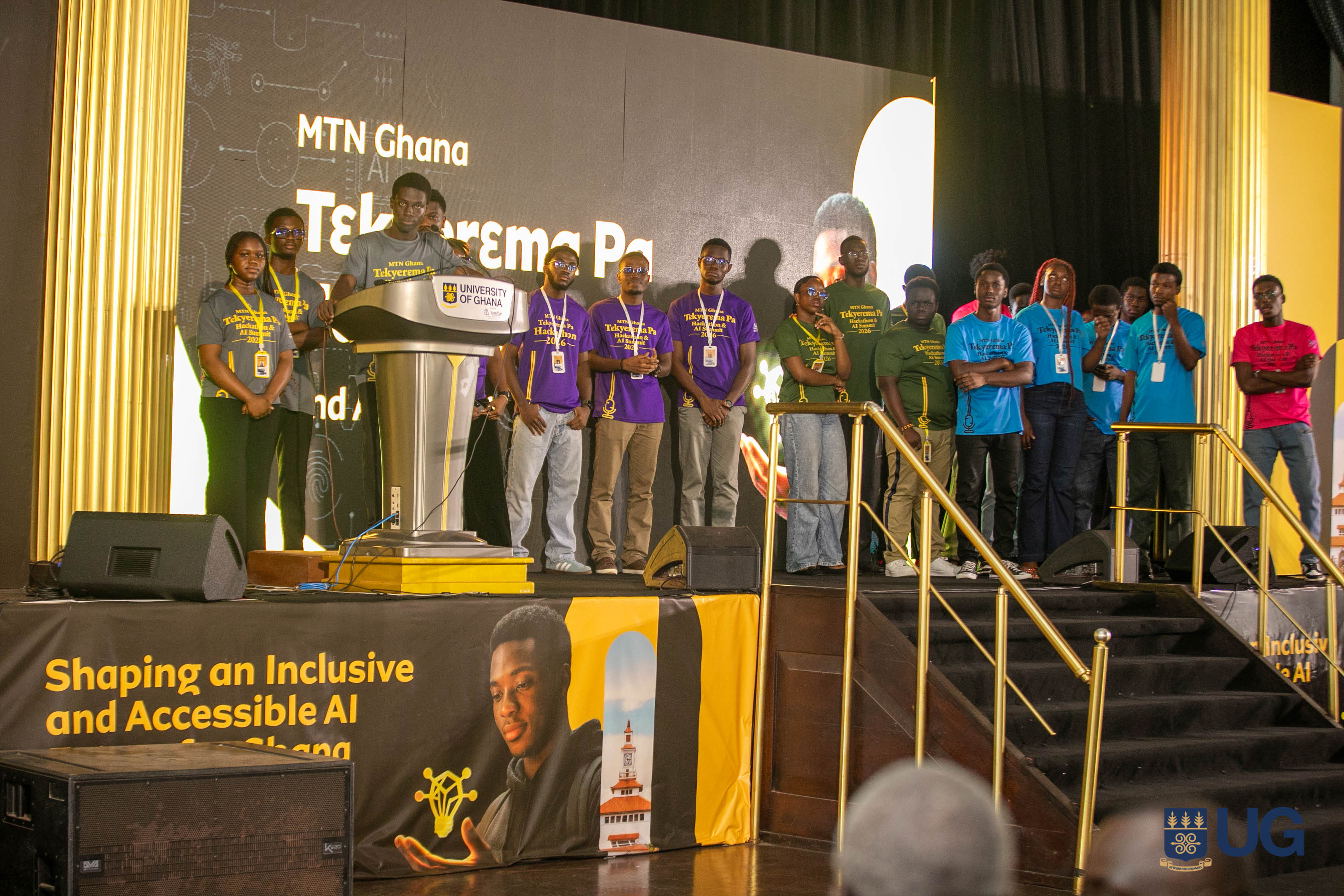
The MTN Ghana Tɛkyerɛma Pa Hackathon and AI Summit 2026 reaffirmed the shared vision of MTN Ghana and the University of Ghana to position Ghana as a leader in inclusive and accessible AI innovation on the continent.