UG School of Performing Arts Dazzles at Juneteenth Commemoration in Dr. Abdul Karim Hakib-Directed Slave Trade Re-enactment
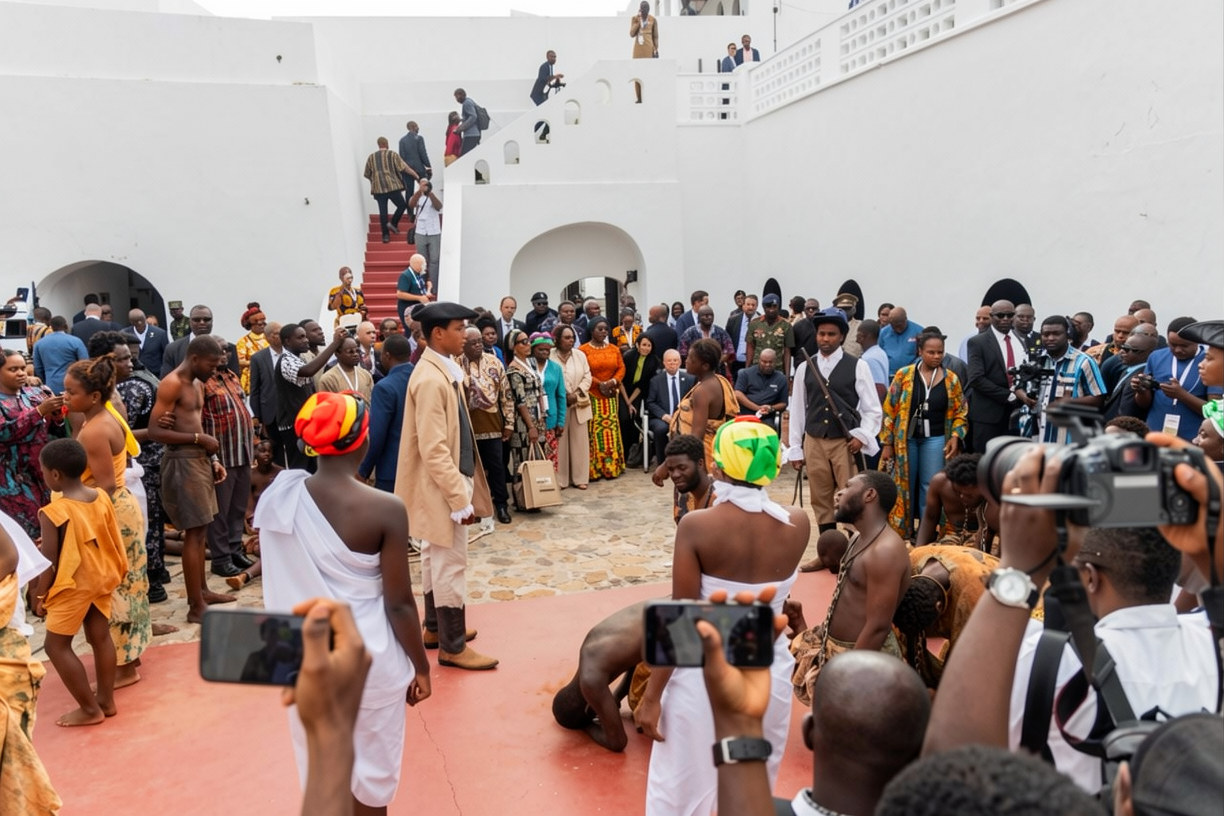
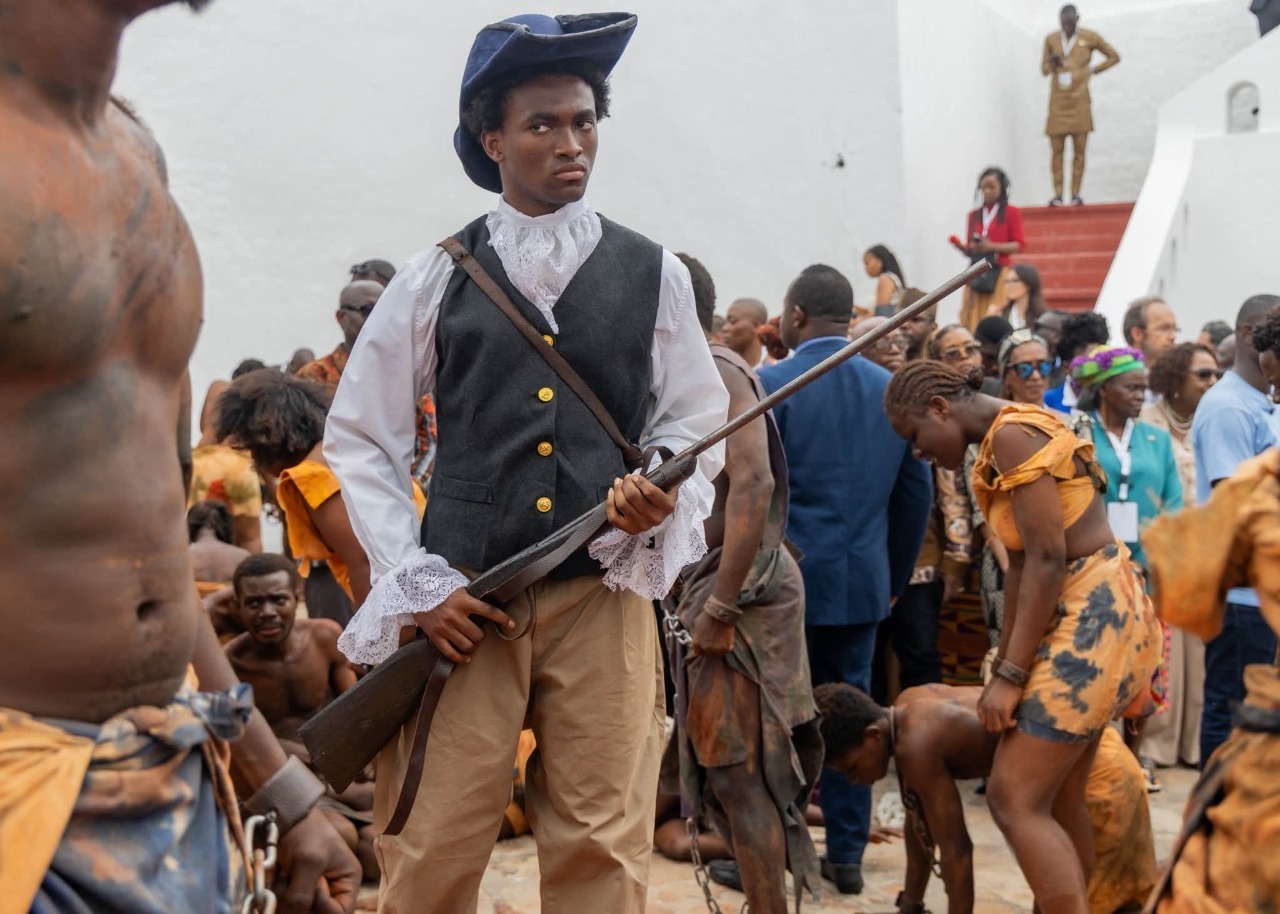
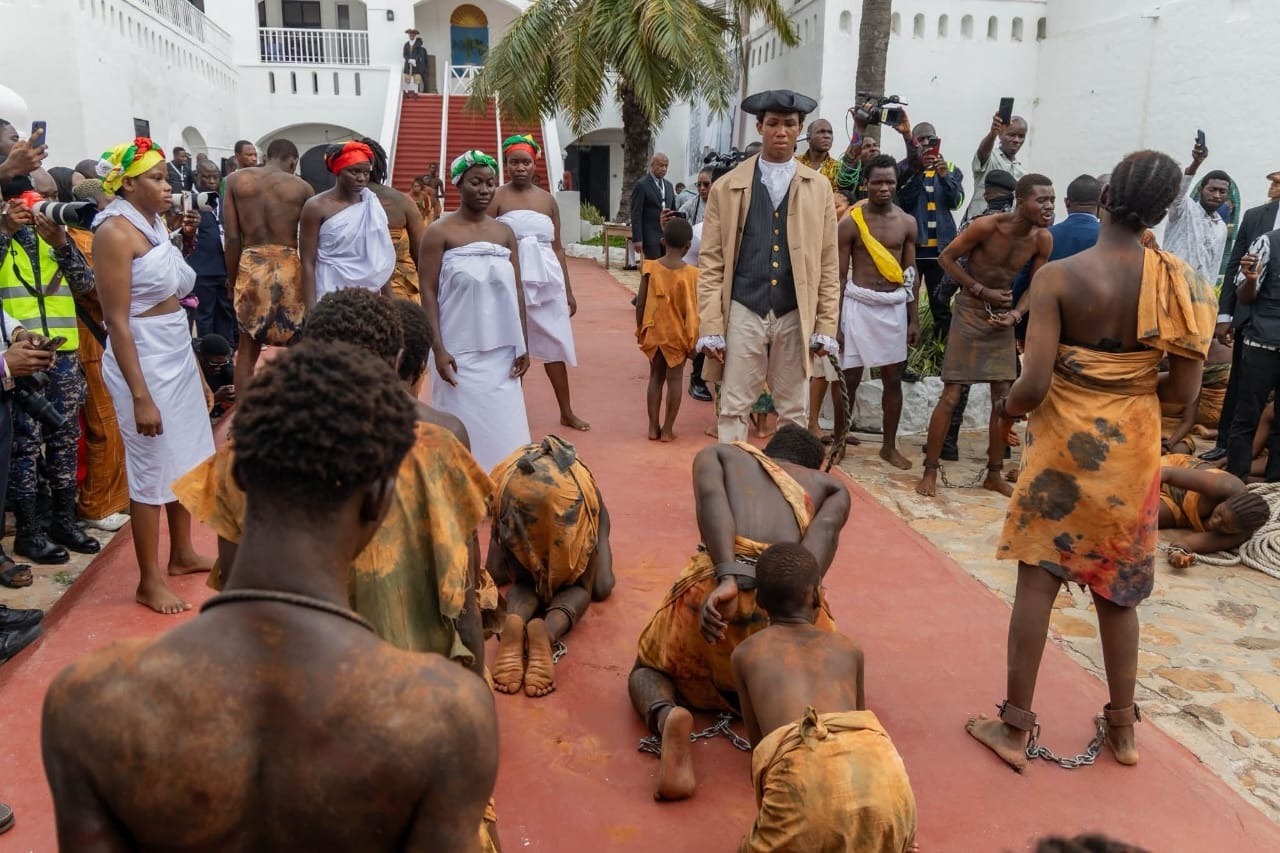
The University of Ghana’s School of Performing Arts has earned widespread acclaim following a powerful dramatic re-enactment of the transatlantic slave trade staged as part of Ghana’s recent Juneteenth celebrations at Christiansborg Castle in Accra.
Curated and directed by Dr. Abdul Karim Hakib of the Department of Theatre Arts, the production formed a major highlight of the “Next Steps 2026” High-Level Consultative Conference, a global gathering aimed at advancing the United Nations resolution recognising slavery as the gravest crime against humanity.
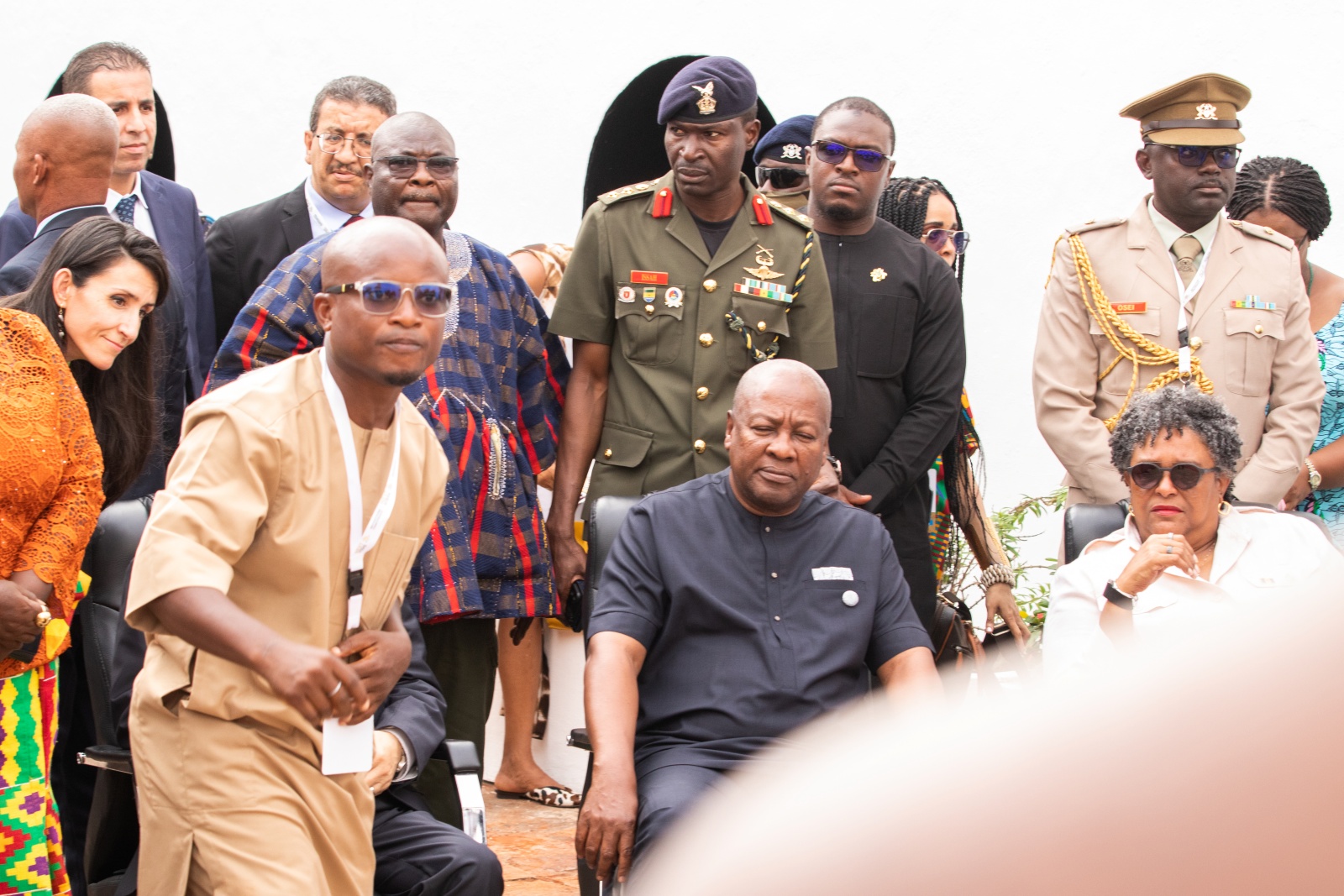
Set against the historic backdrop of Christiansborg Castle, (Osu Castle, a significant site in the history of the transatlantic slave trade, the performance offered a moving portrayal of one of humanity’s darkest chapters. Through a blend of dramatic storytelling, visual symbolism and artistic expression, the production invited audiences to reflect on the enduring impact of slavery and the importance of preserving historical memory.
The event was commissioned by the Government of Ghana in collaboration with the Ministry of Foreign Affairs under the leadership of Hon. Samuel Okudzeto Ablakwa as part of activities commemorating Juneteenth and strengthening global conversations on reparatory justice and historical accountability.
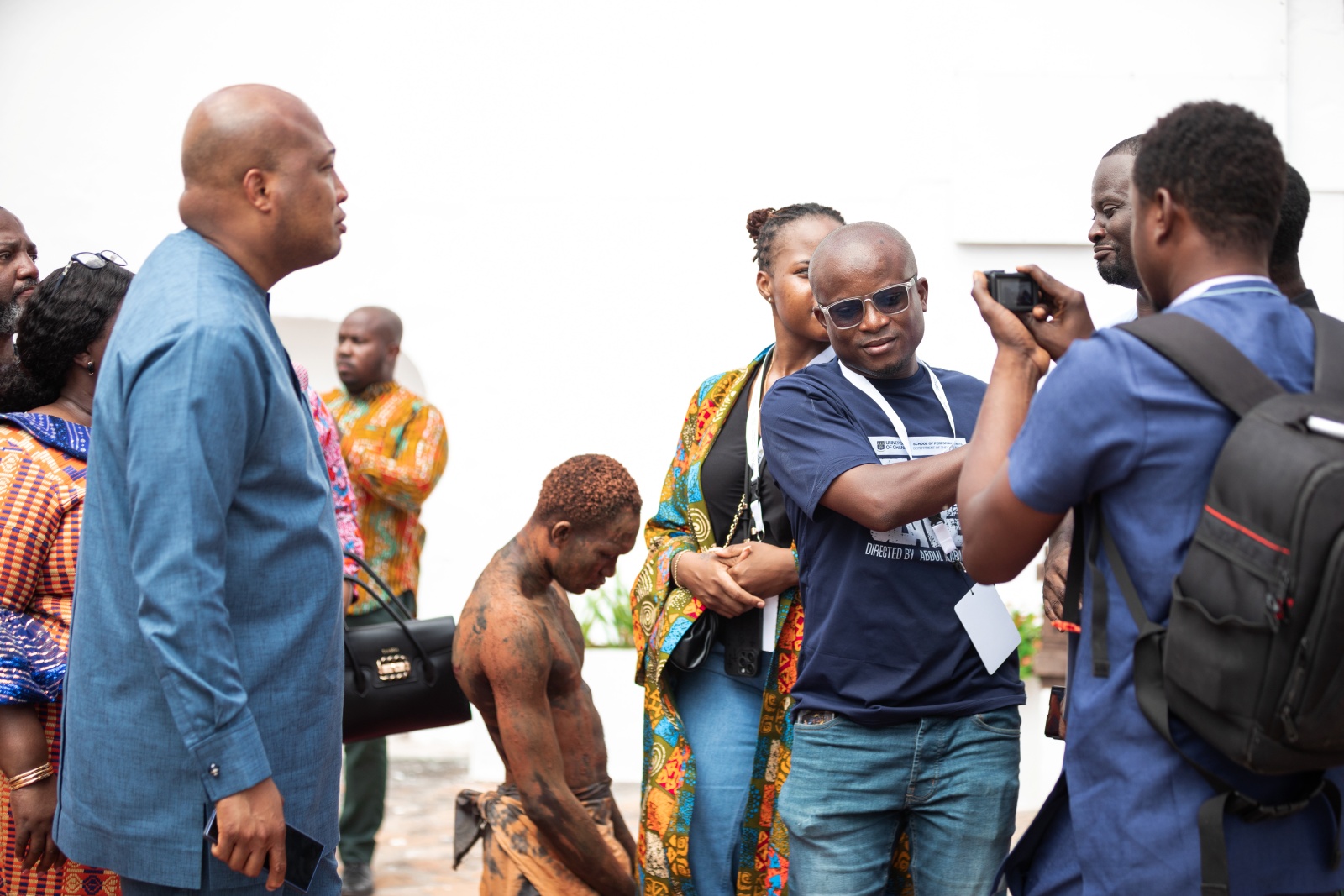
Dr. Hakib’s artistic direction brought together performers, designers and technical experts in a production that transformed the historic site into a living stage, recreating the experiences of those affected by the transatlantic slave trade. The performance highlighted the capacity of theatre and the performing arts to engage audiences on complex historical and social issues while fostering dialogue and reflection.
Speaking on the production, Dr. Hakib explained that the re-enactment was deliberately designed to evoke reflection, remembrance and dialogue while bringing to life the experiences of millions of Africans who endured the horrors of the transatlantic slave trade. He noted that beyond commemorating history, the performance sought to connect contemporary audiences with the human stories behind one of the most tragic periods in world history.
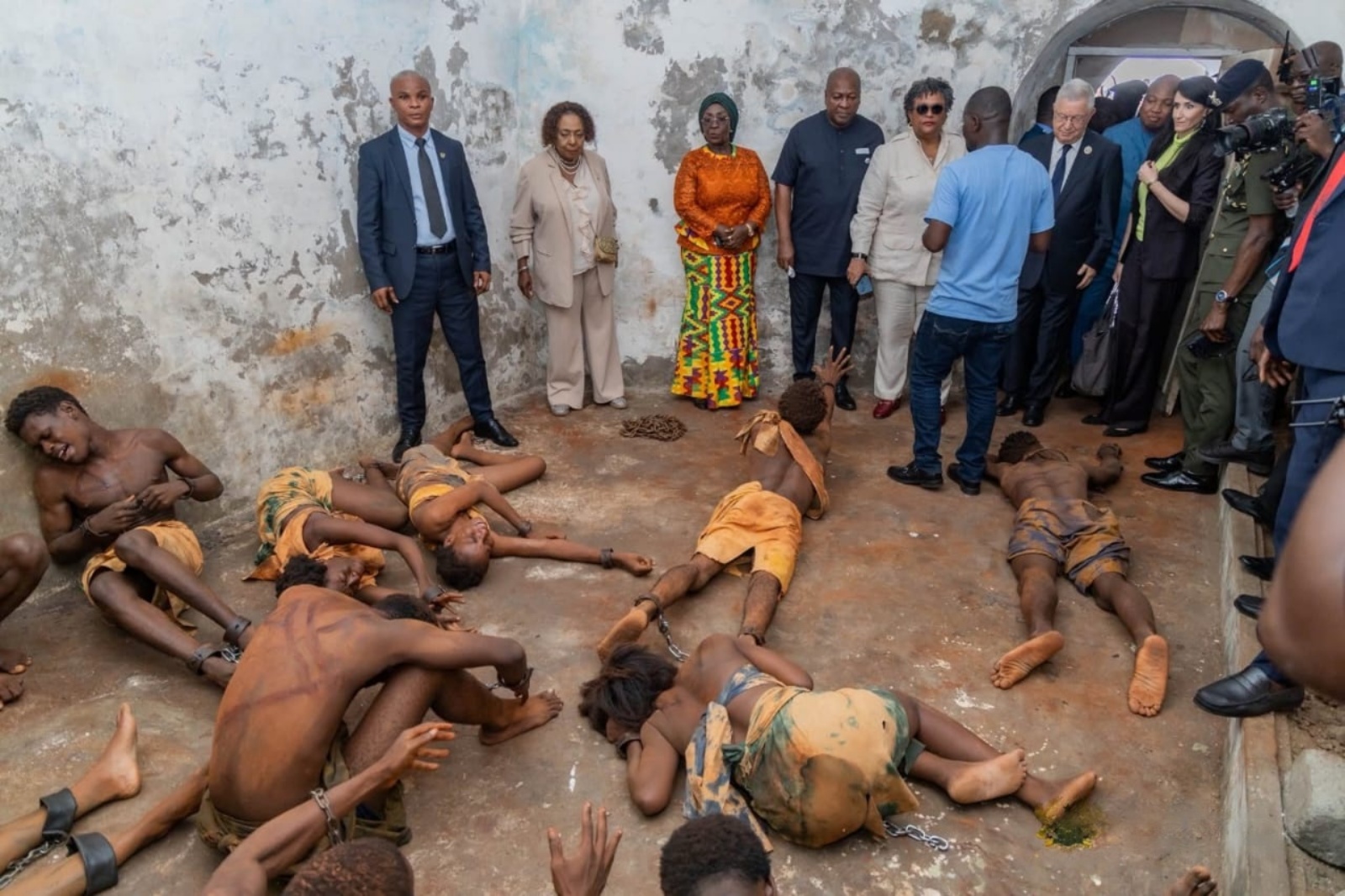
He further observed that African performance traditions possess immense potential for preserving and retelling historical narratives. According to him, the use of indigenous theatre forms, music, dance and storytelling offers powerful avenues for documenting African experiences and transmitting them to future generations in ways that are both engaging and culturally authentic.
Dr. Hakib expressed profound gratitude to the more than 100 cast and crew members, production personnel and organisers whose commitment and professionalism contributed to the success of the performance. He also thanked the Ministry of Foreign Affairs and the organising team for entrusting him and his collaborators with such an important national and international assignment, describing the opportunity as both an honour and a responsibility.
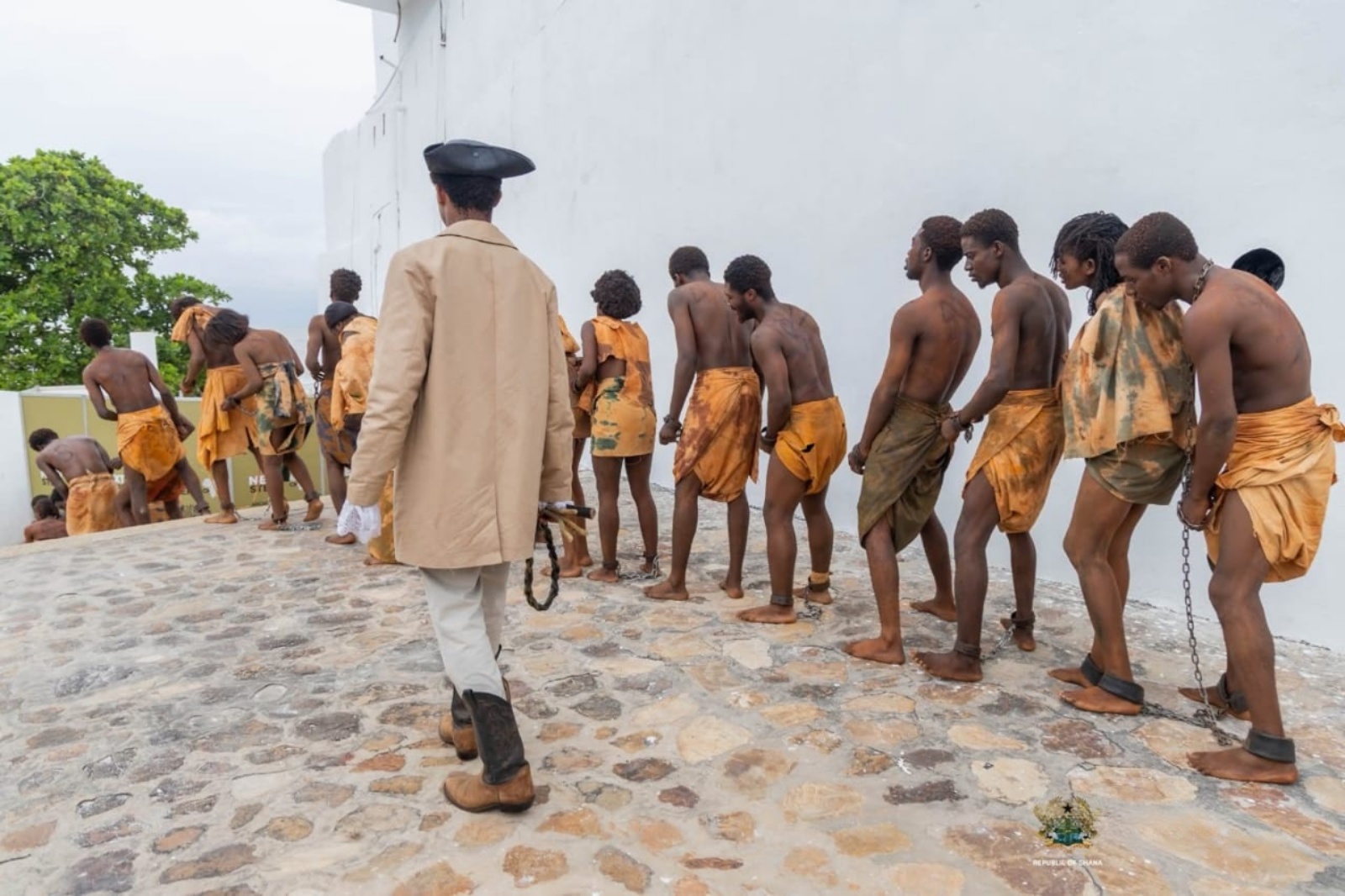
The production was supported by a dedicated team comprising Ms. Hellen Akosua Mawunyo Diaba, Production Manager and Mr. Senanu Kwame Amenyo, Safety Manager, both of the Global Arts and Development Centre (GADEC). The creative design team included Mr. Michael Malekpor of Abibigromma, the resident theatre company of the University of Ghana, freelance designer Ms. Wendy Sika Mamiya and Mr. Prince Kofi Safo of the Department of Theatre Arts. Technical direction was provided by Mr. Maxwell Odoi-Yeboah, while documentation was led by Mr. Razak Mohammed of GADEC.
The production represented a collaborative effort between the Global Arts and Development Centre and the Department of Theatre Arts of the School of Performing Arts, demonstrating the University’s commitment to using the arts as a vehicle for education, advocacy and social transformation.
The production drew praise from President John Dramani Mahama, who described the re-enactment as a vivid portrayal of the suffering endured by enslaved Africans from their capture and transportation to their confinement in the slave castles. He commended the School of Performing Arts for bringing history to life in a manner that deeply resonated with audiences and revealed the harsh realities of the transatlantic slave trade. The President further indicated that the performance deserved a global audience and disclosed plans to support its presentation beyond Ghana, including in Barbados.
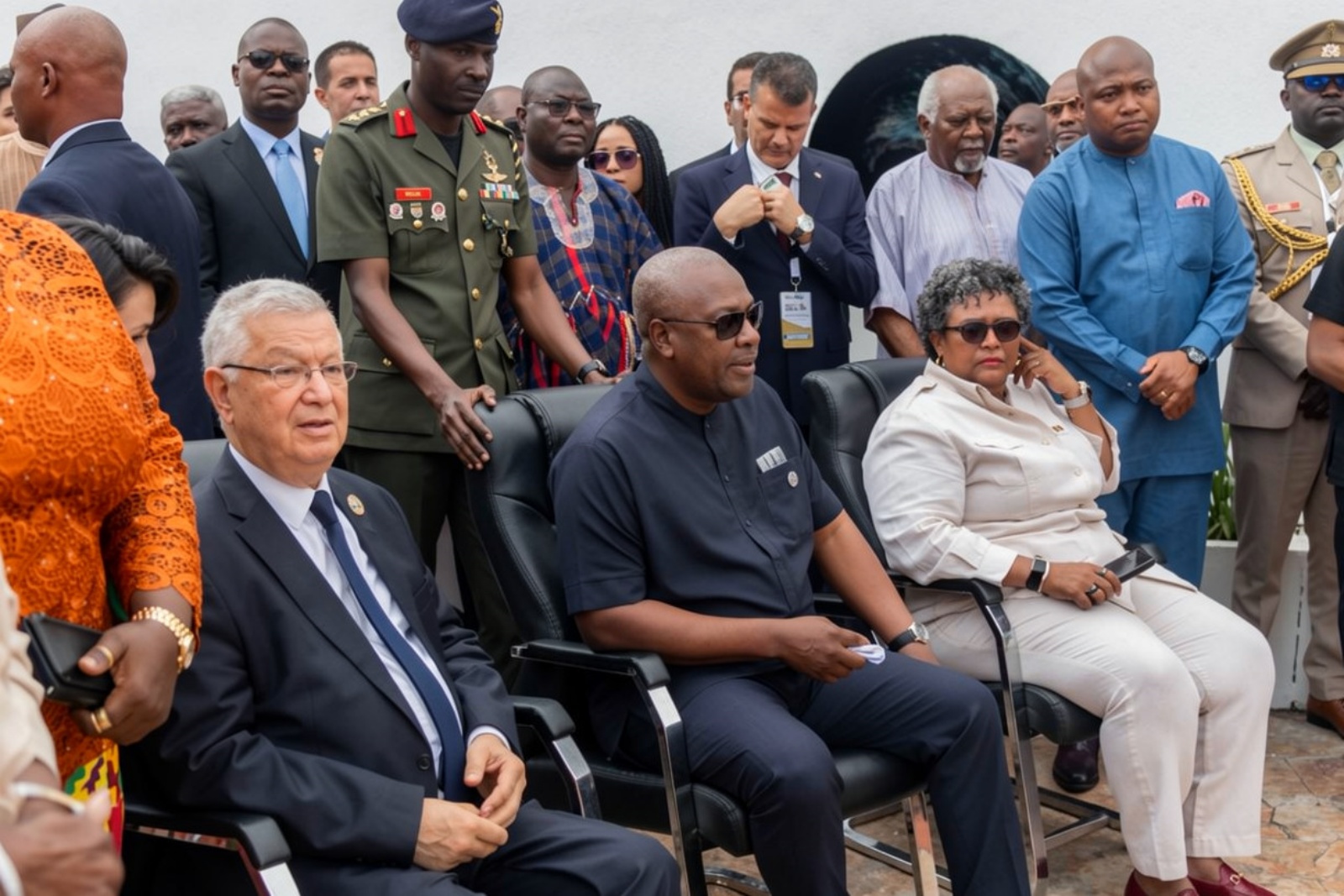
Prime Minister of Barbados, H.E. Mia Amor Mottley, was equally moved by the production, describing it as one of the most powerful artistic interpretations of the slave experience she had witnessed. Reflecting on the performance, she noted that while the history of slavery can be read and discussed, the School of Performing Arts' re-enactment of the arrival, detention and passage through the Door of No Return offered a deeply emotional and unforgettable experience. She observed that the performance captured the reality of the oppression endured by enslaved Africans in a way that words alone could not convey and described it as a memory that would remain with her long after the event.
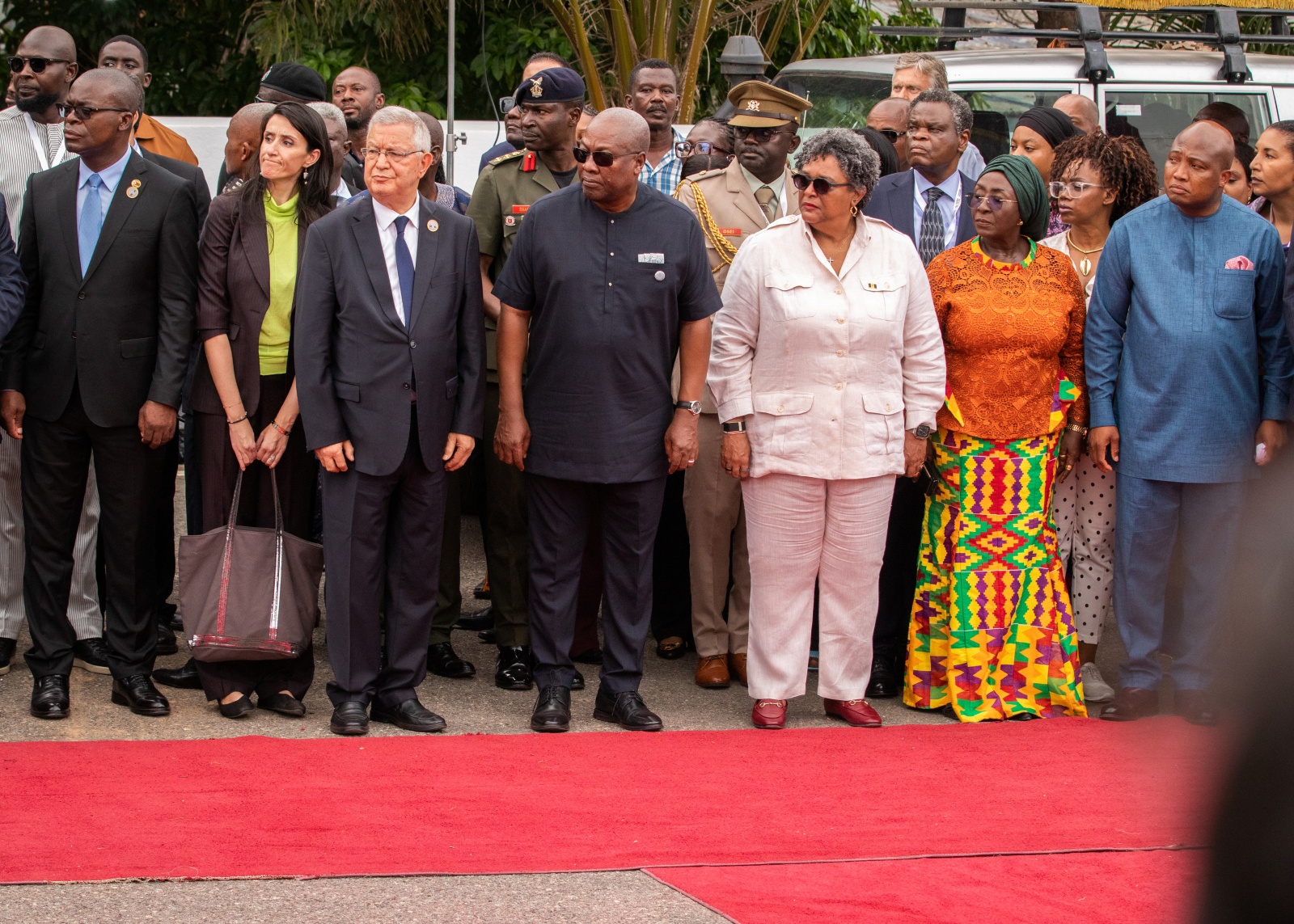
The performance also received significant recognition from Ghana’s Minister for Foreign Affairs, Hon. Samuel Okudzeto Ablakwa, who commended the School of Performing Arts for what he described as a masterful re-enactment of the transatlantic enslavement experience.
In a post-event message shared on social media, the Minister congratulated the School for its outstanding performance, noting that the production had attracted considerable international attention.
“Their brilliant performance is receiving wide international acclaim with invitations already pouring in from multiple countries including Barbados, Jamaica and the US,” he stated.
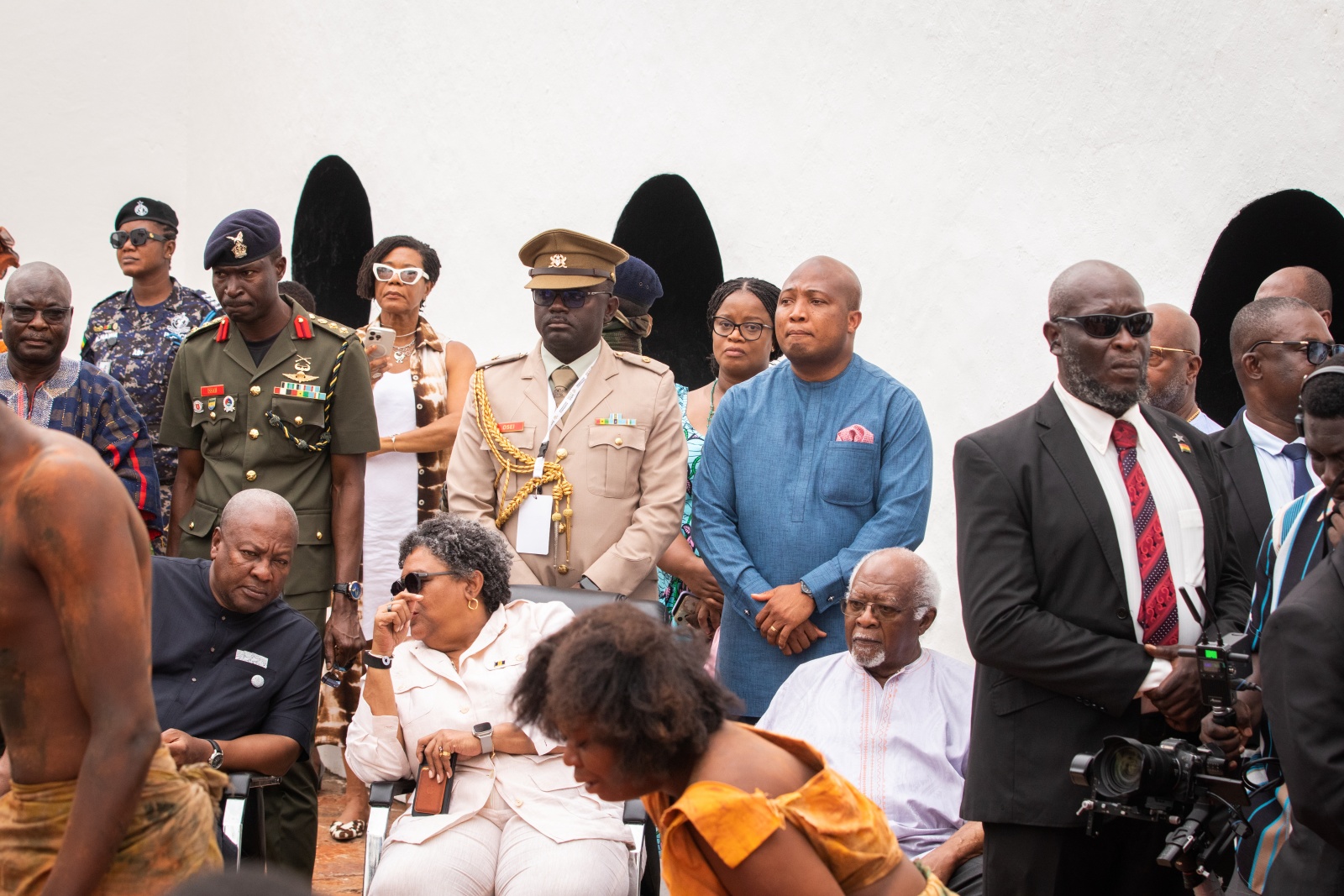
He further expressed pride in Ghana’s creative talents and the ability of the country’s artists to tell compelling stories that resonate with global audiences.
The recognition adds to the growing reputation of the School of Performing Arts and its faculty for producing impactful artistic works that engage contemporary issues while preserving and interpreting important aspects of history and culture.