IDRC-Supported Research in Liberia Finds Patterns of Displacement, Proposes Policy Measures
A recent dissemination workshop in Liberia has highlighted the complex realities of forced displacement, based on fieldwork conducted by the IDRC Research Chair on Forced Displacement in Anglophone West Africa, led by Prof. Mary Boatemaa Setrana.
Supported by the International Development Research Centre (IDRC), the research builds on earlier studies in Ghana, Nigeria and Sierra Leone and marks Liberia’s inclusion as the fourth focus country in the regional project.
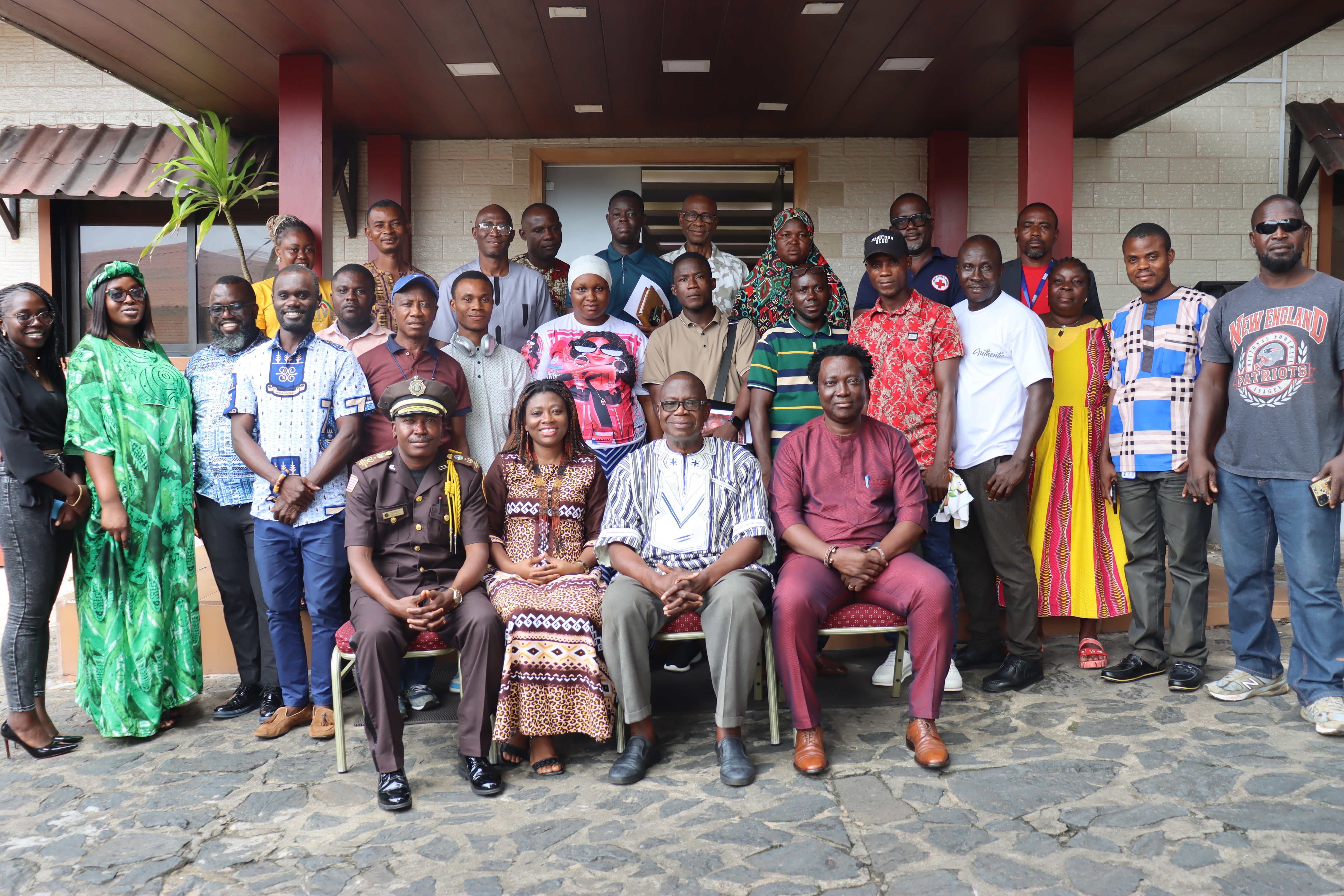
The workshop, hosted with the support of the Liberia Refugee Repatriation and Resettlement Commission (LRRRC), brought together government officials, academic researchers, humanitarian actors and development partners to discuss preliminary findings and reflect on policy implications. It provided a platform for dialogue between institutions, local communities and refugee populations affected by displacement.
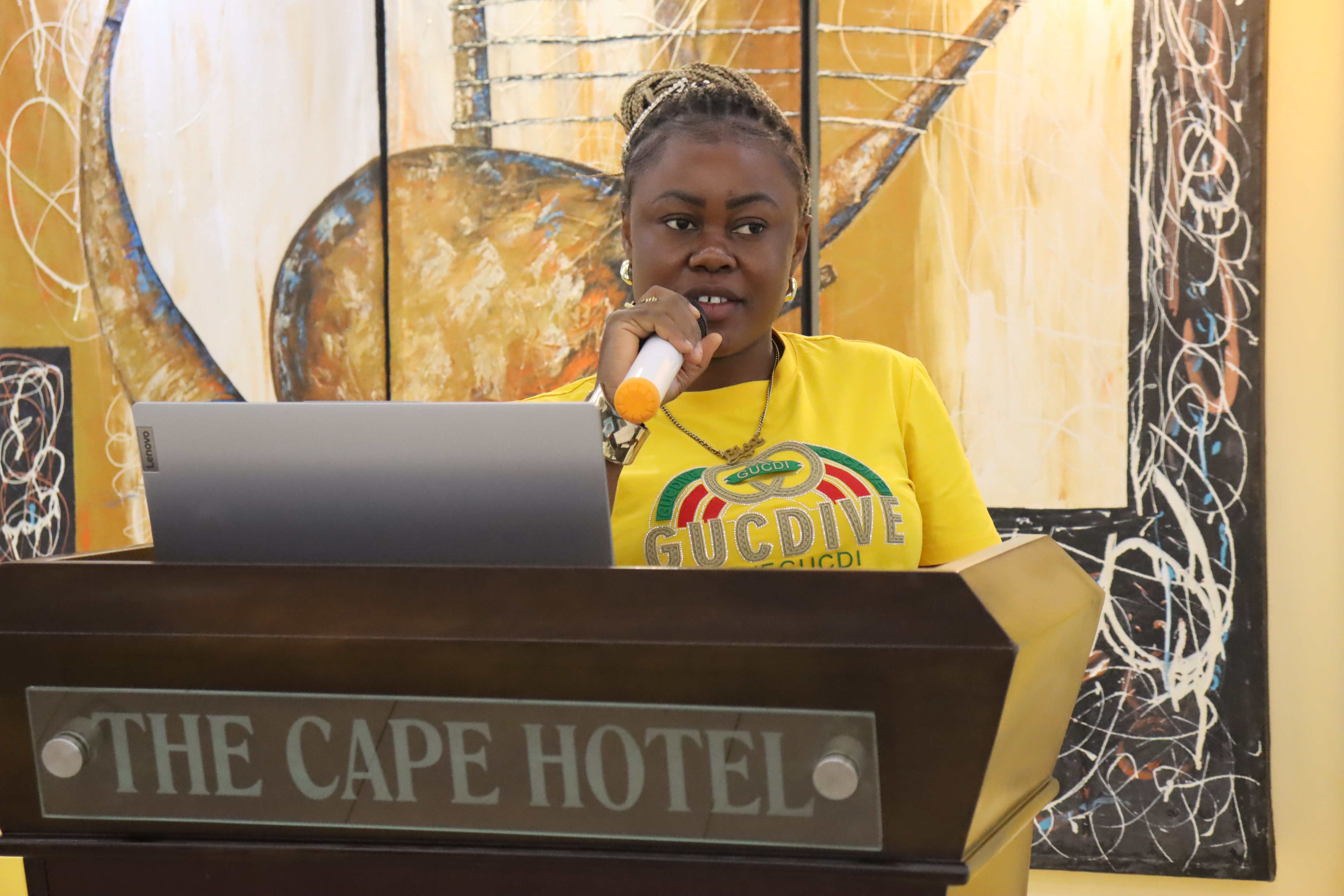
Delivering opening remarks, Hon. Johnson Paye, Director of the LRRRC, welcomed participants and underscored the critical role of accurate data in informing national displacement responses.
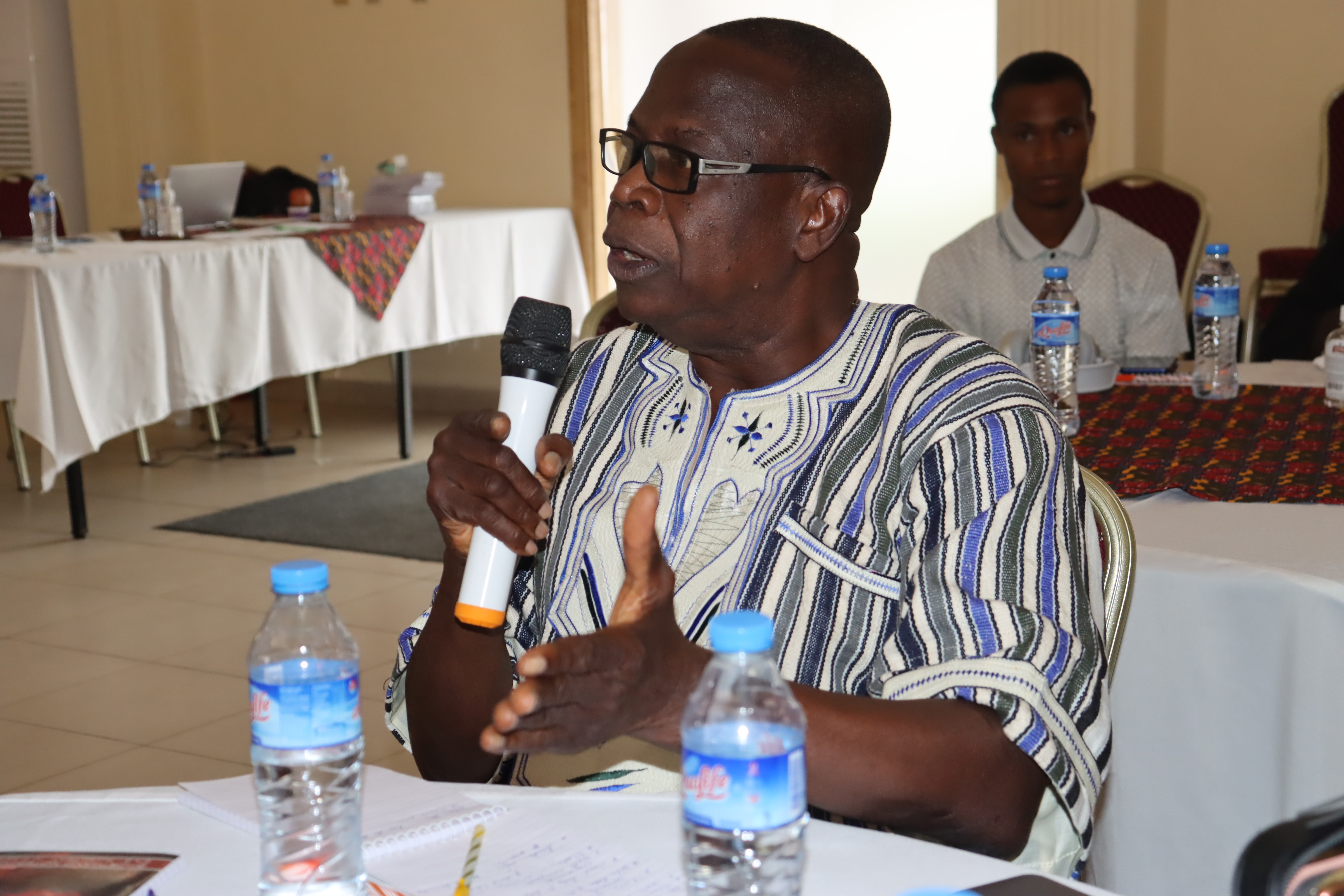
“Understanding the dynamics of forced displacement is essential for shaping policies that protect vulnerable populations and strengthen institutional coordination,” he said.
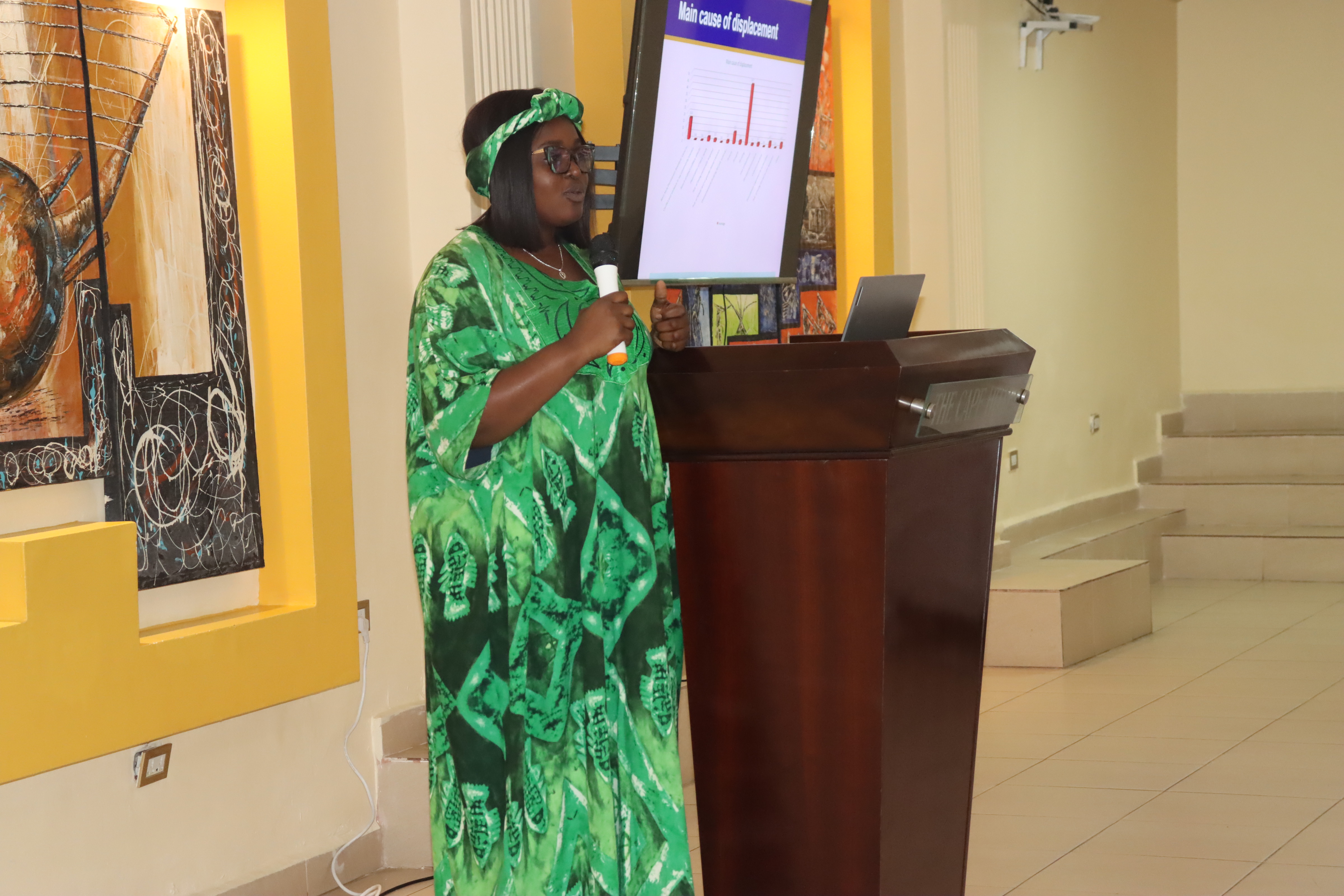
Prof. Setrana provided an overview of the project, detailing that while over 108 million people are forcibly displaced worldwide, there remains a limited understanding of the lived experiences of displaced populations, particularly in climate-sensitive urban environments. “Our work in Liberia is part of a broader effort to generate evidence that is locally grounded and regionally relevant, supporting policies that respond to real vulnerabilities,” she noted.
Prof. Setrana highlighted that the research, made possible with IDRC support, contributes to evidence-based policymaking and regional dialogue on forced displacement. She expressed gratitude to local stakeholders, noting that their cooperation is critical in producing data that informs practical and sustainable interventions.
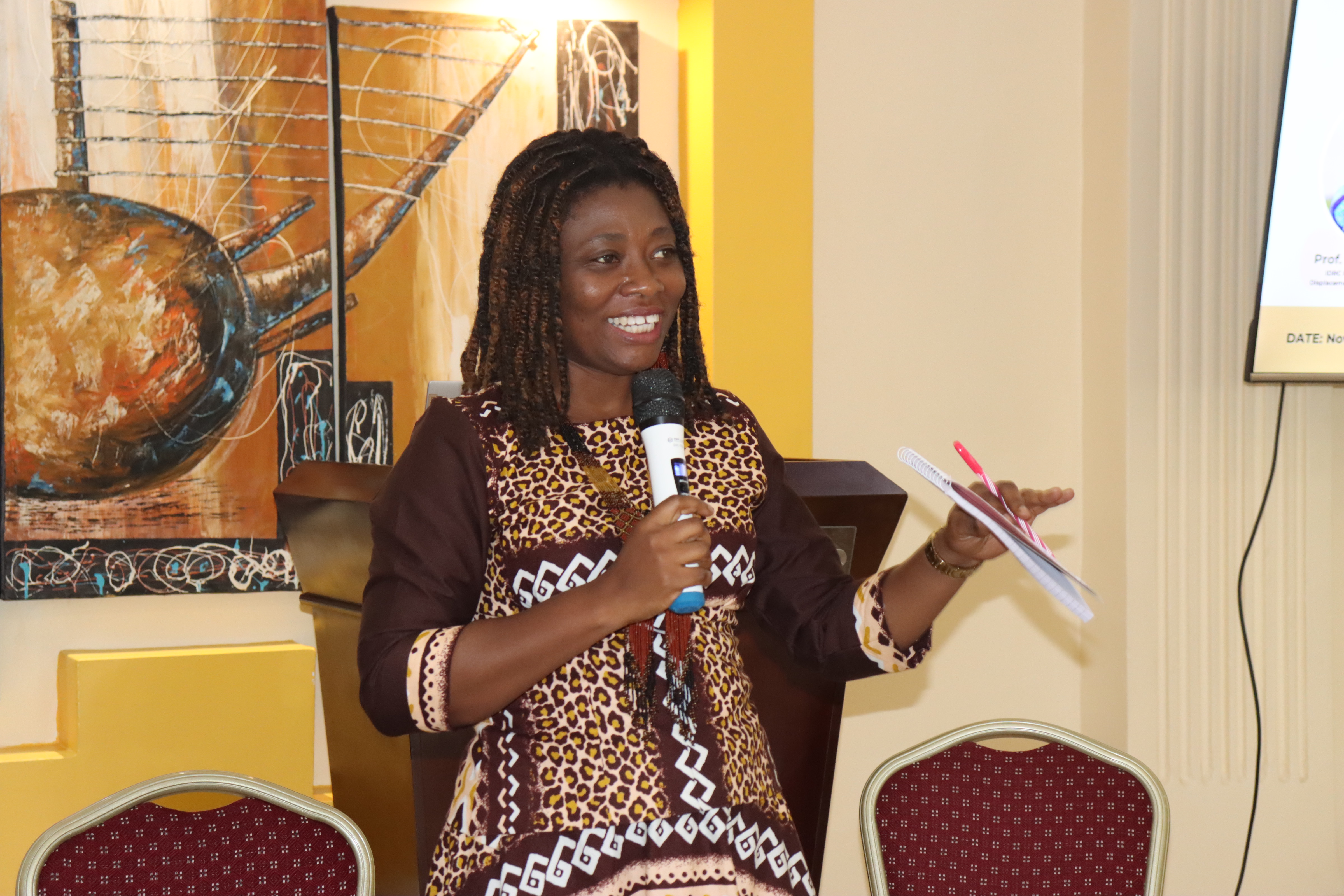
“The commitment of our partners in Liberia ensures that our findings not only reflect the realities on the ground but also guide policy measures that can improve the lives of displaced and vulnerable populations,” she said.
The research findings revealed cyclical displacement in five urban and peri-urban communities in Monrovia, Bernard Farm, Doe Estates, FDA Junction, Mount Barclay and Dour Town. Recurrent flooding, poor drainage, and weak urban infrastructure were identified as primary drivers of displacement, with households often seeking temporary shelter before returning once conditions improved.
Livelihoods in these communities, largely informal, were found to be highly sensitive to weather shocks, while inadequate sanitation, substandard housing, limited healthcare access, and disrupted education compounded vulnerabilities.
In Grand Gedeh County, field engagement with refugees at the former PTP Settlement, now known as Kanneh New Town, revealed evolving settlement dynamics. Refugees faced gaps in documentation, uneven access to resources, and tensions arising from differentiated opportunities for local integration.
The study highlighted the particular challenges experienced by women, children, and persons with disabilities, stressing the need for inclusive policy approaches.
The workshop also featured insights from institutional representatives. Officials from the Liberian Immigration Service discussed ongoing efforts to strengthen migration governance and border management, noting the increasing complexity of population movements shaped by climate and livelihood pressures.
Dr. William Allen of the University of Liberia introduced the newly established Centre for Migration and Diaspora Studies, mentioning the role of academic engagement in understanding displacement and fostering collaborations across the region.
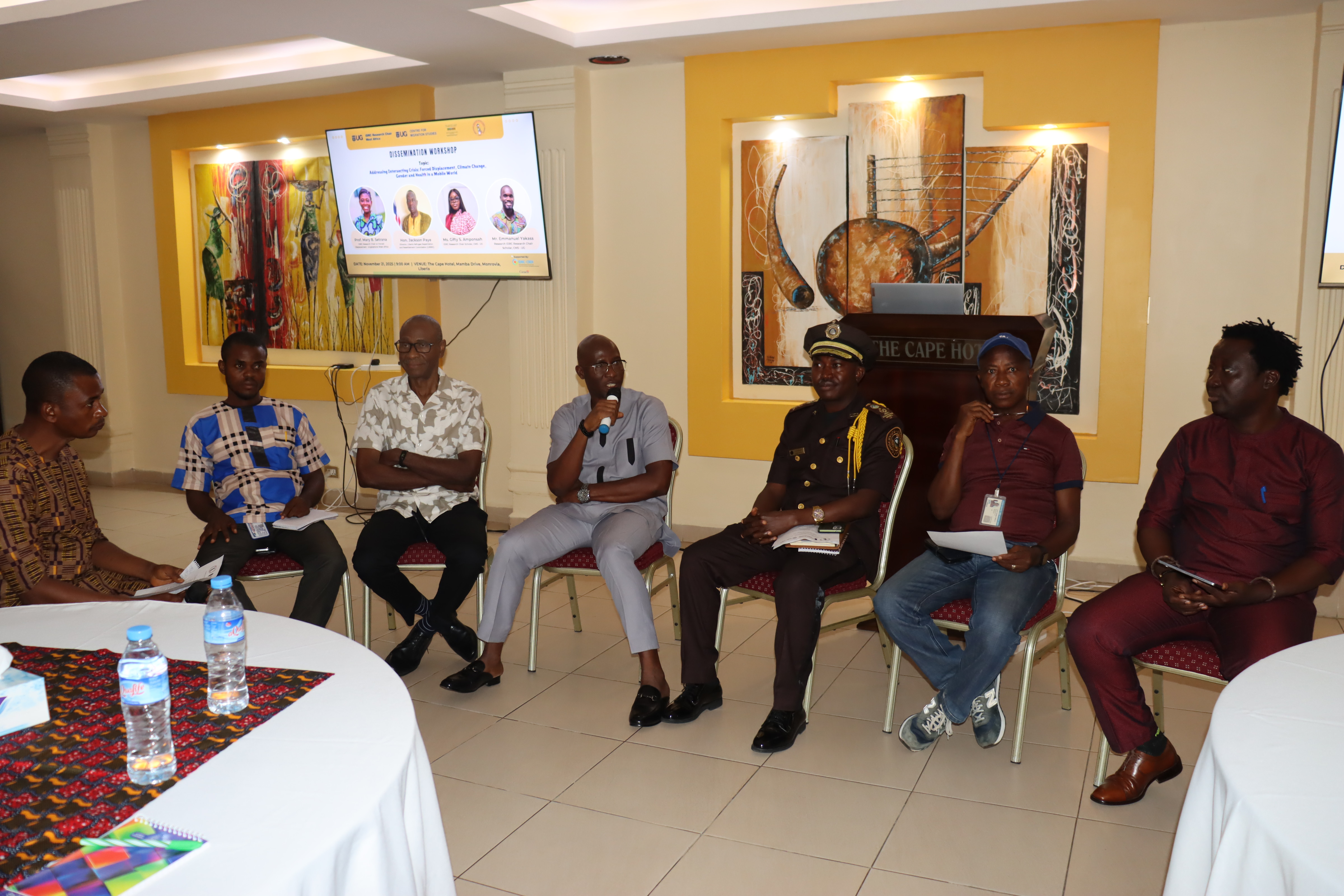
The Liberia dissemination workshop reinforces the IDRC Research Chair’s ongoing efforts to strengthen knowledge, institutional engagement, and leadership on forced displacement in Anglophone West Africa.
The Chair continues to advance regional understanding of displacement dynamics and supports collaborative solutions tailored to local contexts by connecting rigorous research with policy dialogue and practical interventions.