What Sustainable Maize Research Means for Food Security in West Africa - Insights from UNESCO Fellow Dr. Pearl Abu

When Dr. Pearl Abu, Senior Lecturer at the University of Ghana, Team Lead for Maize at the West Africa Centre for Crop Improvement (WACCI) and former Postdoctoral Research Fellow at WACCI, was recently announced as a recipient of the UNESCO-Equatorial Guinea Fellowship for Young Women Scientists, it was more than just an accolade.
It was recognition that her continuous research on maize improvement is gaining traction, making tangible contributions to food security, nutrition and sustainable agriculture in West Africa.
The 2025 UNESCO-Equatorial Guinea Fellowship for Young Women Scientists is part of a new support programme instituted to recognise outstanding female researchers across Africa. In 2025, only two recipients were selected, Dr. Pearl Abu, whose work contributes to the development of nutrient-rich maize varieties tolerant to abiotic stresses and Dr. Tegwinde Rebeca Compaore (Institute for Health Sciences Research, Burkina Faso), whose research advances precision diagnostic strategies adapted to African contexts.
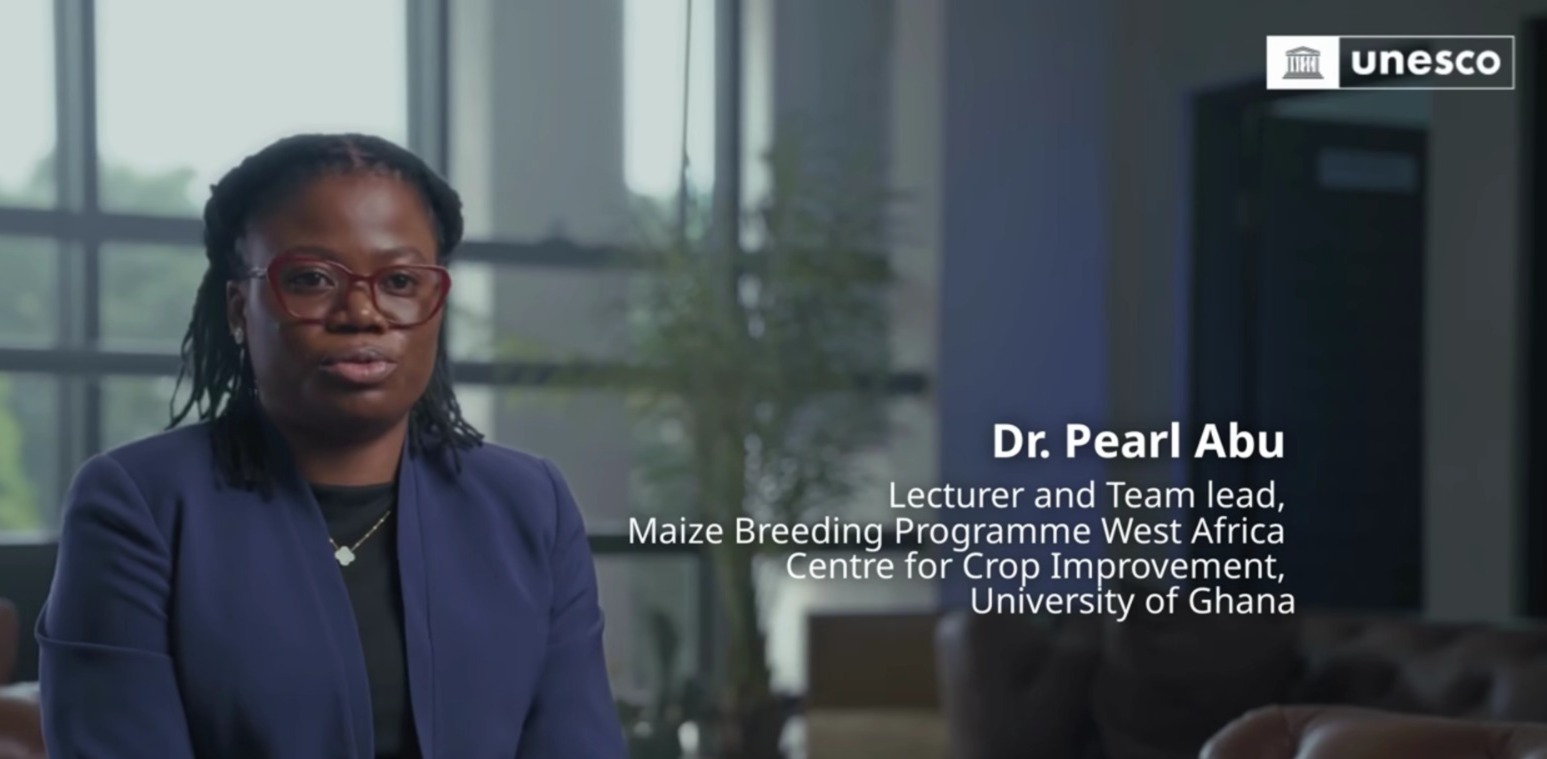
UNESCO noted that these fellowships honour female Scientists “who stand out for their scientific rigor and relevance to the major challenges facing the African continent,” reaffirming its commitment to inclusive and innovative science, as well as the critical role of women in research. This recognition underlines the global significance of Dr. Abu’s work in advancing sustainable agriculture and food security.
Building on this recognition, Dr. Abu is looking to expand her research on sustainable maize improvement while strengthening collaborations and training the next generation of scientists. Maize remains a staple food for millions of households across the sub-region. Nonetheless, rising climate pressures, soil degradation and limited access to improved technologies continue to threaten its productivity. Sustainable maize research, as Dr. Abu notes, provides practical pathways to address these challenges by enhancing yields, improving resilience and ensuring that the crops that feed families today remain available for future generations.
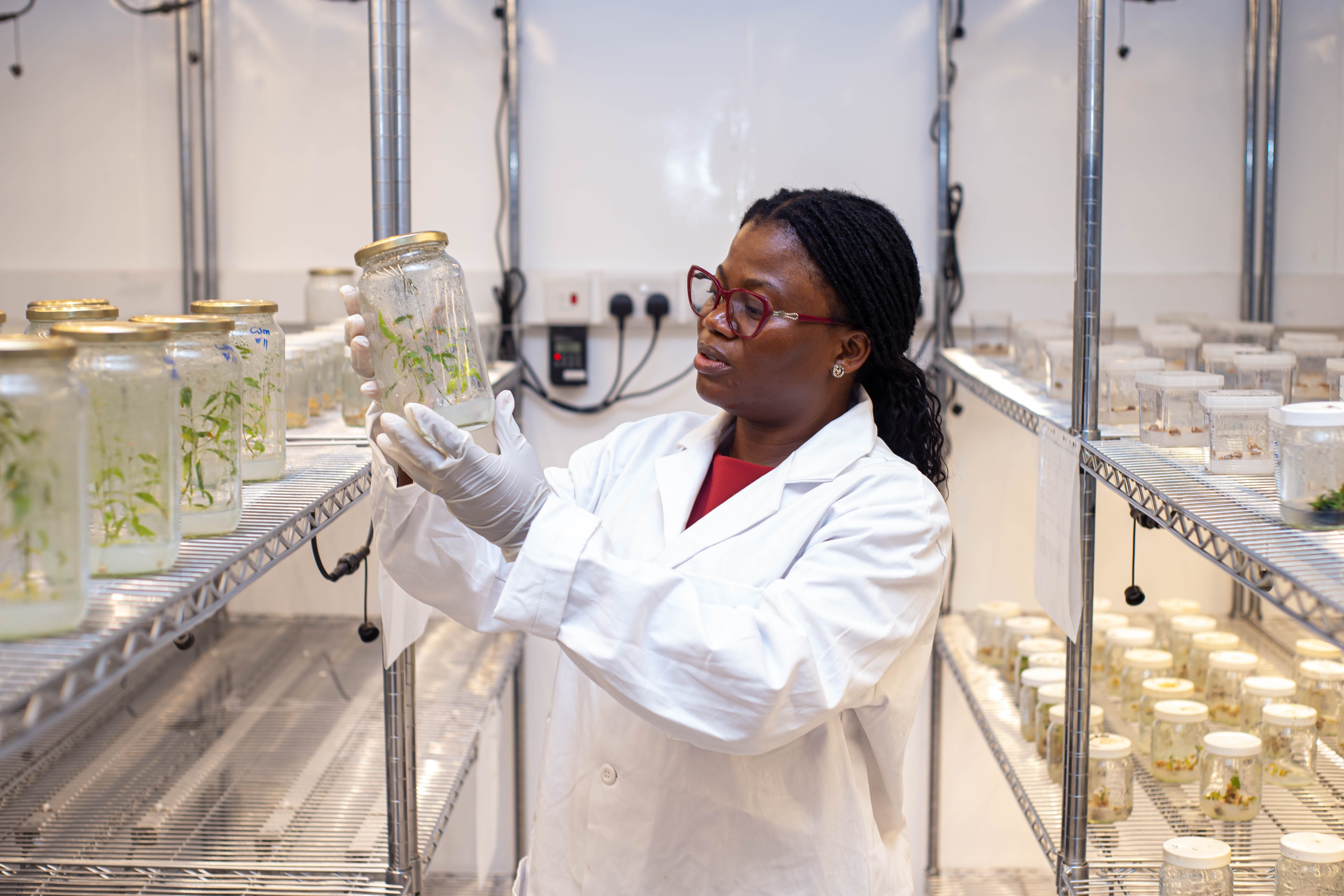
Drawing on her work as a plant breeder and her experience so far as a UNESCO fellow, as well as support from initiatives like DAAD (German Academic Exchange Service), Dr. Abu explains how science-led innovation can reshape maize production systems to support a more food-secure future.
“The inspiration for my research comes from seeing how crucial maize is in our everyday lives,” Dr. Abu told the Public Affairs Directorate during a visit to her at the Tissue Culture Laboratory at WACCI, “Growing up, maize was everywhere, on our plates and in our markets. However, I also observed persistent challenges, including declining soil fertility, heavy reliance on chemical fertilizers and communities still grappling with hidden hunger.”
Her research addresses these challenges directly through plant breeding approaches that are developed with the purpose of producing high-yielding, nutrient-rich and stress-tolerant maize varieties. A central aspect of her work is biofortification, improving the content of vital nutrients such as protein, vitamin A and zinc in maize.
“Our goal is to make maize not just more productive, but also more nutritious and resilient,” she explains. “We support both the livelihoods of farmers and the health of families who depend on maize as a dietary staple, by improving the crop itself.”
One of the most innovative aspects of Dr. Abu’s research is her focus on nature-based solutions. She is exploring how maize can form stronger partnerships with arbuscular mycorrhizal fungi (AMF), which are beneficial soil microorganisms that enhance nutrient absorption.
“This approach allows us to reduce reliance on chemical fertilizers while improving both yield and grain quality,” she stated. “It is a way of working with nature to produce healthier food, while protecting the soil and the environment for future generations.”
Dr. Abu is also spearheading the establishment of Ghana’s first Double Haploid (DH) maize breeding facility at WACCI, a move she describes as transformative for crop improvement in the country. “With DH technology, we can reduce the time needed to develop new maize varieties from six to eight years down to just two to three,” she says. “This acceleration allows us to respond quickly to emerging challenges such as drought, pests, low soil fertility and malnutrition.”
In addition to faster breeding, the facility will boost local scientific capacity. “It’s not just about the maize,” she emphasises. “It’s about training the next generation of scientists, creating new opportunities for innovation and positioning Ghana as a leader in modern plant breeding.”
Having developed her career through the support and mentorship of many, Dr. Abu considers mentoring the next generation of plant breeders a necessary responsibility. She is already mentoring a new cohort of student researchers, guiding them in advanced maize breeding techniques and sustainable agriculture practices.
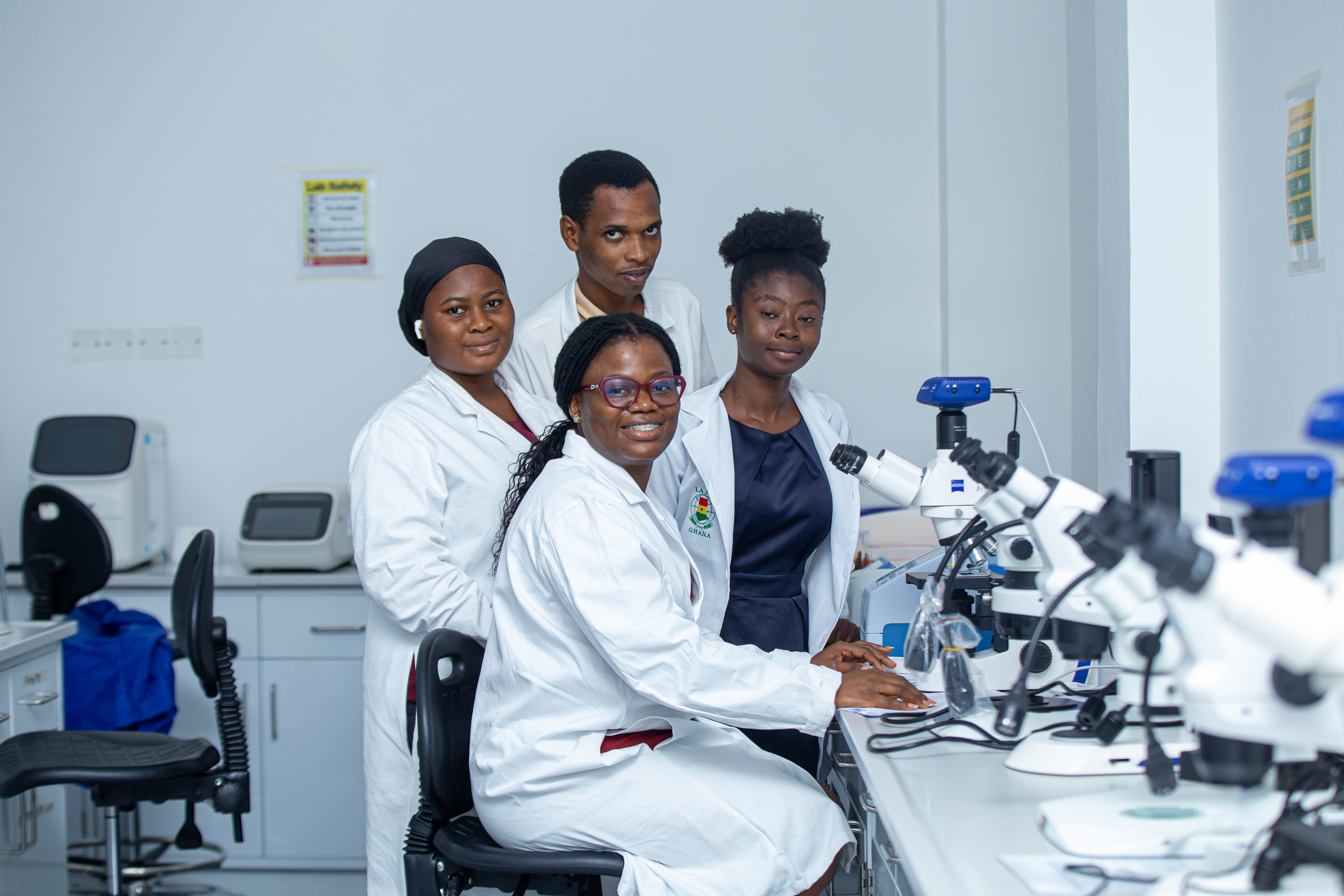
“Mentorship is a critical part of my work,” she says. “These students are the future of African plant science. Seeing them develop their skills, lead projects and contribute to solutions for food security is incredibly rewarding.”
Dr. Abu’s path as a Scientist has been shaped by collaboration and mentorship. She acknowledges support from researchers at the University of Cambridge, Penn State University, Iowa State University, the International Institute of Tropical Agriculture (IITA), the International Maize and Wheat Improvement Centre (CIMMYT) and the entire WACCI team. She also credits mentors such as Prof. Eric Danquah, Prof. Kwame Offei, Dr. Naalamle Amissah, Dr. Beatrice Ifie and Prof. Ruairidh Sawers for their guidance and support, which have enabled her to become a contributor to food security efforts in West Africa.
“Scientific research is never a solo journey,” she reflects. “I have faced challenges like limited resources and the need to balance multiple responsibilities. But strong collaborations and mentorship, supported by programmes like DAAD, have been critical in navigating these hurdles and creating opportunities to advance our work.”
For Dr. Abu, the future of maize research in West Africa is both ambitious and transformative. She is excited to pursue innovative, cutting-edge research that combines modern genetics with nature-based solutions to improve maize production in Ghana. A major focus will be on developing maize varieties that partner strongly with beneficial soil fungi, reducing chemical fertilizer use while boosting yield and nutrition.
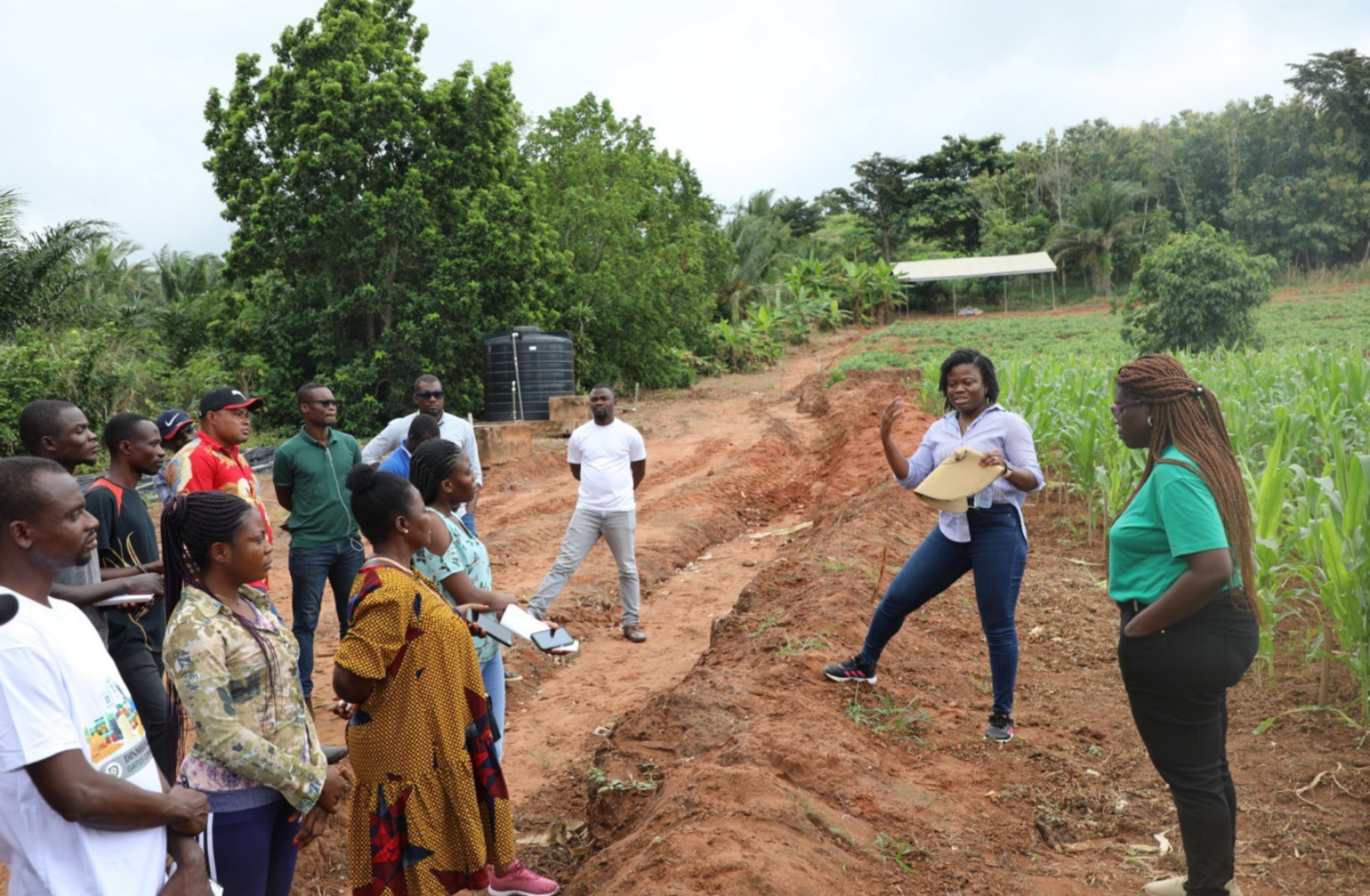
She also looks forward to the realisation of the Double Haploid (DH) facility at WACCI, which will enable the breeding of improved varieties much faster. According to Dr. Abu, “These efforts will accelerate the development of climate-smart, nutrient-rich maize tailored to local conditions, strengthen food security and support healthier and more sustainable communities.”
“The end goal is that our work should contribute to food security, nutrition and sustainable livelihoods,” she says. “It is about ensuring that families across West Africa have access to maize that is both productive and nutritious and that our farming systems can withstand the pressures of climate change.”
Through her pioneering research and mentorship, Dr. Pearl Abu, Senior Lecturer and Team Lead for Maize at WACCI, exemplifies the University of Ghana’s commitment to impactful research that delivers tangible benefits to society, strengthening food security, empowering young scientists and supporting more sustainable farming systems across the region.
Read about the UNESCO–Equatorial Guinea Fellowship for Young Women Scientists.