UG Reviews 2026 Progress, Strengthens Strategic Actions at Second Mid-Year Management Retreat
Management of the University has conducted a comprehensive mid-year review of institutional performance to assess progress under the Strategic Plan, strengthen implementation and realign priorities for the remainder of 2026.
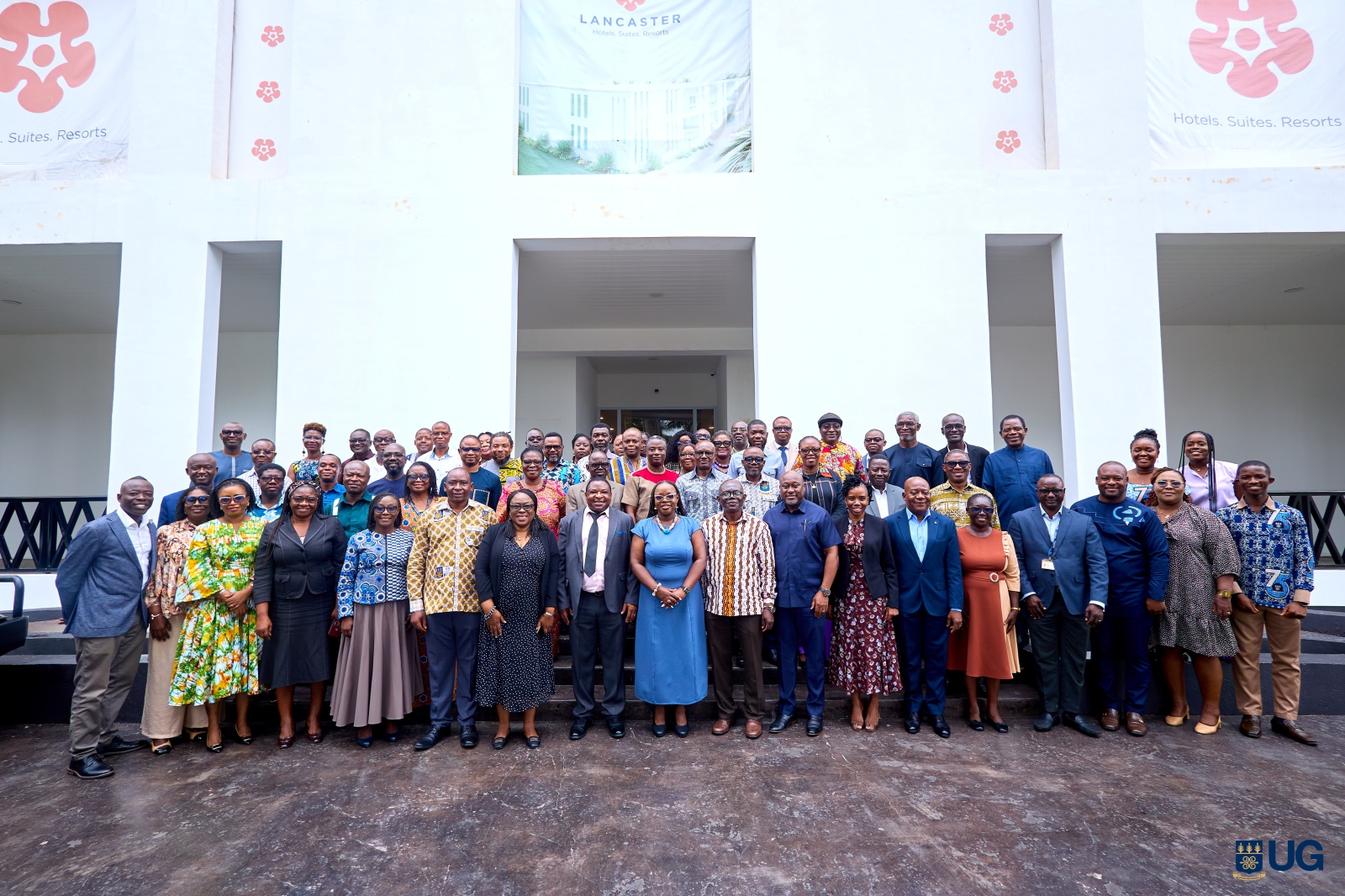
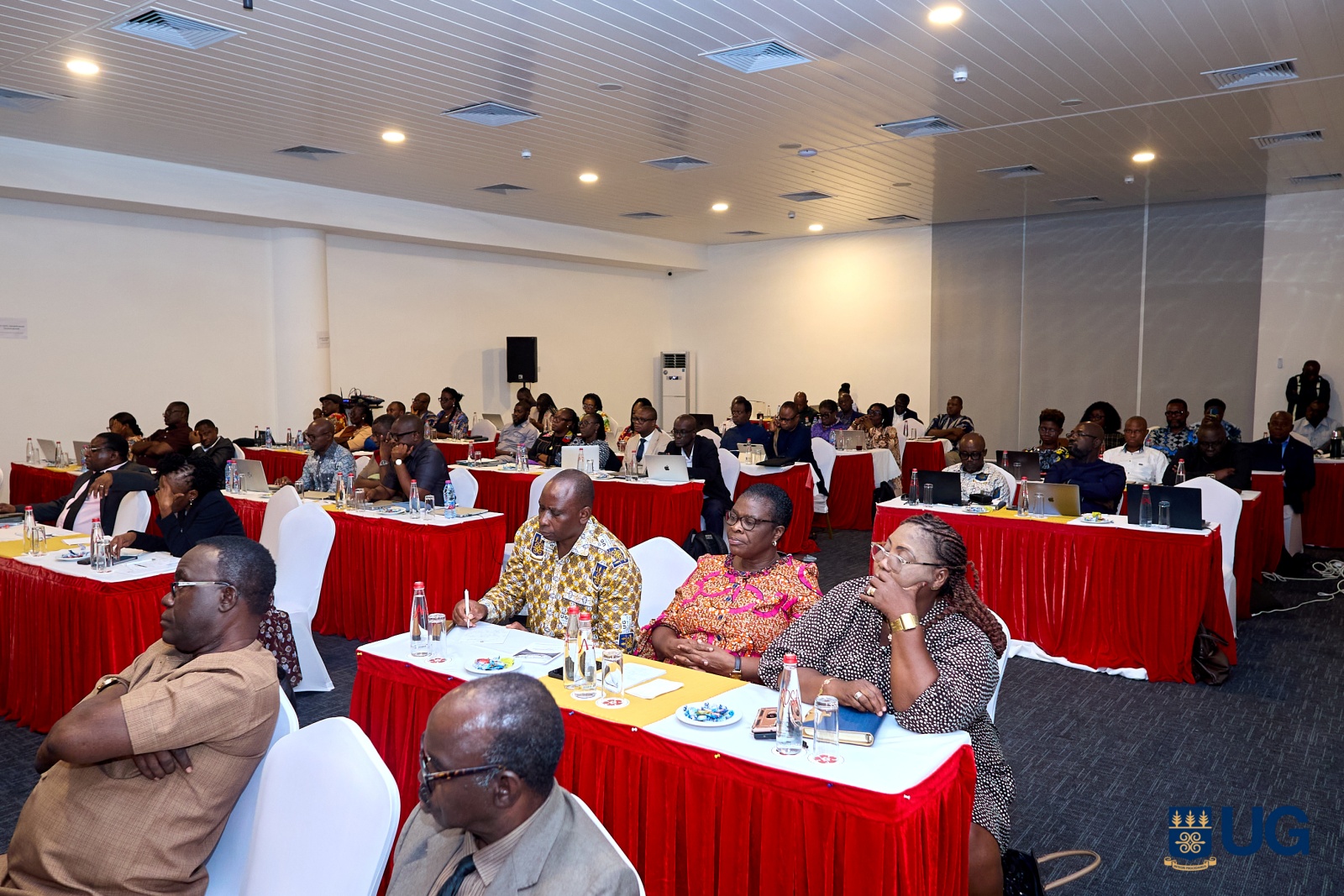
The full-day Second Vice-Chancellor's Mid-Year Management Retreat, held at the Lancaster Accra Hotel, brought together members of Management and senior leaders from across the University to review progress on the 2026 Action Plans, identify operational challenges and discuss practical measures to enhance implementation during the second half of the year.
Building on the success of the inaugural Mid-Year Management Retreat introduced in 2025, the meeting has become an important platform for monitoring progress towards the University's Strategic Plan, fostering collaboration across Colleges, Schools, Departments, Institutes, Centres and administrative units, and ensuring that implementation remains responsive to emerging priorities.
The retreat featured progress update presentations from the Inter-Collegiate Implementation Committee, the Offices of the Pro Vice-Chancellors, the Registrar, the Provosts of the Colleges of Basic and Applied Sciences, Education, Health Sciences and Humanities and the University of Ghana Enterprises Limited (UGEL). Throughout the day, participants reviewed progress made in implementing the University's 2026 Action Plans and deliberated on key institutional priorities, including strategic plan implementation, graduate education, research and innovation, student admissions and graduation, student experience and employability, institutional policies, resource mobilisation, digital transformation, risk management, enterprise development and overall institutional performance.
Participants reviewed progress recorded across the University’s five Strategic Priorities, highlighting noteworthy achievements in research, innovation, student experience, partnerships, infrastructure development and institutional visibility, while candidly examining challenges requiring sustained management attention.
Among the issues discussed were graduate enrolment, student accommodation, staff recruitment constraints, international student recruitment, infrastructure expansion and diversified resource mobilisation. Management also deliberated on practical interventions aimed at strengthening operational efficiency, improving graduate supervision and examination processes, expanding postgraduate enrolment and enhancing the overall student experience.
Opening the retreat, the Vice-Chancellor, Prof. Nana Aba Appiah Amfo, explained that the mid-year review was instituted to enable Management to assess implementation midway through the year rather than waiting until year-end.

“We agreed that instead of meeting only once a year, we should meet midway through the year to evaluate what we have achieved so far and determine where we need to double our efforts or make the necessary corrections before the year ends,” she noted.
Prof. Amfo commended members of Management, faculty and staff for their commitment to advancing the University's strategic agenda, acknowledging that the achievements recorded over the past six months reflected the collective efforts of the University's leadership and wider community.
Updating participants on developments since the previous management retreat, the Vice-Chancellor highlighted several institutional milestones, including the University's continued position as Ghana's leading university and its ranking among the top universities in Africa in the QS World University Rankings 2027.
She also highlighted the launch of the UG Innovation Hub and Maker Space, the First Student Industry Conference, the maiden Student Experience Conference, the distribution of laptops to economically disadvantaged students, the “Say No to Drugs” campaign and the signing of a concession agreement for a new 10,000-bed student accommodation facility.

She further highlighted achievements in research and partnerships, including the launch of the UG Alumni Network App, new international collaborations, the commissioning of the Noguchi Memorial Institute for Medical Research Reception, progress on the GCB-funded expansion of the University Hospital and growing international recognition of the University, including her appointment as Chair of the Worldwide Universities Network.
Notwithstanding these successes, Prof. Amfo acknowledged several institutional constraints, including declining postgraduate enrolment, staffing challenges, infrastructure deficits and increasing pressure on internally generated funds. She emphasised the need for innovative resource mobilisation, prudent financial management and stronger implementation across all units.
Presenting the progress report of the Inter-Collegiate Implementation Committee, the Pro Vice-Chancellor (Academic and Student Affairs), Prof. Gordon Awandare, underscored the importance of timely implementation and reporting on unit action plans. He noted encouraging progress across Colleges and administrative units while urging units which are yet to complete and upload their implementation plans to do so promptly to strengthen institutional monitoring and evidence-based decision-making.
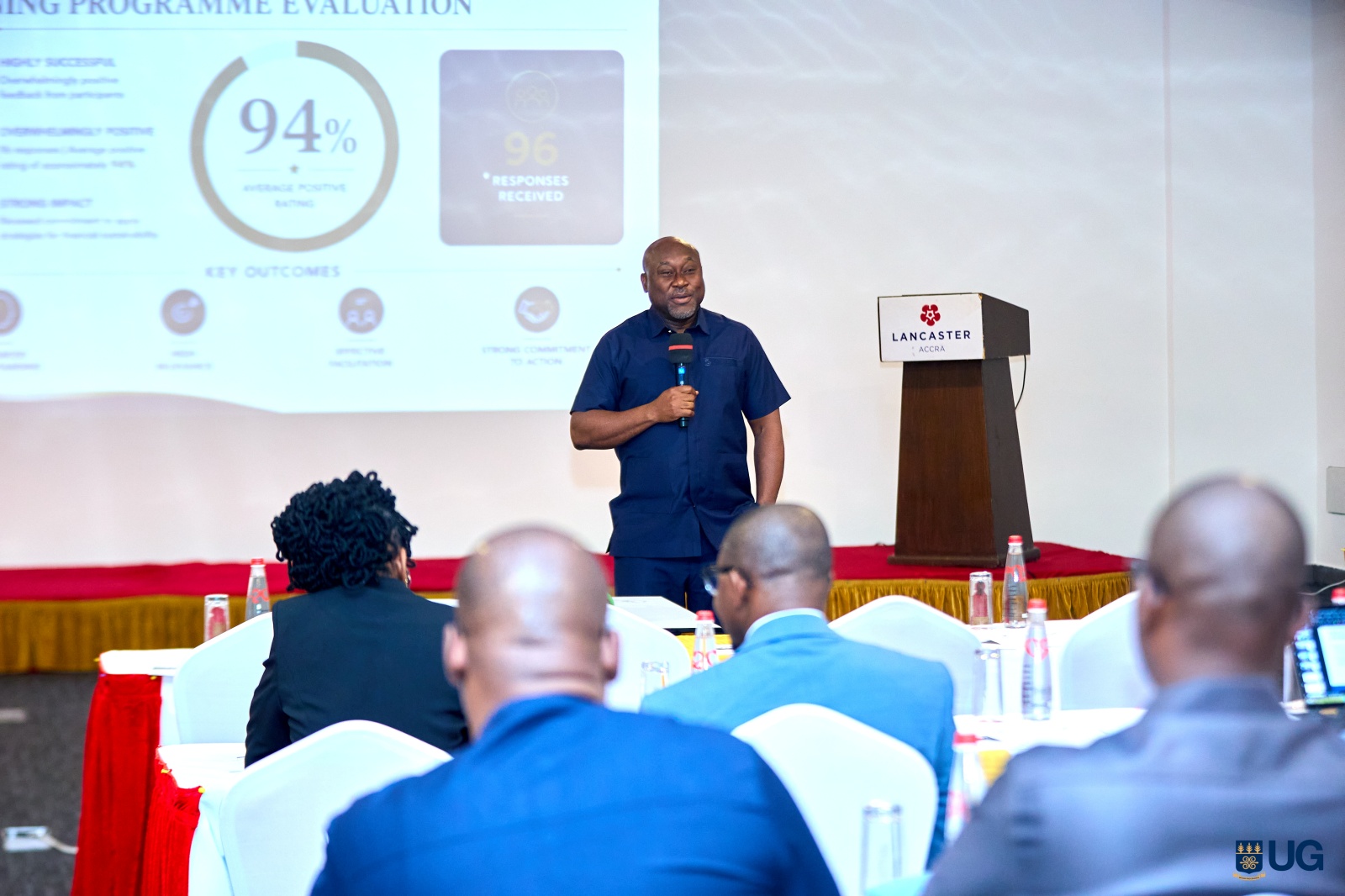
He also outlined outcomes of the University’s recent workshop on resource mobilisation and budgeting, stressing the need for units to explore alternative funding sources in response to tightening public finances while ensuring that available resources are aligned with the University's strategic priorities.
The Pro Vice-Chancellor (Research, Innovation and Development), Prof. Felix Ankomah Asante, presented updates on research, innovation and graduate education initiatives, including measures to improve visibility and administration of the University of Ghana Research Fund and strategies aimed at increasing postgraduate enrolment and strengthening research capacity across the institution.
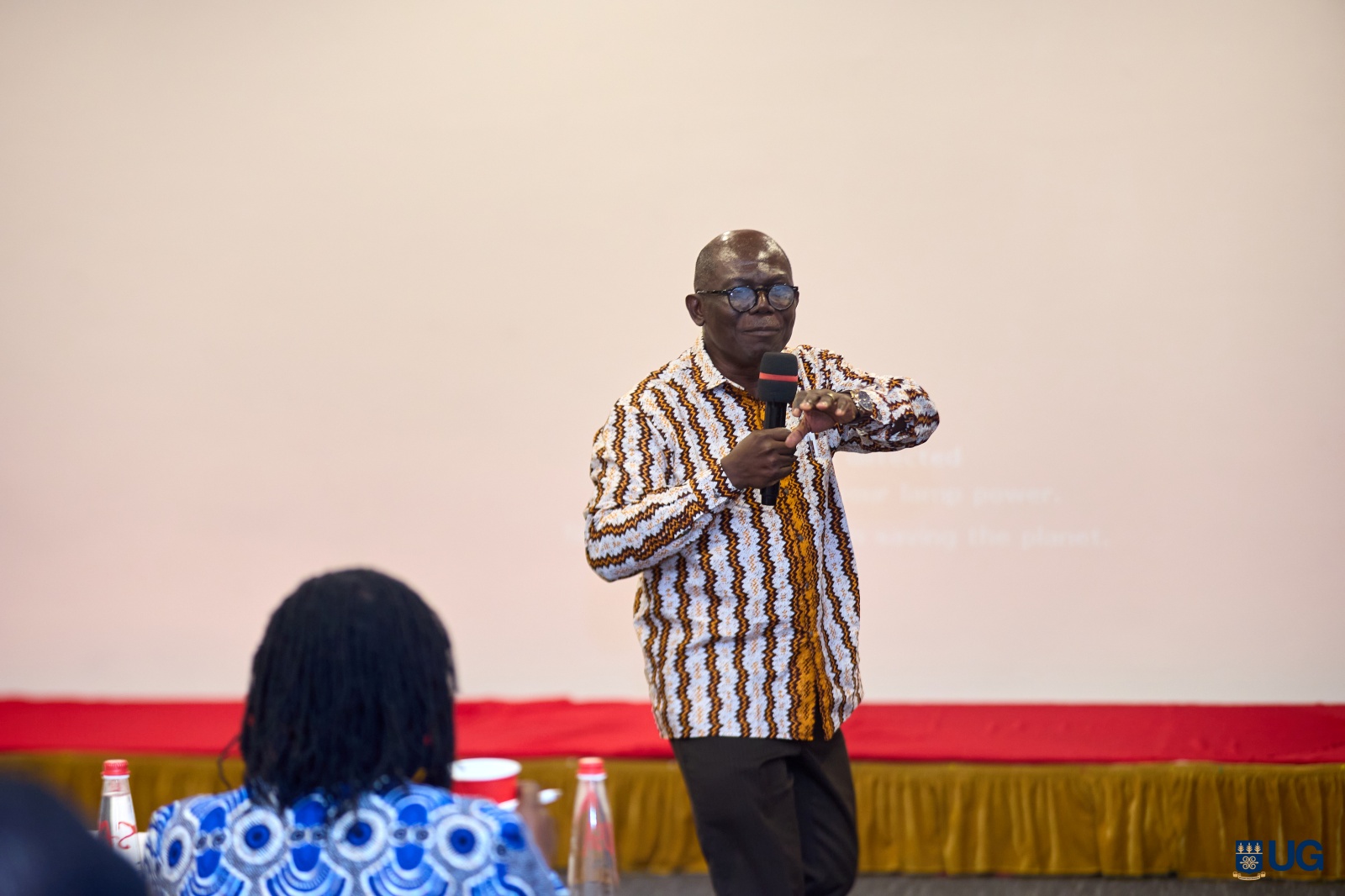
The Pro Vice-Chancellor's presentation was supported by the respective Directors of the Research and Innovation Directorate (RID), the Institute of Applied Science and Technology (IAST), the Information Technology Directorate (ITD) and the Institutional Research and Planning Directorate (IRPD), who elaborated on ongoing initiatives to strengthen research management, digital transformation, institutional planning, performance monitoring and data-driven implementation of the University's Strategic Plan.
The Registrar, Mrs. Emelia Agyei-Mensah, delivered updates on institutional policies and administrative reforms, highlighting the recently approved University of Ghana Artificial Intelligence Policy and the Revised Anti-Sexual Harassment Policy, both of which received approval from the University Council earlier this year. She noted that the policies had undergone extensive legal review and stakeholder consultations and would now be widely publicised through multiple communication platforms to promote awareness and compliance across the University community.

As part of the Registrar's presentation, updates were provided on the implementation of the University's Student Work Policy, staff recruitment and replacement processes, employee wellness initiatives, workplace development programmes and activities to promote staff motivation, including the annual Employee Week celebrations. The presentation also highlighted strategic communication and institutional visibility initiatives, partnerships supporting the organisation and publicity of major University events, stakeholder engagement, digital communication, brand promotion and efforts to advance the implementation of the University's Strategic Plan.
The retreat also provided an opportunity for Management to deliberate on broader operational issues affecting the University and to agree on concrete actions to strengthen implementation, improve coordination across units and enhance institutional performance during the remainder of 2026.
In her closing remarks, Prof. Amfo encouraged all units to sustain the momentum achieved during the first half of the year, stressing that the University’s strategic ambitions could only be realised through collective responsibility, accountability and continuous collaboration.
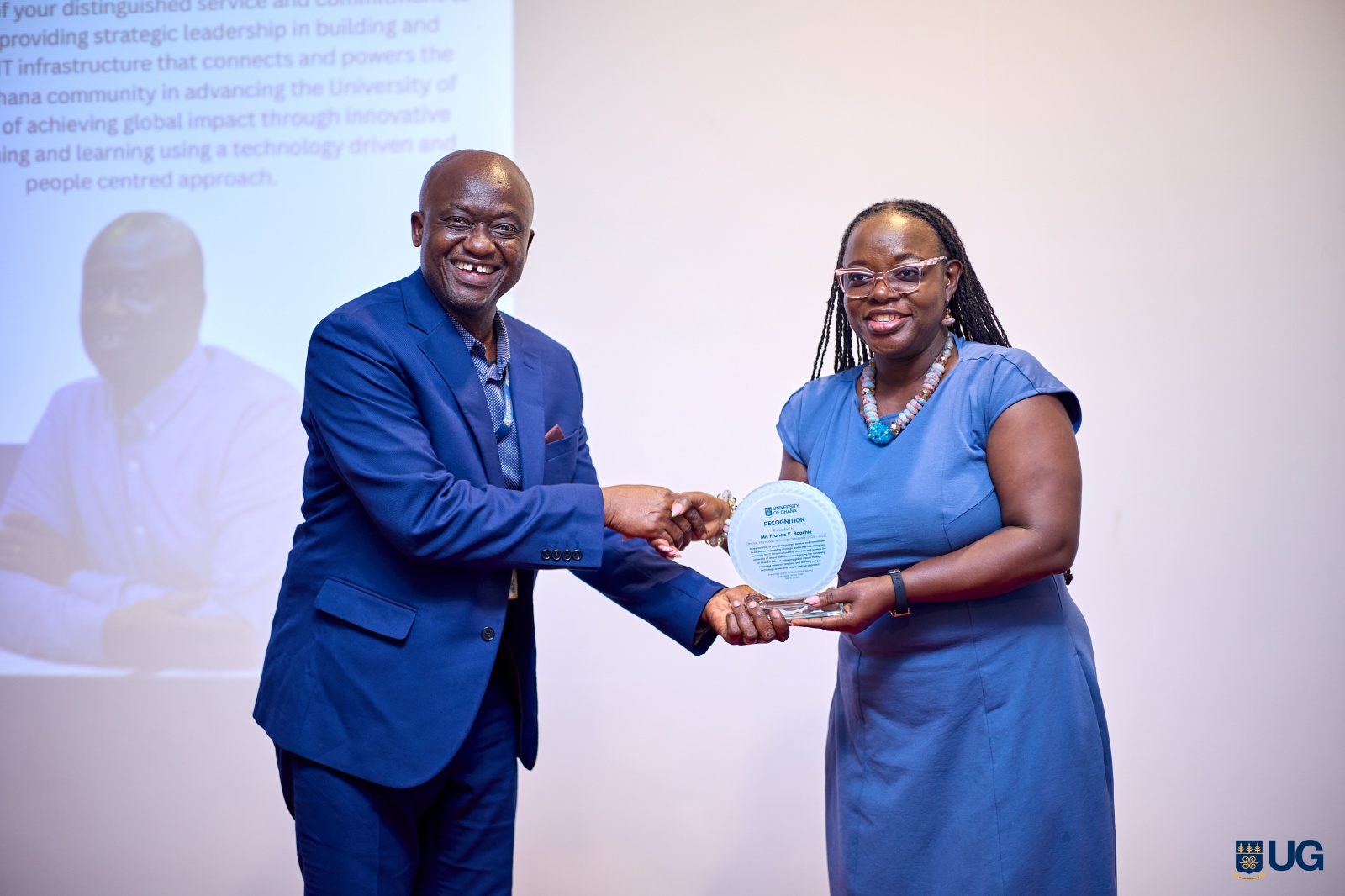
She also took the opportunity to acknowledge members of Management who would be leaving office before the next retreat, expressing appreciation on behalf of the University for their dedicated service, commitment and invaluable contributions to the institution's growth, while wishing them success in their future endeavours.