UG Highlights Strategic Synergies in Agrifood, Climate and Rural Technology at RISC 2025
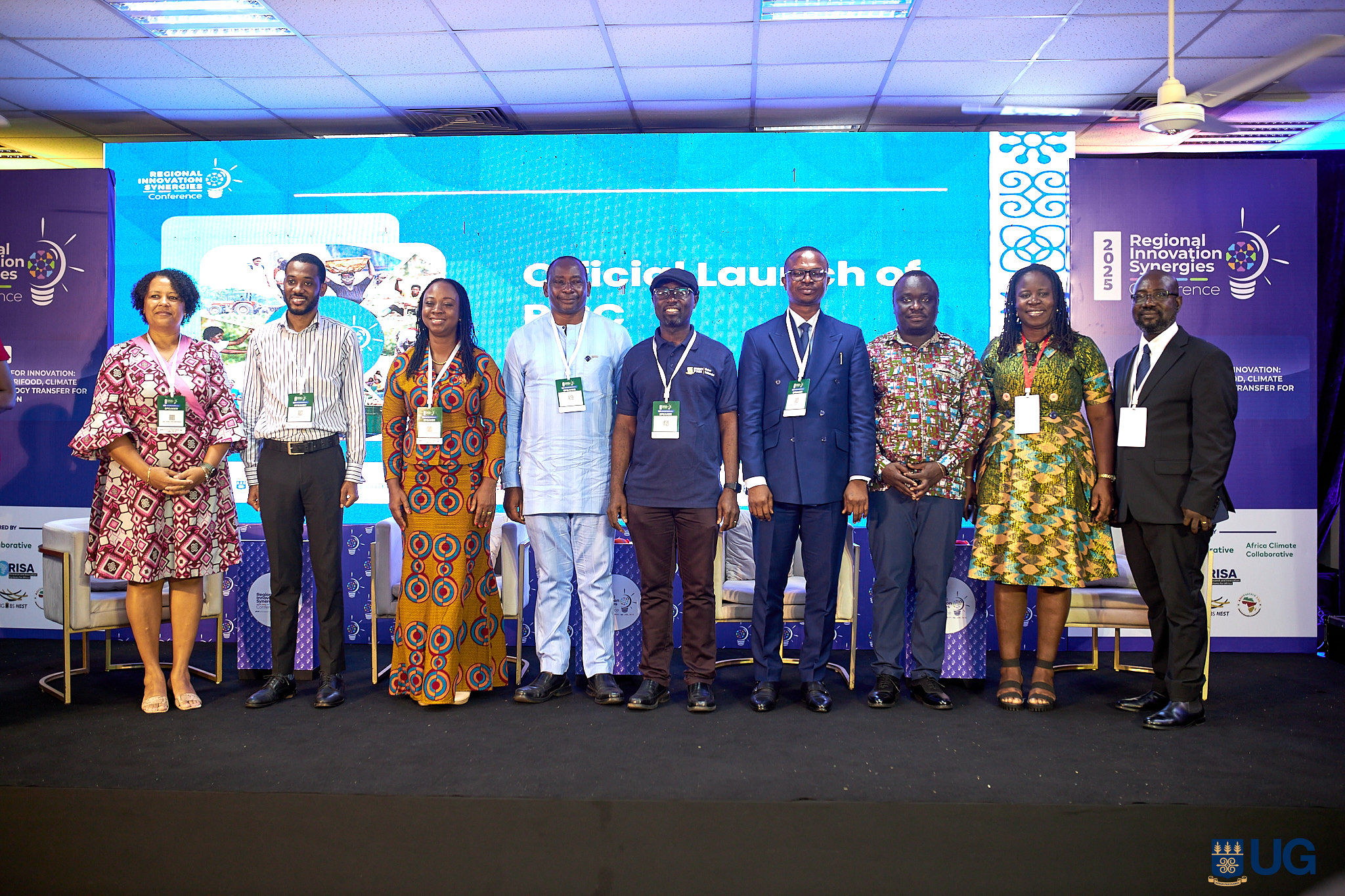
The 2025 Regional Innovation Synergies Conference (RISC) was opened at the University of Ghana, with a rallying call for deeper collaboration and strategic partnerships to drive national development. The event brought together government officials, policy leaders, researchers, faculty, international development partners, industry experts, innovators, and students.
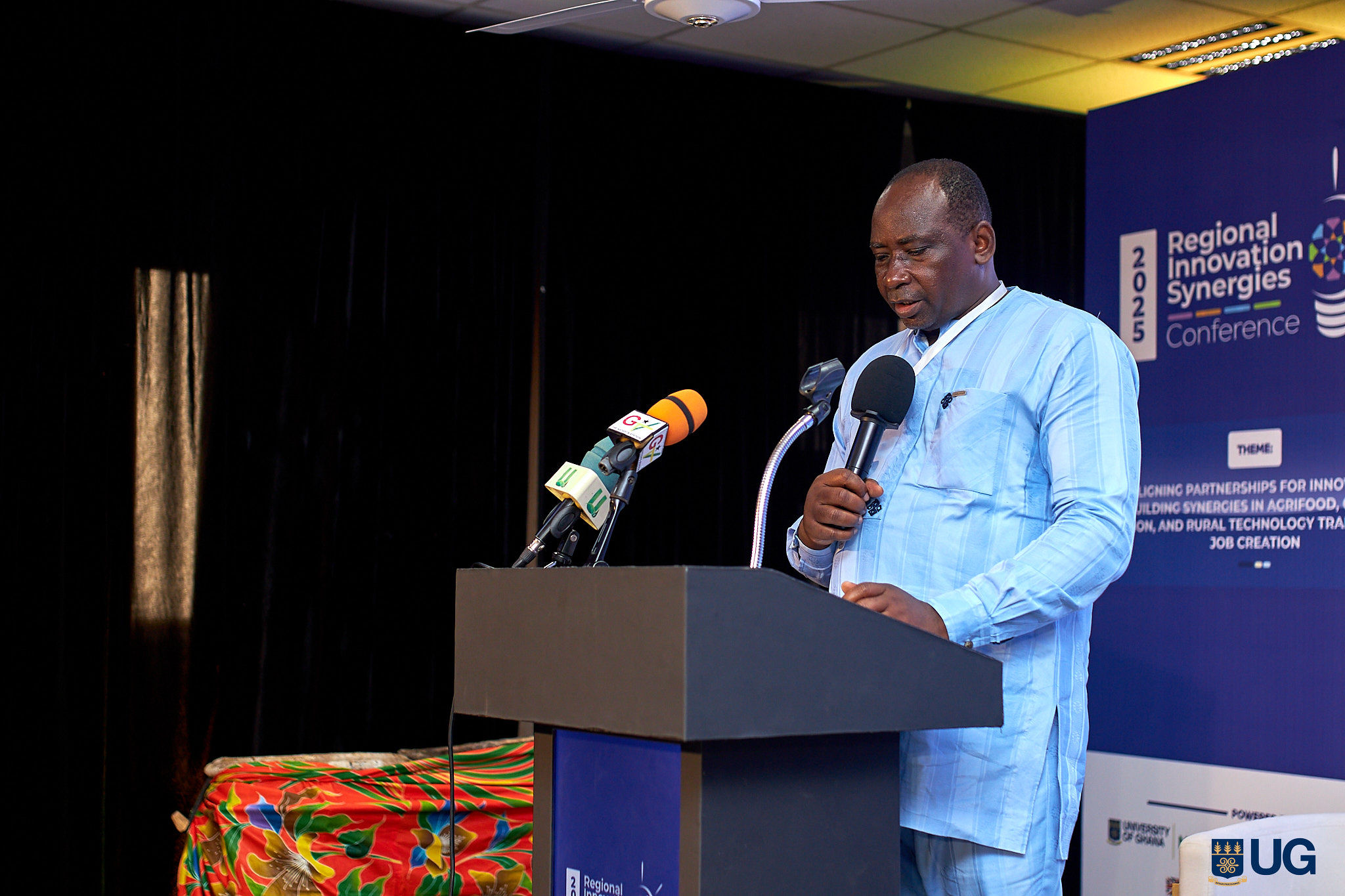
Delivering opening remarks on behalf of the Vice-Chancellor, Provost of the College of Humanities, Professor Joseph Awetori Yaro, described the Conference as ‘‘a defining moment in the University of Ghana’s ongoing mission to transform innovation from an isolated activity into a coordinated engine for national development.’’
Professor Yaro emphasised that this year’s conference showcases outcomes from cutting-edge initiatives across the University of Ghana, including the University of Ghana Business School (UGBS) Innovation and Incubation Hub, the Nkabom Collaborative, the Africa Climate Collaborative, AfriVenture Lab, BRRInG and the Youth Enterprise Support Programme. These projects, he observed, demonstrate that innovation flourishes when diverse actors are connected by a shared purpose.
He further reaffirmed that RISC is tightly aligned with the University of Ghana’s Strategic Plan (2024–2029).
Keynote Speaker, Prof. Abigail Opoku Mensah, Ag. Administrator, Ghana National Research Fund, disclosed that the “synergies among all three thematic themes; Agrifood Innovation and Entrepreneurship, Climate Innovation and Entrepreneurial Mentorship and Rural Innovation and Technology Transfer are strategic as they fall within the proposed thematic areas of funding at the Ghana National Research Fund.” She commended all development partners for their tireless support in advancing research development and innovation on the continent.

Speaking to the theme of the Conference, ‘Aligning Partnerships for Innovation: Building Synergies in Agrifood, Climate Action and Rural Technology Transfer for Job Creation’, the Guest of Honour and CEO of the National Entrepreneurship and Innovation Programme (NEIP), Mr. Eric Adjei, indicated that it “aligns directly with the mission of NEIP which is to provide training, business development support, access to funding to help entrepreneurs churn their ideas to sustainable businesses.” He also reiterated NEIP’s commitment to support entrepreneurs who are tackling the thematic areas with creativity and purpose. He concluded by praising the UGBS Innovation Hub for its excellent performance during the onboarding of the government’s flagship ‘Adwumawura’ programme.

In earlier remarks, Team Lead for the Entrepreneurship Pillar of the UG Nkabom Collaborative, Prof. George Acheampong, indicated that the RIS Conference “was conceived as a collective response to the growing realisation that while we have made tremendous progress across individual projects and institutions, our impact becomes truly transformative only when we connect the dots.”

The Dean of UGBS, Prof. Ernest Tweneboah-Koduah, also called for an attitudinal change intervention towards entrepreneurship for the youth. “We want to encourage the youth to go into entrepreneurship,” he emphasised.

The Conference also featured a high-level plenary session that brought together the Principal Investigators of three flagship initiatives leading Ghana’s innovation and development landscape. The session showcased the collective efforts of agrifood systems, climate action, research commercialisation and rural technology transfer in strengthening the national innovation ecosystem.
The session, moderated by Broadcast Journalist Alfred Ocansey, had as panelists, Prof. Richmond Aryeetey; P.I, UG Nkabom; Dr. Adelina Mensah, Deputy Director, Operations, Africa Climate Collaborative, UG and Mr. Gameli Adzaho, Country Technical Lead, RISA Fund.

Prof. Aryeetey stated that one of the innovations the UG Nkabom Collaborative is implementing is to ‘bring onboard professionals with sustainable food systems training.’ He called on partners to rally help behind the teeming youth who are full of energy and brilliant ideas.
Highlighting the concept of inclusion, Dr. Mensah explained that the target of the Africa Climate Collaborative is women, people of displaced backgrounds or refugees and persons with disabilities. These marginalised groups, she noted, face structural barriers in accessing education to come up with innovative ideas hence the need to prioritise them.
For Mr. Adzaho, the RISA Fund seeks to address the rural-urban divide in terms of education. The collaboration with UG, he added, challenges this narrative and shows that innovation in the rural areas must be contextualised to achieve its full potential.
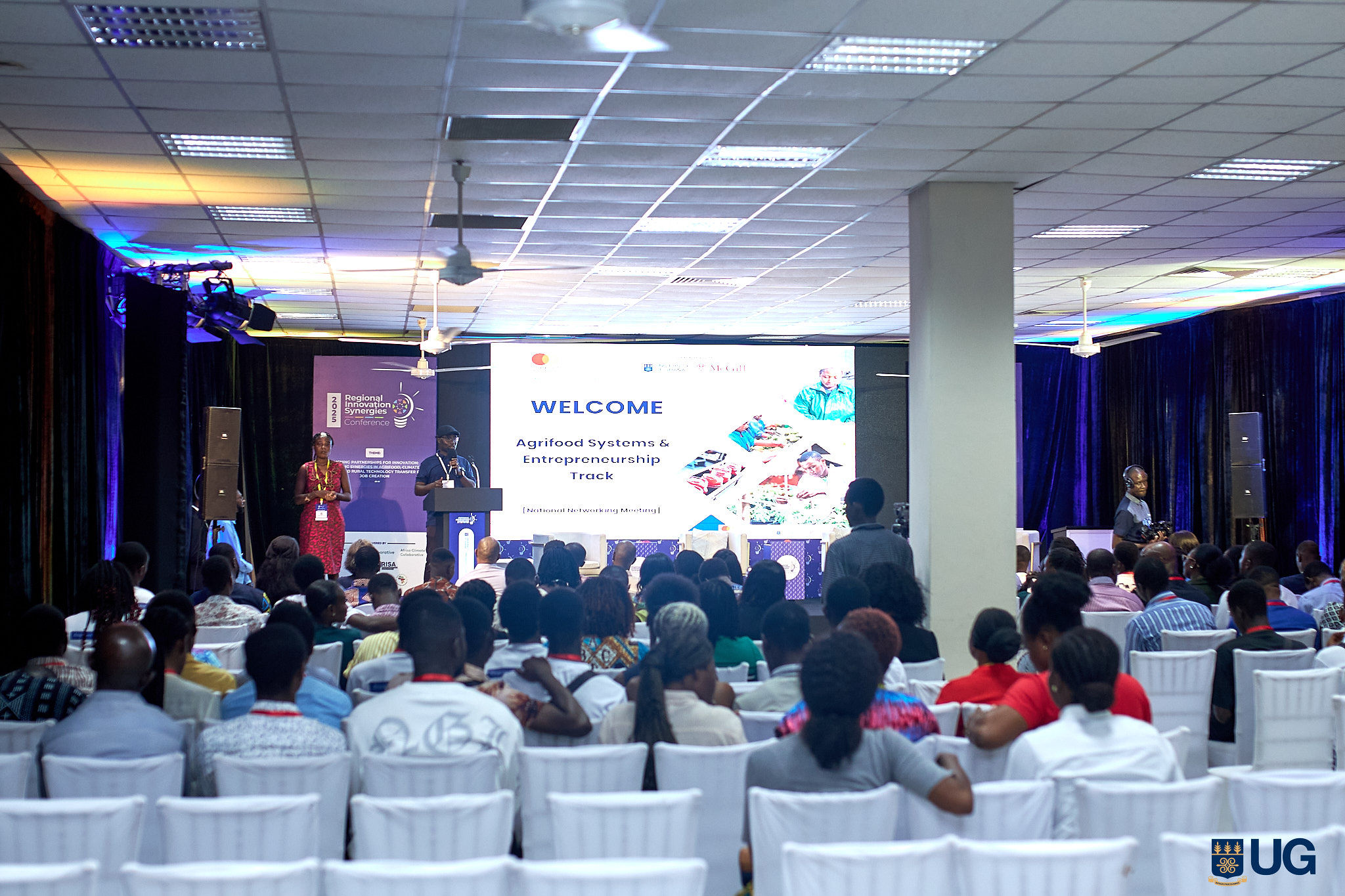
The Regional Innovation Synergies Conference seeks to create an annual space for shared learning, co-creation and strategic alignment.