Prof. Yaw Agyeman Boafo Highlights Climate Risks and Urban Resilience on Research Agenda Show, Says Solutions Lie with Everyone
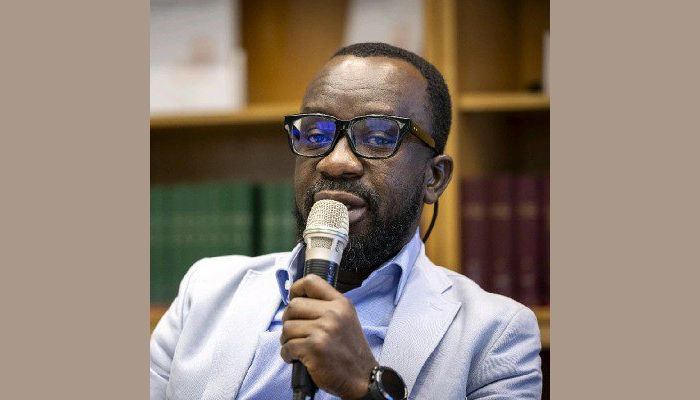
Prof. Yaw Agyeman Boafo, Associate Professor at the Centre for Climate Change and Sustainability Studies and Curriculum Development Lead for the African Climate Collaborative based at the University of Ghana, has called for collective action to address the growing impacts of climate change on urban life, noting that meaningful solutions must involve governments, communities and individuals alike.
Prof. Boafo made the remarks during an appearance on the Research and Innovation Directorate-led Programme on Radio Univers dubbed the Research and Innovation Agenda programme, where he spoke on the topic “Heat, Floods and Drought: What Climate Change Means for Urban Life.” The discussion examined how climate change is increasingly shaping everyday experiences in Ghana’s cities and communities.
Introducing the programme, new host Ms. Pascaline Songsore of the Public Affairs Directorate, highlighted the recent surge in heat across the country, with many residents complaining about sleepless nights without fans or air conditioners and the difficulty of moving around under the scorching sun. She also noted that the upcoming rainy season is likely to bring concerns about flooding in several urban areas, while drought continues to affect water availability and farming in other parts of the country.
Responding to these concerns, Prof. Boafo explained that climate change is no longer a distant or abstract issue but one that is already influencing daily life through shifting weather patterns and environmental stress.
According to him, climate risks such as extreme heat, flooding and drought should not be viewed in isolation, as they often occur together and reinforce one another.
“Climate risks are interconnected,” he explained, noting that heat can worsen water scarcity, drought can undermine livelihoods and food security and flooding can repeatedly destroy infrastructure and household assets.
Drawing on insights from his recent research on climate risk governance, Prof. Boafo detailed that while floods often dominate public discussions, slower and less visible climate stresses such as extreme heat and drought remain largely under-recognised within policy and planning frameworks.
He noted that these conditions nonetheless have profound effects on livelihoods, health, and overall well-being.
Prof. Boafo also highlighted the role of communities in responding to climate risks, stressing that many households are already adapting through everyday strategies. “Communities are already responding in different ways, whether through adjusting daily routines during heat waves, managing flood risks locally, or finding alternative livelihoods in drought-affected areas,” he said.
However, he pointed out that these efforts often take place without adequate institutional support, placing heavy financial and emotional burdens on households.
According to Prof. Boafo, addressing climate risks effectively requires improved coordination among institutions responsible for urban planning, disaster management and environmental protection.
He called for stronger collaboration between policymakers, researchers and communities to ensure that climate responses reflect the lived realities of people on the ground.
Prof. Boafo also highlighted practical pathways for building resilience in urban areas, including investments in urban greening, better drainage systems, climate-sensitive housing designs, water storage and reuse and improved public spaces that help reduce heat exposure.
“These are not solutions that government alone can deliver,” he said. “Everyone has a role to play, from policymakers and planners to communities and individuals.” He therefore encouraged citizens, particularly young people, to participate actively in climate awareness and sustainable practices in their communities.
The Research and Innovation Agenda programme on Radio Univers provides a platform for University of Ghana researchers to share insights from their work and contribute to public conversations on issues affecting society.
The discussion underscored the importance of translating research into practical action to help Ghanaian communities adapt to the realities of a changing climate.