Displacement in Africa is a Growing Challenge; Evidence to Support Policy is Advancing - Prof. Setrana on Research and Innovation Agenda
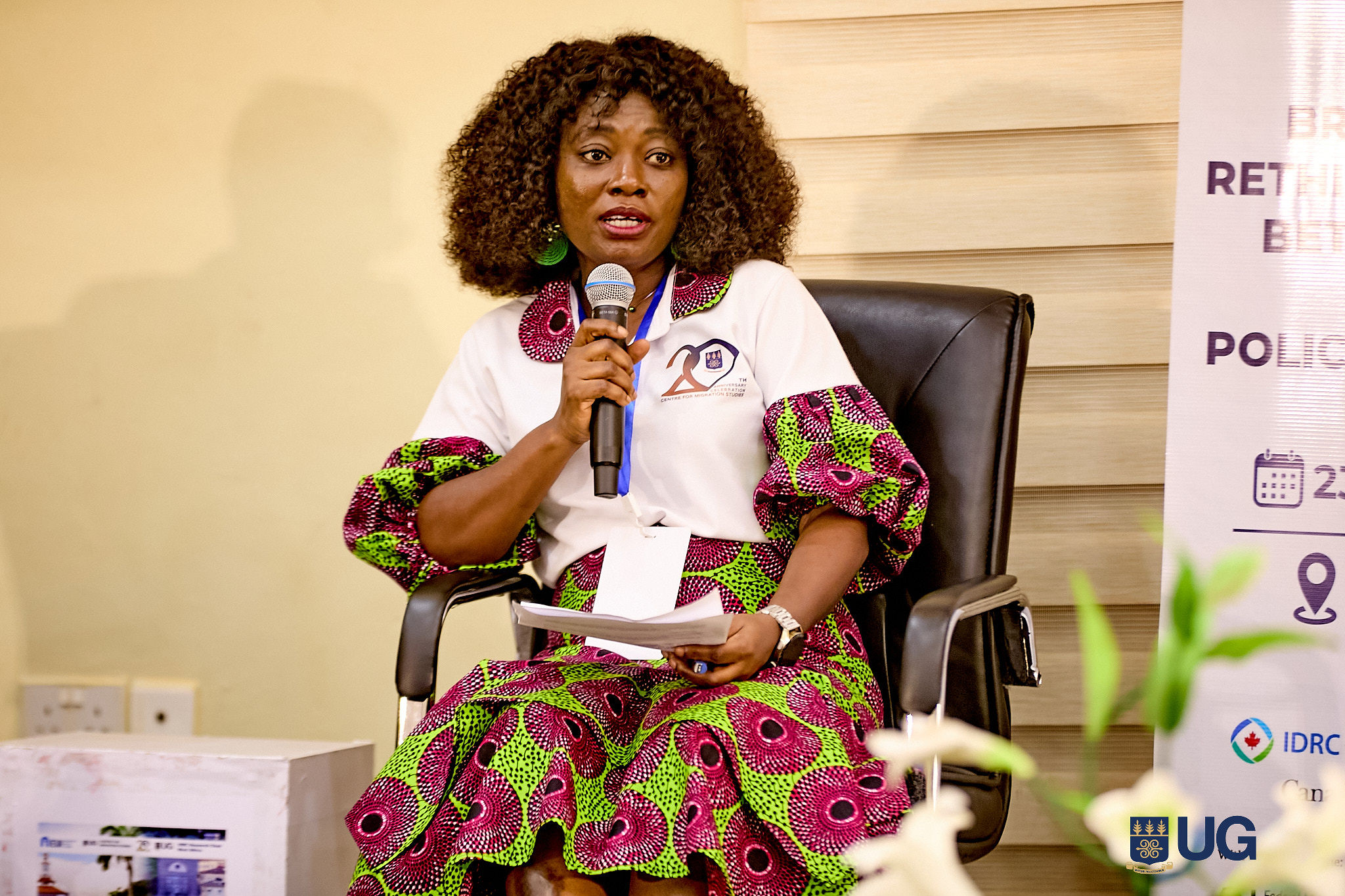
Displacement in Africa is a growing and increasingly complex challenge, with conflict, violent extremism, political instability and climate-related shocks forcing people from their homes and creating new pressures for governments, communities and humanitarian actors.
As these patterns continue to evolve, research is generating evidence to support a better understanding of forced displacement and inform policy responses, Prof. Mary Boatemaa Setrana has said.
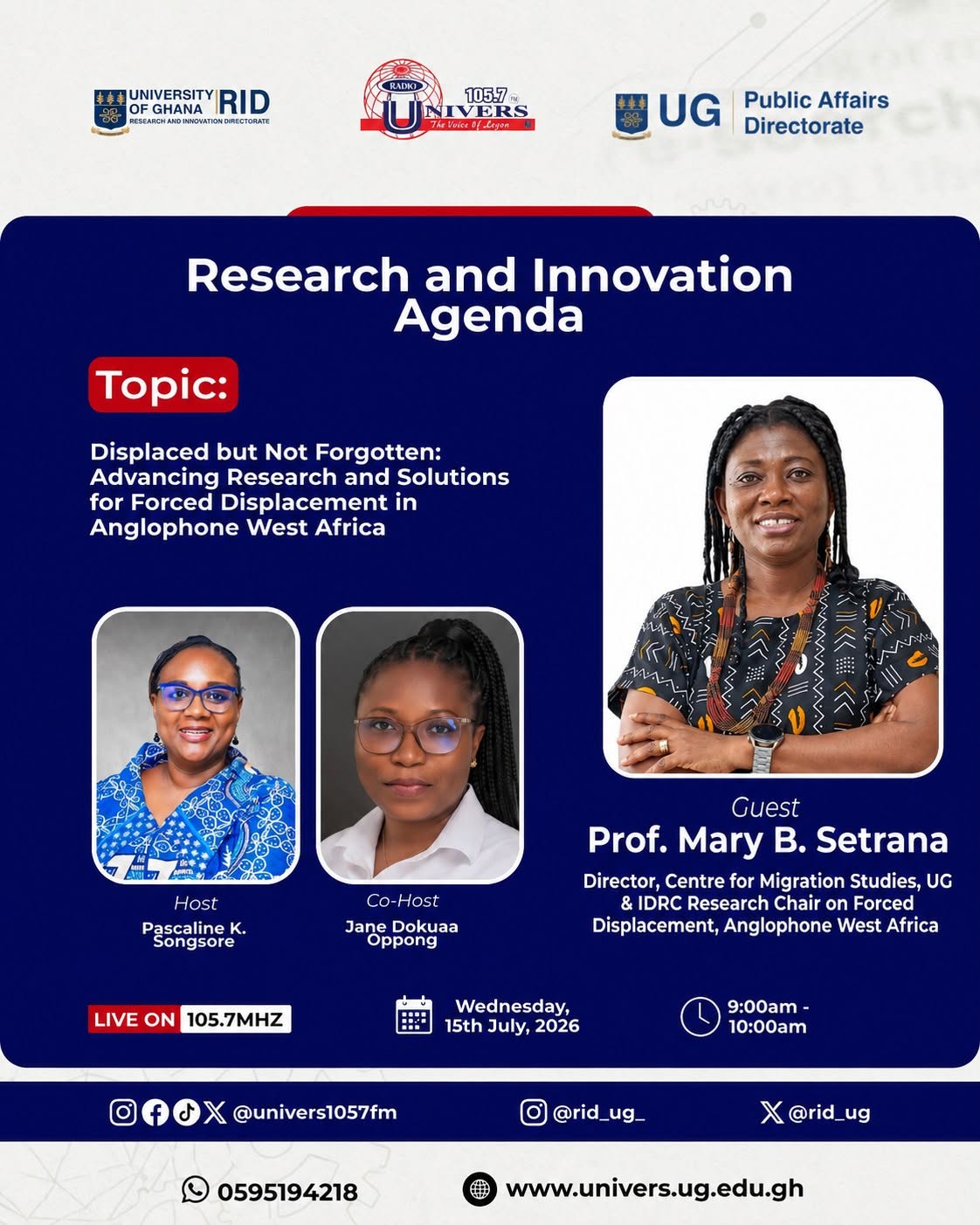
Prof. Setrana, Professor of Migration and Social Change and Director of the Centre for Migration Studies (CMS), made the observation when she was featured on the University of Ghana’s Research and Innovation Agenda on Radio Univers 105.7 FM on Wednesday, 15 July 2026.
The discussion focused on her work as the International Development Research Centre (IDRC) Research Chair on Forced Displacement in Anglophone West Africa and the research being undertaken to strengthen knowledge, evidence use and leadership on forced displacement in the region.
Speaking on the programme, Prof. Setrana said research has an important role to play in moving discussions on displacement beyond statistics and general assumptions to a closer understanding of the circumstances and experiences of people affected by displacement.
She was speaking based on evidence emerging from the Chair-led project, “Strengthening Knowledge, Evidence Use and Leadership in the Global South on Forced Displacement: Focus on Anglophone West Africa”. The project is generating locally grounded evidence from Ghana, Nigeria, Liberia and Sierra Leone to examine the drivers, experiences and impacts of forced displacement.
The research covers five broad areas: the root causes and drivers of displacement; livelihoods and gender; access to services; governance and legal frameworks; and regional cooperation.
According to Prof. Setrana, the research brings together different forms of evidence through large-scale quantitative surveys, qualitative interviews, focus group discussions, stakeholder consultations and policy dialogues. The work engages refugees, internally displaced persons, returnees, host communities, government institutions and development partners.
The different research approaches provide opportunities to examine displacement from multiple perspectives and to understand how displacement affects people and communities beyond the immediate circumstances that cause them to leave their homes.
A key part of the discussion was the connection between evidence generation and policy. Research findings from the project are being used to contribute to discussions on the governance of forced displacement, protection, access to services, livelihoods and the development of appropriate responses for displaced populations and host communities.
Prof. Setrana also spoke about the need for research on forced displacement to reflect the realities of African societies. While displacement has become a major subject of international policy and humanitarian discussions, she noted the importance of strengthening evidence generated by African researchers and institutions and ensuring that African perspectives contribute to global conversations.
The project’s work extends beyond research production to include capacity development. Postgraduate students and early-career researchers are being supported through training, mentorship, research engagements and opportunities to participate in scholarly and policy discussions on migration and forced displacement.
These activities are intended to strengthen the ability of emerging researchers to undertake rigorous research and contribute to the growing body of knowledge on displacement in the region.
The conversation also highlighted the importance of partnerships in addressing the multidimensional nature of forced displacement. Research institutions, governments, humanitarian organisations, civil society groups and development partners each have different roles to play in translating evidence into responses that address both the causes and consequences of displacement.
The Chair is also creating platforms for research dissemination and dialogue, including conferences, policy engagements, webinars, stakeholder consultations and public outreach. These engagements provide opportunities for findings and emerging perspectives to be discussed with policymakers, practitioners, researchers and affected communities.
Prof. Setrana’s appearance on the programme provided an opportunity to take the project’s work beyond academic and policy audiences and bring the conversation on forced displacement to the wider public. It also highlighted how research generated at the University of Ghana is contributing to discussions on one of the continent’s pressing humanitarian, development and governance challenges.
The Research and Innovation Agenda is produced through a collaboration between the University’s Research and Innovation Directorate, Public Affairs Directorate and Radio Univers 105.7 FM.
The programme provides a platform for researchers to share their work and discuss how research and innovation can contribute to addressing challenges at national, regional and global levels.
Prof. Setrana’s engagement formed part of the University’s broader research dissemination efforts, connecting ongoing research on forced displacement with public conversations on evidence, policy and the experiences of displaced populations across Africa.