UG Nkabom Seminar Highlights Digital Innovation, Data and Planning as Key to Export-Ready Agribusiness
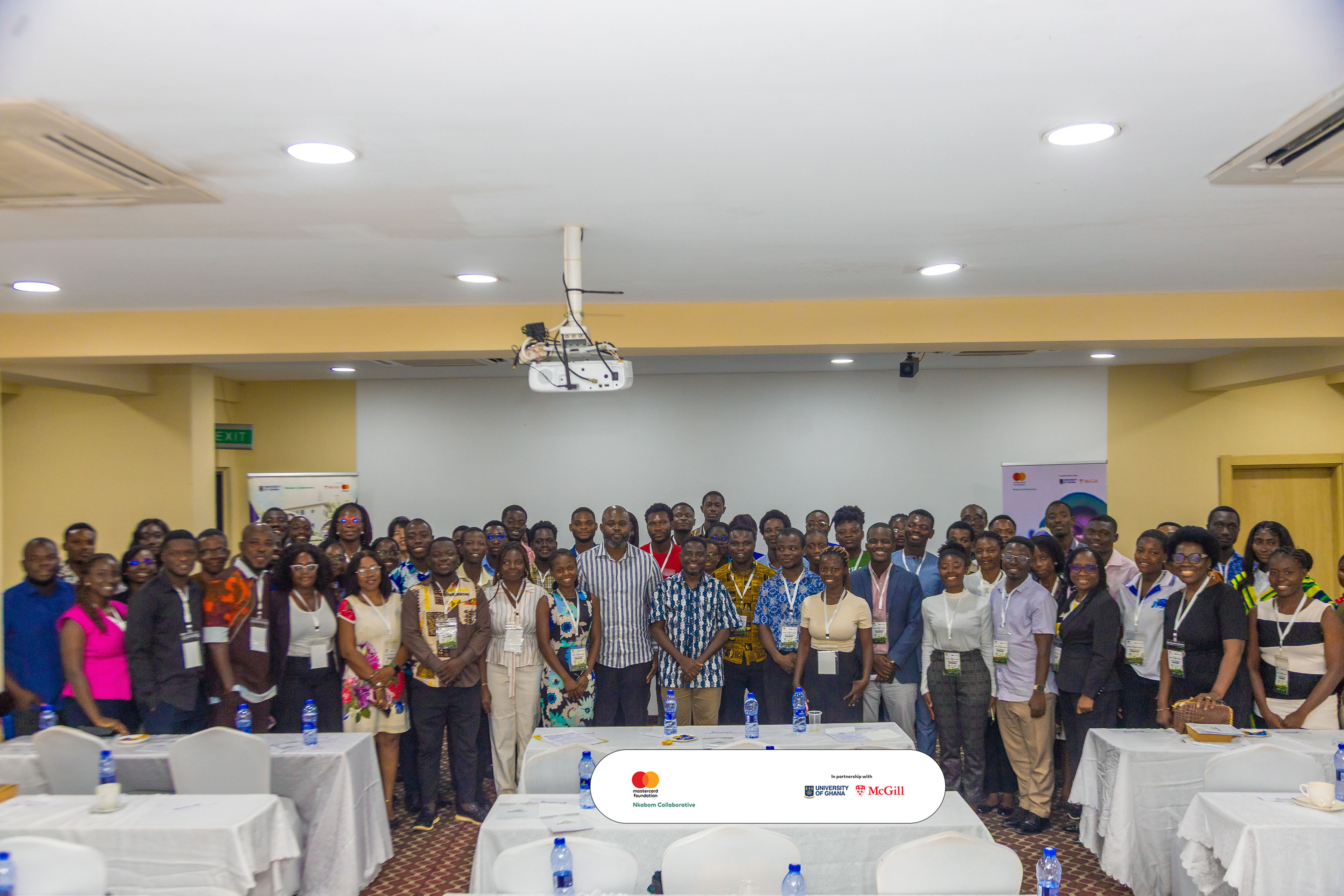
A session of the Nkabom Seminar Series hosted by the Nkabom Collaborative at the University of Ghana has highlighted the growing importance of digital innovation, data and planning as key factors in strengthening agribusiness practice, entrepreneurship and policy direction within Ghana’s agri-food sector.
The seminar forms part of the Collaborative’s broader efforts to transform Ghana’s agri-food systems and expand opportunities for young people across the value chain. It brought together agribusiness practitioners, entrepreneurs, policymakers and food systems advocates to examine how digital technologies, data-driven systems, innovation and value-chain development can strengthen Ghana’s food systems and position local agribusinesses for export markets.
Held on the theme, “Digital Market Access and Export-Ready Agribusiness,” the two-part event featured a keynote address, an expert presentation and a panel discussion focused on harnessing digital tools, data and entrepreneurship to transform Ghana’s agri-food sector.
In his welcome remarks, Project Team Lead for the Collaborative, Prof. Richmond Aryeetey, said the seminar formed part of the Collaborative’s ongoing commitment to connecting young people with expertise, innovation and opportunities across Ghana’s agri-food system.

He noted that while public conversations often centre on agricultural production, the food system presents diverse opportunities along the entire value chain, including logistics, processing, marketing, manufacturing and exports. He added that the Collaborative seeks to inspire young people to explore these opportunities through education, entrepreneurship, mentorship and strategic partnerships, ultimately contributing to a more sustainable and inclusive food system.
Delivering the keynote address as Guest of Honour, the Upper West Regional Minister, Hon. Charles Lwanga Puozuing, described agriculture as the backbone of Ghana’s economy and the foundation for rural transformation, particularly in the Upper West Region, where farming remains a major source of livelihoods.
He observed that although farmers continue to produce in abundance, many are unable to realise commensurate returns due to persistent challenges, including limited market access, inadequate storage facilities, poor pricing systems and weak value addition. According to him, these constraints have contributed to recurring post-harvest losses and seasonal price fluctuations, citing the recent maize glut in northern Ghana as an example of how bumper harvests can become an economic burden without efficient market systems.

Hon. Puozuing identified digital transformation as a critical pathway to addressing these challenges, explaining that modern agricultural markets are increasingly driven by connectivity rather than geography. He noted that digital platforms can connect farmers directly to aggregators, processors and export markets while providing real-time market information, transparent payment systems and improved logistics coordination.
He further explained that these interventions align with Ghana’s broader development agenda, which prioritises agricultural modernisation, value-chain development, youth employment through agribusiness and digital innovation, private sector-led industrialisation and export diversification.
Calling for greater youth participation, the Minister urged stakeholders to make agriculture more attractive through technology-driven innovation. He cited digital platforms, drones, automated irrigation systems and other emerging technologies as opportunities capable of transforming agriculture into a modern, competitive enterprise.
He also called for practical action to ensure that farmers are connected to markets before harvest, production is guided by reliable data rather than assumptions and rural communities evolve into thriving agribusiness hubs capable of driving national economic growth.
Speaking on the seminar theme, agribusiness entrepreneur and broadcaster, Mr. Kojo Akoto Boateng, challenged prevailing narratives that focus primarily on agricultural production, arguing that modern food systems extend well beyond the farm gate. He noted that meaningful transformation requires greater attention to the entire value chain, from production and processing to distribution, marketing and consumption.

He stressed that agriculture remains a profitable business and encouraged greater participation, particularly among young people. According to him, digital technologies provide practical solutions for production planning, inventory management, business administration and market expansion.
Mr. Boateng observed that while Ghana produces sufficient food to meet local demand, weaknesses in processing, storage and distribution continue to undermine food security and market efficiency. He identified inadequate data collection and poor planning as major constraints affecting agricultural productivity and competitiveness, describing data as the engine that drives efficient markets and informed decision-making across the agricultural value chain.
On export readiness, he underscored the importance of quality assurance, certification, traceability, logistics and proper documentation. He explained that meeting international market standards requires, consistent record-keeping, compliance with certification requirements and the adoption of technologies that enhance transparency throughout the production process.

He further described digital platforms as essential business tools that make agribusinesses more visible, accountable and investment-ready. According to him, social media platforms are increasingly becoming important channels for customer engagement and market discovery, while digital records and business analytics improve credibility with financial institutions and investors by demonstrating business performance and growth.
Mr. Boateng also called for stronger collaboration between academia and industry, observing that although universities produce valuable research, much of it does not adequately reach farmers and agribusinesses. He urged researchers to communicate their findings in practical ways that respond directly to industry needs and support innovation across the food system.
Concluding his presentation, he encouraged entrepreneurs to approach agriculture with the same discipline applied to any successful enterprise by prioritising strategic planning, data-driven decision-making and continuous innovation. He also commended the Nkabom Collaborative for creating a platform to deepen conversations on food systems transformation and value-chain development, noting that such engagements are essential for building a competitive and export-ready agribusiness sector.
The seminar also featured a panel discussion with Founder and Chief Executive Officer of The Ghanaian Farmer Company, Ms. Enyonam Manye and agripreneur and hydroponics farmer, Mr. Stephen Nii Oblitey Ashong (Farmer Nii) and Mr. Kojo Akoto Boateng.
Ms. Manye highlighted the growing interest in agriculture, driven by expanding market opportunities, but cautioned that enthusiasm alone does not guarantee success. She encouraged aspiring agripreneurs to invest in practical agronomic training, adopt quality assurance practices and digitalise their operations to improve transparency and competitiveness.

She also advised young people to explore opportunities beyond primary production, including input supply, mechanisation services, aggregation, logistics and post-harvest management, describing these as important areas for innovation and employment.
Sharing his entrepreneurial journey, Farmer Nii highlighted how proper farm records and digital tools have supported the growth of his hydroponics enterprise. He encouraged aspiring agripreneurs to understand the agricultural landscape, build strategic partnerships and scale their businesses progressively. Drawing on his experience, he demonstrated that successful agribusinesses can begin on a small scale before expanding into larger commercial ventures through innovation, technology and sound business practices.

He encouraged aspiring entrepreneurs to begin with a clear understanding of the agricultural landscape, leverage partnerships and scale gradually. Drawing on his experience in hydroponic farming, he demonstrated that successful agribusinesses can start on a small scale before expanding into larger commercial ventures through innovation, technology and sound business practices.
The seminar reinforced the importance of digital innovation, strategic partnerships and value-chain development in building a more competitive, resilient and export-ready agri-food system while inspiring young people to seize emerging opportunities across Ghana’s evolving food economy.
