
STUDENT VOICES • RESEARCH & POLICY ENGAGEMENT
From Research to Reality
How Shadowing a World Bank Mission Reshaped My Thinking
By Betty Adzah | PhD Candidate, Department of Economics, University of Ghana
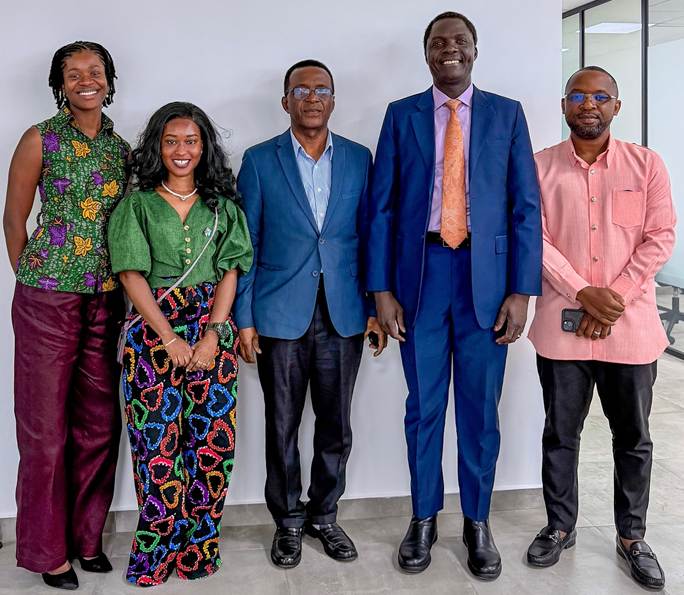
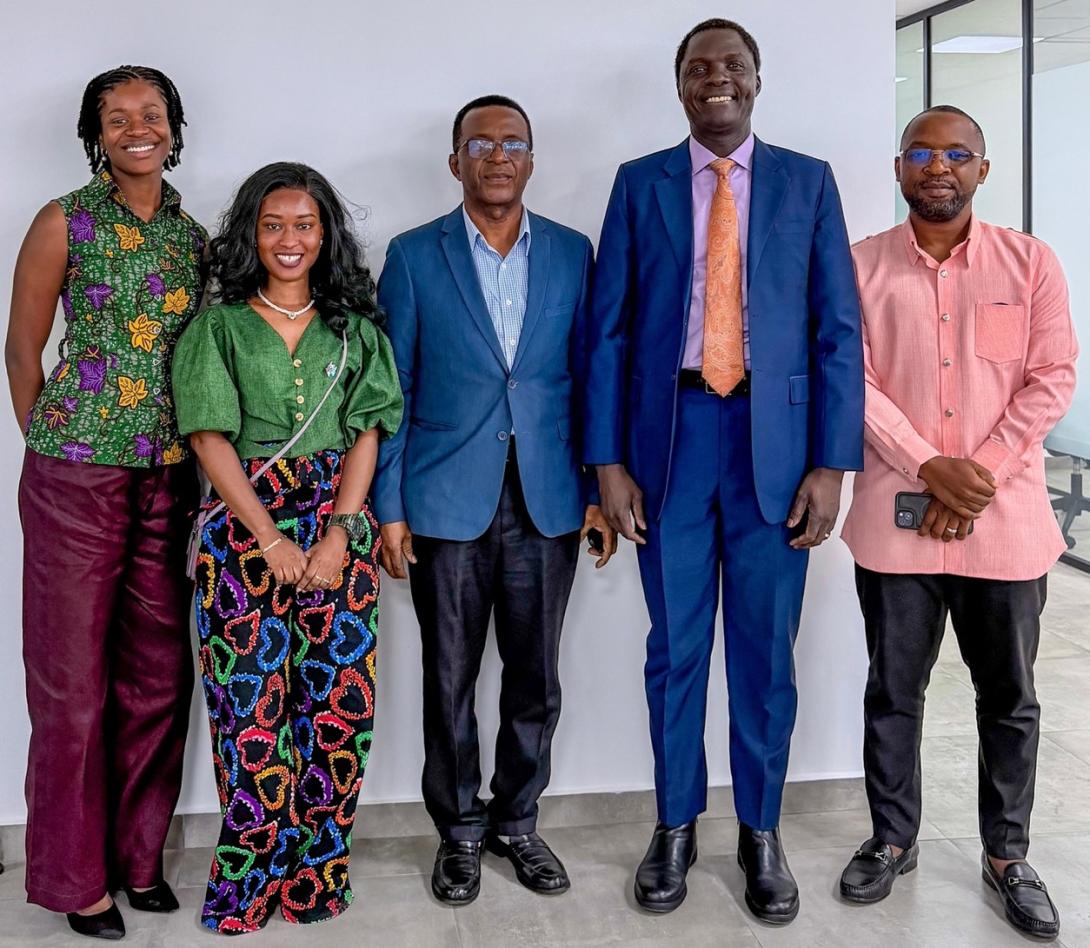
World Bank PFM4SD Mission: Group photograph with members of the World Bank team during the mission at Ghana's Ministry of Finance.
As graduate students, we spend countless hours reading journal articles, analyzing datasets, testing theories, and proposing policy recommendations. Through our research, we develop ideas about how governments, ministries, and development institutions function. Yet, if we are honest, much of that understanding is constructed from the outside looking in.
Economics trains us to simplify reality. We make assumptions, estimate models, interpret coefficients, and recommend policies based on the evidence we generate. While this process is fundamental to rigorous research, it can sometimes leave us disconnected from the complex realities of policymaking — the institutional arrangements, competing priorities, political constraints, and operational frameworks that ultimately shape how decisions are made.
“How can we produce research that truly informs policy if we rarely experience how policy is actually made?”
Where the Idea Began
That question stayed with me after the inaugural World Bank–University of Ghana Graduate Student Colloquium held on 22 May 2026. The colloquium gave graduate students the opportunity to present their research and receive valuable feedback from World Bank experts and University faculty. During the closing discussions, I reflected on how impactful the engagement had been and suggested that our collaboration could move beyond occasional seminars.
I proposed the idea of a Graduate Student Policy Shadowing Initiative—an opportunity for selected graduate students to shadow World Bank staff during missions, observe stakeholder engagements firsthand, gain insight into how development policy is designed and implemented, build professional networks, and strengthen the policy relevance of their research. While the concept is still in its early stages, the long-term aspiration is that, following a successful pilot and continued collaboration between the Department and the World Bank, it could evolve into a more structured Non-Resident Fellowship.
For me, this was deeply personal. I had always wanted to understand what happens behind the scenes in organisations like the World Bank. How do development professionals work? How are missions planned? How are discussions with governments conducted? How do research findings translate into real policy decisions? These were questions that could not be fully answered from textbooks or journal articles.
Not long after the colloquium, I received an email from Professor Nkechi Owoo, informing me that Dr. Raymond Muhula of the World Bank had shared the schedule for the PFM4SD (Public Financial Management for Service Delivery) mission at Ghana's Ministry of Finance, and invited me to participate as an observer. It was one of those rare moments where an idea transitions into reality.
Inside the Mission
Throughout the mission, I sat in meetings involving officials from ministries, departments, and agencies in Ghana. They discussed implementation progress, operational challenges, institutional coordination, financing arrangements, and the road ahead for the programme. I listened carefully, took pages upon pages of notes, and found myself constantly connecting what I was hearing to my own doctoral research.

From Observation to Research: documenting key insights that continue to shape my doctoral research.
A Shift in Perspective
The experience fundamentally changed how I think about research.
Concepts that had previously existed only in academic literature suddenly became tangible. I began to see how policies evolve through negotiation, collaboration, evidence, and practical constraints. I identified research questions I had never previously considered and realized that some of the assumptions we routinely make as researchers overlook important institutional realities. In many ways, the experience helped me refine my PhD thinking, not by replacing theory, but by grounding it in practice.
Equally valuable was the opportunity to engage with experienced professionals from government and international development institutions. Conversations that might ordinarily have taken years to access happened naturally throughout the mission. I learned from their perspectives, asked questions, and built relationships that I hope will continue throughout my academic and professional journey.
Looking back, I now appreciate that impactful research requires more than methodological rigour. It also requires proximity to the systems we seek to improve. Seeing policy being discussed, negotiated, and implemented provides insights that datasets alone cannot always reveal.
Looking Ahead
This experience has strengthened my conviction that initiatives like the Non-Resident Fellowship can transform graduate education at the University of Ghana. I hope to work with the Department of Economics and our partners to expand this opportunity so that more graduate students can experience the invaluable intersection between research and policymaking. Such exposure will not only produce stronger researchers but also better policy thinkers and future leaders capable of generating evidence that speaks directly to Ghana's development challenges.
I am profoundly grateful to Professor Edward Nketiah-Amponsah, Head of the Department of Economics; Professor Nkechi Owoo, whose leadership continues to create transformative opportunities for graduate students; and Dr. Raymond Muhula and the World Bank team for welcoming me me so warmly into the PFM4SD mission, generously sharing their knowledge, and providing a truly enriching experience that has become an important stepping stone in my academic and professional journey.
This fellowship has reminded me that some of the most meaningful lessons in research are learned not only in classrooms or behind statistical software, but also in boardrooms, policy discussions, and the spaces where evidence meets action.
I sincerely hope many more graduate students will have the opportunity to embark on this journey.
Betty Adzah
PhD Candidate, Department of Economics, University of Ghana
IGC PhD Fellow
Participant, World Bank PFM4SD Non-Resident Fellowship Shadowing Experience
