University of Sussex and UG Deepen Partnership Through Reciprocal Mentoring Initiative
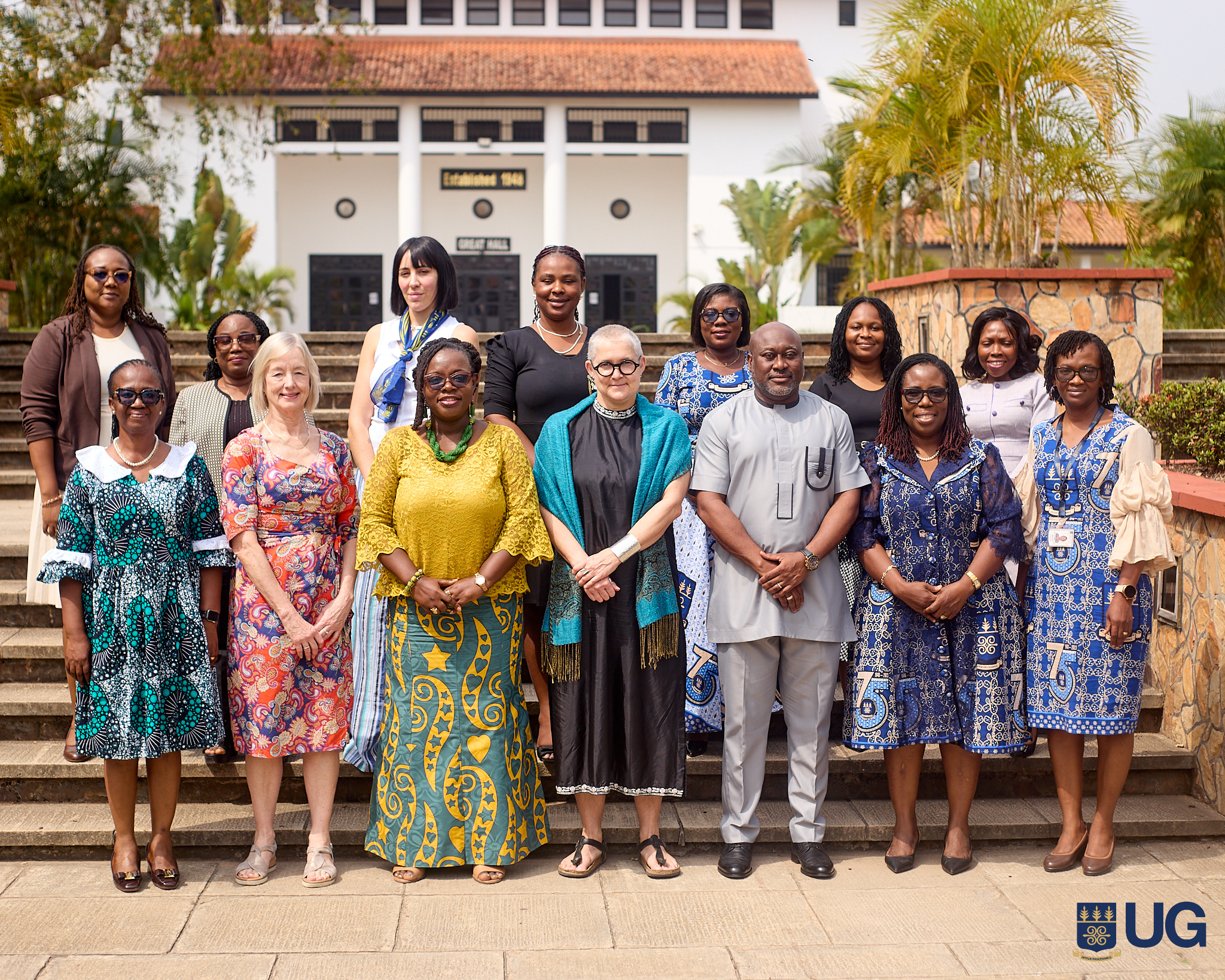
The University of Sussex and the University of Ghana are strengthening their collaboration through a Cross-Institutional Reciprocal Mentoring Scheme designed to advance gender equity, inclusive leadership and international academic exchange.
During a scheduled engagement with the Vice-Chancellor of the University of Ghana, Prof. Nana Aba Appiah Amfo, representatives of the University of Sussex, alongside the Centre for Gender Studies and Advocacy (CEGENSA) at UG, reviewed the progress and outcomes of the initiative. The scheme connected both academic and administrative staff across borders through reciprocal mentorship and structured peer learning, fostering both professional development and cultural exchange.
Providing an overview of the initiative, Prof. Deborah Atobrah, Director of CEGENSA, highlighted the scheme’s transformative effect, particularly for participants without prior international study or work experience. She explained that the programme pairs participants with international mentors and is sustained through monthly engagements and focus group discussions, which encourage reflection on shared experiences and assessment of the effectiveness of the programme.
Delivering remarks on the project, delegates from the University of Sussex described the initiative as both professionally enriching and personally rewarding.
The Pro Vice-Chancellor for Education and Students at the University of Sussex, Prof. Kate O’Riordan, thanked the University of Ghana for its hospitality and praised UG’s academic and research facilities which they toured during the visit. She also expressed delight at the ongoing partnership between the two institutions, noting that she was hopeful it would give rise to further collaborative initiatives in the coming years.
Prof. Sarah Guthrie, Associate Dean for Culture, Equality and Inclusion, said the mentorship programme provided a platform for participants to discuss common challenges and structural barriers in academia.
Sarah Law, Equality, Diversity and Inclusion Consultant at the University of Sussex and a member of the visiting delegation, noted that cross-cultural mentoring and the expansion of international networks are key benefits of the scheme, continuing to support participants’ career development.
Sharing her personal experience, Ms. Sylvia Antwiwaah Sarbah, a Research Development Officer at UG’s Research, Innovation and Development Directorate and a trainee beneficiary of the project, described the mentorship as a crucial milestone in her career. She credited the scheme with inspiring her successful application to the West African Research and Innovation Management Association (WARIMA) Conference, highlighting the significance of its reciprocal approach.
For her part, the Vice-Chancellor of the University of Ghana, Prof. Nana Aba Appiah Amfo, welcomed the delegation to the university and highlighted the institution’s strategic priorities, which are aligned with achieving its vision. She noted that key priorities include commitment to faculty and staff, as well as engagement and partnerships, which the mentoring scheme achieves.
Prof. Amfo also commended the Cross-Institutional Reciprocal Mentoring approach as a model of international collaboration and urged that its processes be documented to enable replication across other institutions.
Prof. Gordon Awandare, Pro Vice-Chancellor for Academic and Student Affairs, called for wider participation, including increased engagement of male employees in gender-focused initiatives.
On her part, Prof. Jemima Anderson, Dean of International Programmes, encouraged the expansion of the scheme across additional faculties and professional sectors.
Prof. Juliana Y. Enos from the School of Public Health and Prof. Gloria Ivy Mensah, Noguchi Memorial Institute for Medical Research took turns to provide insights into the project.
Primarily targeting female academic and administrative staff, the Cross-Institutional Reciprocal Mentoring Scheme has emerged as a model of collaborative excellence, reinforcing mutual learning and institutional development. Both universities reaffirmed their commitment to sustaining and scaling the initiative to achieve broader institutional and regional impact.