
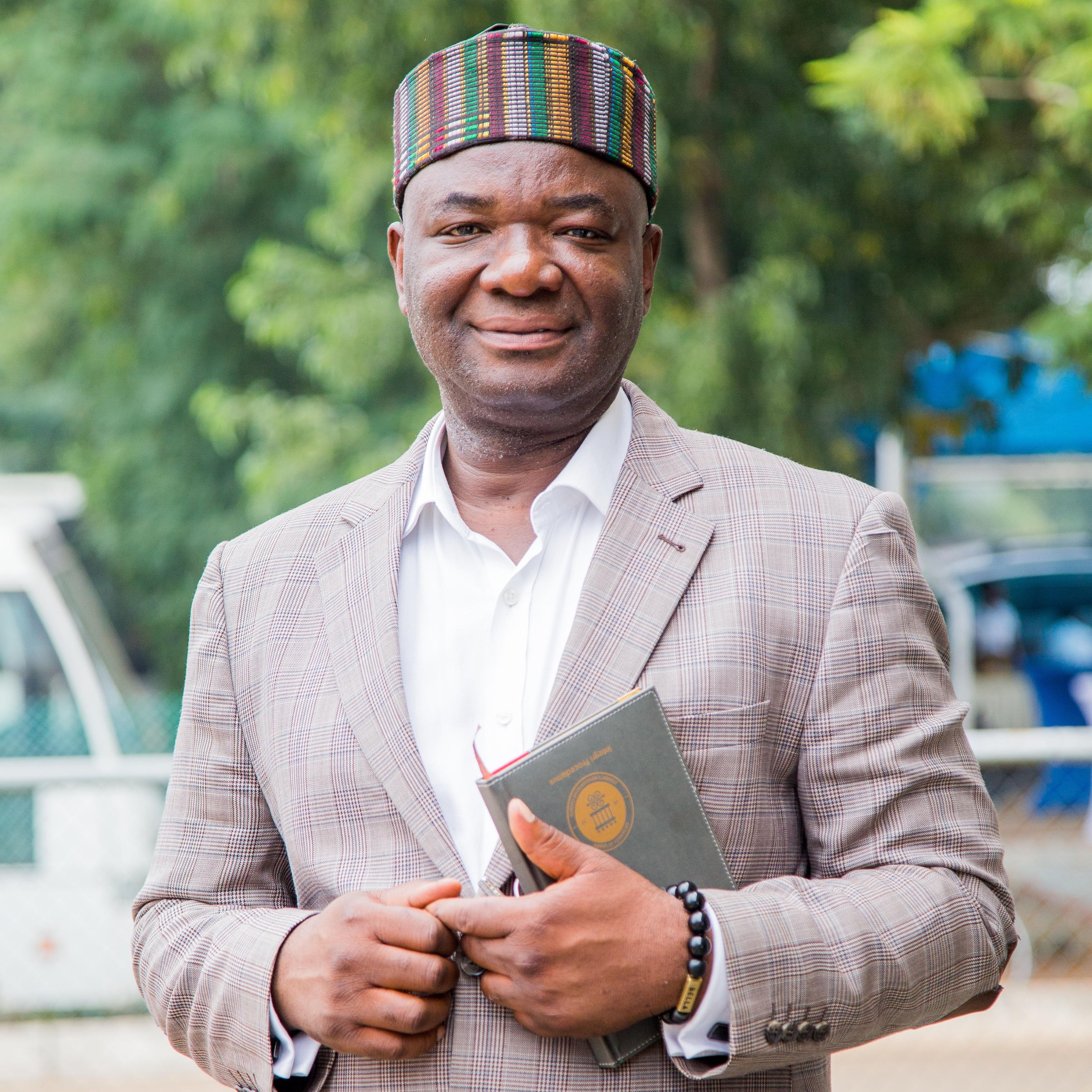
Dr. Bella Bello Bitugu
Senior Lecturer
About
Ghanaian and Austrian trained, Dr. Bitugu was the Director of Sports, University of Ghana from 2013 to 2024, and now Senior Lecturer at the Department of Physical Education and Sports Studies. He is the Vice President - Training, Research and Education, Africa Traditional Sports And Games Confederation (ATSGC). He is an expert in Development through Sport which uses sport to address development and various societal issues. He teaches at the University of Ghana and other Universities in Europe. He participates in, and consults on numerous projects.
He has coordinated several sport for development projects across Europe and Africa and was the Country Director of Right To Play Ghana. He serves on several boards and provides invaluable services to Governments, NGOs, Academia, Sports Governing Bodies, Regional, Continental and Global Organisations including the United Nations, the Africa Union, the Commonwealth, GIZ, Union of Africa Traditional Sports and Games etc. on matters relating to sport development and development through sport.
Education
1998 - 2004 Doctor of Philosophy (PhD.), University of Innsbruck, Austria, Educational Sciences.
1993 -1997 Master of Philosophy, (Mphil), University of Innsbruck, Austria, Educational Sciences.
1987 - 1991 Bachelor of Arts Hons. (B.A. Hons), University of Cape Coast, Ghana, Social Science (Sociology and Economics)and Diploma in Education.
Research Interest
Sports and GDP
Conceptual approach and research methodology for a research progamme on the socio-economic benefits and impacts of sport and recreation on Ghana
Research objectives and anticipated outcomes
The primary objective of this research on Ghana is:
- To develop an improved understanding and development perspective on the socio-economic benefits and impacts of sport and recreation in Ghana and to provide a scientific basis and evidence-based information for decision-making for the recognition of the impact that sport and recreation has on socio-economic development and sustainable development.
The purpose of the research is to:
- Provide a research basis for an improved understanding and development perspective on the socio-economic benefits and impacts of sport and recreation in Ghana;
- Improve the understanding of Government and other key players regarding the importance and significance of sport and recreation in terms of its economic contributions including the contribution of sport to GDP and employment;
- Provide a scientific basis for the recognition of the impact of sport and recreation on social development including health, education, social welfare, social cohesion and social capital development as well as community safety.
- Specific attention needs to be paid to participation rates of various sectors of society in sport and recreation, physical education and the involvement of the youth, as well as establishing the impact of improved physical activity levels of the population on health and hospital costs.
- Promote and preserve African traditional sports and games
Sport policy mapping African research programme
A partnership initiative initiated by the UNESCO Chair for Sport, Development and Peace (SDP) and Olympic Education at the University of Western Cape, in collaboration with the AU Sports Council, IOC, and UNESCO.
Purpose and objectives
The purpose of the new Sport Policy Mapping Research Programme is to establish a Network of sport and develop researchers in various African countries to develop, record and publish, a sport and development profile of these countries. This Research Schedule has been developed to serve as a Guide to country researchers with their research. This is a dynamic framework and will be adapted from time to time.
African Traditional Sports and Games Confederation on the promotion of Traditional sports and games in Africa.
Objectives:
- Foster social cohesion and community engagement
- Support education and skills development
- Drive economic growth and sustainable development
- Enhance global visibility and recognition
Strategies:
- Develop a comprehensive database of African traditional sports and games
- Establish a network of community-based sports clubs and organizations
- Create training programs for coaches, officials, and athletes
- Host regional and continental competitions and events
- Establish partnerships with governments, NGOs, and private sector organizations
Action Plans:
- Develop a database of African traditional sports and games
- Establish a network of community-based sports clubs and organizations
- Create training programs for coaches, officials, and athletes
- Host regional and continental competitions and events
- Establish partnerships with governments, NGOs, and private sector organizations
ERASMUS+ MOBILITY PROGRAMME - Exchange programme between University of Ghana and Applied University of Kufstein, Austria.
The planned mobility project is relevant to the internationalisation strategy of University of Ghana (UG) and FH Kufstein for the following reasons: -
Promoting internationalisation of curriculum and pedagogy: The cooperation contributes to promoting greater diversity in the study programmes and the academic community. Enhancing institutional reputation and international visibility: Active staff and student mobility strengthens the global partnerships and contributes to a positive image of the institutions.
The institutions are committed to providing equal access to opportunities. Staff and student mobilities foster the North-South dialogue, contribute to reducing inequality and provide chances for students with fewer opportunities to participate in international mobility. Teachers and students enhance their knowledge about relevant socio-economic, cultural, business and management-oriented aspects in the dynamic economic areas of Ghana and Austria. Staff Mobility also ensures an exchange of good practices. The teaching staff will share innovative pedagogical methods, and deepen their professional, linguistic and cultural knowledge. Development and strengthening of international networks and cooperation between the universities and regions, as well as cultural diversity, tolerance and openness to other cultural contexts in the institutions and academic community.
Completed Projects:
Exploring An Integrated Approach to disasters And Conflict Response through medical, sports and social perspectives
Participating Institutions: University of Accra / Ghana, MCI/ Austria, University of Ouahigouya/ Burkina Faso
This Seasonal School seeks to implement a multidisciplinary approach to disasters and conflict response by integrating medical, sports, and social work perspectives. The program is designed to enhance the effectiveness of interventions in the aftermath of disasters and conflicts, particularly in settings like Burkina Faso, which has faced significant security challenges and a dramatic rise in internally displaced persons since 2016.
The importance of collaboration across these three disciplines—medical, sports, and social work—cannot be overstated. By working together, professionals from these fields can provide a holistic response that not only addresses immediate physical health needs but also promotes psychological recovery and social cohesion. This synergy is essential for developing sustainable strategies that enhance the resilience of individuals and communities in the face of adversity.
The curriculum aims to broaden traditional response strategies beyond medical care to include social and sports-based interventions.
This project is sponsored by AFricaUninet under the auspices of Austrian Academic Services.
Ghana Sports Policy
This National Sports Policy 2024-2034 is expected to act as a catalyst in the development and promotion of both elite sports and the use of sports as a tool to achieve global and continental goals, notably, the Sustainable Development Goals (SDGs) and the African Union Agenda 2063 – “The Africa We Want”. The ultimate goals of the NSP 2024-2034 are to increase the level of participation, excellence, performance in sports and improve the quality of life of all Ghanaians by using sports as a tool for social and economic development and change.
The formulation of the National Sports Policy was spearheaded by the Ministry of Youth and Sports, which appointed a committee comprising representatives from the National Sports Authority, Ministry of Youth and Sports, University of Ghana, Ministry of Justice and Office of
Publications
2024 Adom-Aboagye, N.A.A. and Bitugu, B.B. 2024. Gender related prescripts and sport: a case study from Southern Africa, In: B. Graeff, S. Šafaříková, G. Akindes & L. C. Sambili-Gicheha (Eds.). Global South Voices on Sport for Development and Peace. Routledge.
2024 Derrick, C., Banda, D., Bitugu, B. B., Lindsey, I. 2024. A multi-stakeholder approach to sport as tool for development in Africa: Comparing Ghana and Zambia. In: B. Graeff, S. Šafaříková, G. Akindes & L. C. Sambili-Gicheha (Eds.). Global South Voices on Sport for Development and Peace. Routledge.
2022 Bitugu, B. B., Luguterah, A. W. (2022). (De)Colonising Physical Education in Ghana. In Knaus, C. B., Mino, T., Seroto, J. (Eds.). Decolonising African higher education: Practitioner perspectives from across the continent. Routledge.
2020 Bitugu, B. B., Luguterah, A. W., Ahiable, G. K. (2020). Managing community development through sport, In Goslin, A. E., Kluka, D. A., de D’Amico, R.L., Danylchuk, K. Managing sport across borders (eds). Routledge. New York.
2019 Lindsey, I., Bitugu, B. B. (2019). Partnerships in and around SDP, In Collison, H., Darnell, S., Howe, P. D. (eds). Routledge handbook of sport for development and peace. Abingdon: Routledge.
2018 Lindsey, I., Bitugu, B. B. (2018). Distinctive Policy Diffusion Patterns, Process and Actors: Drawing implications from the case of Sport in international development. Journal of Policy studies, 39 (4). DOI: 10.1080/01442872.2018.1479521
2018 Delali, B., Aryeetey, R., Bitugu, B. B., Ocansey, R. (2018): Aging in Ghana: A Public Health and Cultural Perspective, In Volkwein-Caplan, K., McConatha J. T. (eds). Health Promotion in Later Life – A Global Perspective. Routledge. Oxon and New York.
2016 Adom-Aboagye, N. A. A., de Coning, C., Bitugu, B. B., Keim, M. (2016). Trends and tendencies in the facilitation and training of sport and development programmes for the youth: Lessons and experiences from African cases. Africa Journal for Physical Activity and Health Sciences (AJPHES) Volume 22(3).